


Audio By Carbonatix
A high-school in the Chinese city of Shangqiu, Henan Province, recently attracted criticism for removing cafeteria chairs to motivate student to eat faster and dedicate more time to their studies.
Students returning from their summer break were shocked to learn that they would have to start eating standing up after their school’s administrators decided to remove the chairs and benches to deter students from lingering around after finishing their meal. A spokesperson for the Shangqiu school told reporters that management also plans to implement assigned spots for each student to stand in, to further discourage them from wasting time instead of studying.
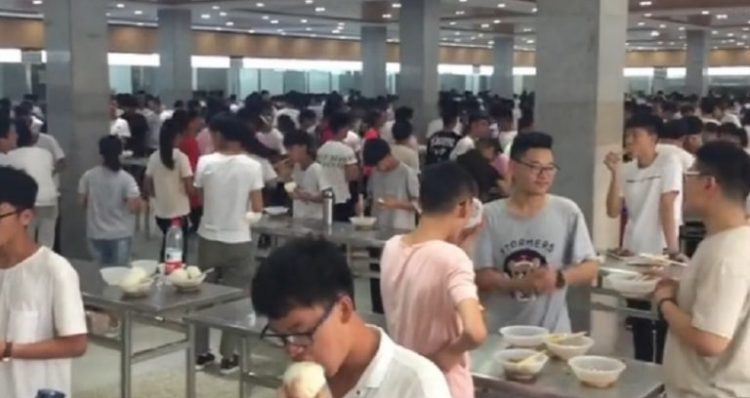
“Next, we’ll designate a lunch spot at the table for everyone to eat standing on their feet. On average, spending 10 minutes on lunch is enough,” a school employee says in a Pear video that recently went viral on Chinese social media.
The controversial move is believed to have been inspired by the draconian rules of “gaokao factories”, top Chinese high-schools infamous for using military-style disciplining techniques to prepare students for the Gaokao, China’s notoriously difficult college entrance exam. At some of these schools, classes start at 5:30 a.m. every day, and one of them even has two tanks installed at the entrance to motivate students.
Interestingly, a student from one of these gaokao factories commented that despite their grueling studying schedule, even they have cafeteria chairs.
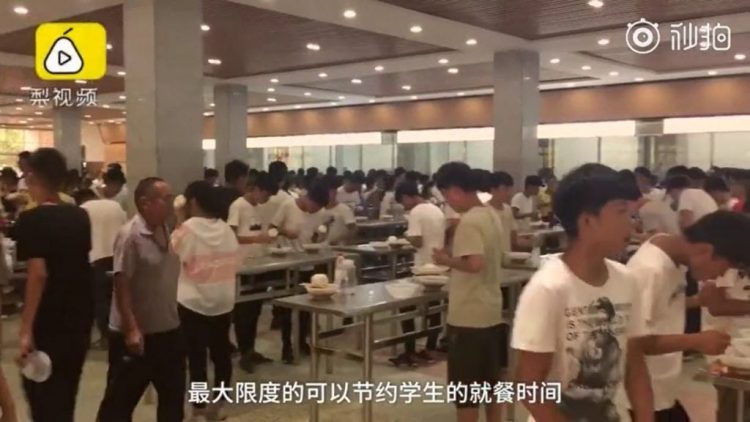
The move has drawn a lot of criticism online, with many people arguing that it will not influence students’ performance at all, and might even lead to unhealthy eating habits.
“They’ll probably shut down the dining hall in the second term at this rate because according to their logic, it’ll really improve productivity if no one eats at all,” one person commented on Weibo, China’s version of Twitter.
“Don’t prisoners sit while they eat?” another person asked rhetorically.
This is only the latest in a series of bizarre techniques Chinese schools have been testing in order to improve their performance. Back in May, we wrote about a school in Hangzhou that implemented face-reading technology to make sure students are paying attention in class.
Latest Stories
-
Parents in Ashanti make U-turn on Category C, D Schools as reporting deadline approaches
3 minutes -
September 21 declared public holiday for Founder’s Day
7 minutes -
Indonesia rescuers battle turbulent seas in search for 129 people after passenger ship capsizes
24 minutes -
Iceland’s last whaling company shrugs off threat of permanent ban
30 minutes -
‘Out of the abundance of the heart, the mouth speaks’ – GBA President on CJ’s SOEs comments
32 minutes -
Member of UK Armed Forces dies in road traffic incident in Ukraine
34 minutes -
Mahama to honour GAF Engineers Regiment with Order of the Companion of the Volta
37 minutes -
Agbodza demands quality, value for money in Accra-Kumasi Expressway construction
39 minutes -
Companies left China to dodge tariffs, now some are heading back
39 minutes -
Bali police investigate after Australian man and children found dead in home
39 minutes -
Government will not borrow to fund Accra-Kumasi Expressway – Ato Forson
47 minutes -
‘Judicial Service’s defence of Chief Justice was lacklustre’ – GBA President
49 minutes -
Etihad Airways sees strong demand, higher passenger capacity despite Iran war, CEO says
52 minutes -
AirBaltic files for Chapter 11 bankruptcy as Iran war costs bite
52 minutes -
COPEC calls for strategic fuel reserve to reduce dependence on tax cuts
58 minutes