

Audio By Carbonatix
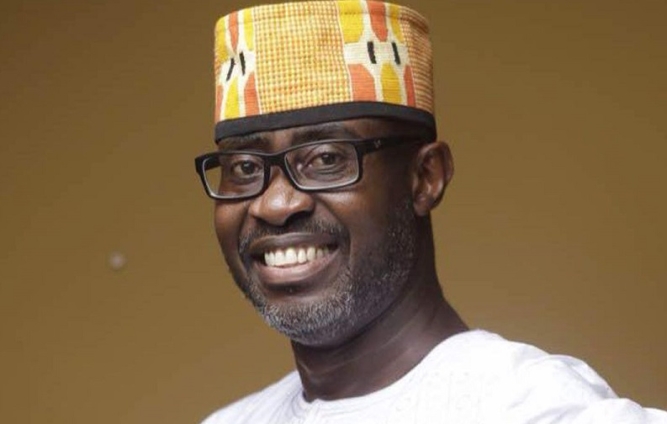
(Speech delivered by Ace Anan Ankomah at the Africa Prosperity Dialogues, 6th February 2026, on the theme: Make Africa Borderless Now)
Ladies and Gentlemen,
In 1993, the Middle East Insight journal posed a deceptively simple question: ‘Lebanon – At the Table or on the Menu?’ Three decades later, that question has morphed into the mantra ‘If you are not at the table, you are on the menu.’
At the 2026 World Economic Forum in Davos, Canadian Prime Minister Mark Carney was compelled to invoke that phrase to sound an alarm: the so-called rules-based international order is breaking down. Great powers (the United States, China, Russia) now pursue naked self-interest with little regard for global norms. Middle powers, caught in between, are discovering that neutrality is no protection, and passivity is a liability.
Prime Minister Carney, welcome to our world, our lived reality, and for which we have paid dearly. For 104 days, between November 1884 and February 1885, the world’s most powerful nations gathered in Berlin at the invitation of German Chancellor Otto von Bismarck. Africa was not invited. Africa was not consulted. Africa was not represented.Africa was on the menu.
The Berlin Conference produced rules for partitioning and colonising an entire continent: people’s, cultures, kingdoms, economies that had existed and evolved for millennia. Lines were drawn with rulers and ink, not with knowledge, consent or care. And those lines still haunt us.
We call it today the ‘Balkanisation of Africa,’ a deliberately loaded metaphor. In Europe, the Balkans were carved out of collapsing empires into small, hostile, fragile states, triggering a century of wars: the Balkan Wars, the First World War, the Greco-Turkish War, and later the Yugoslav conflicts.
Africa suffered a similar fate, except on a continental scale. Borders drawn without consent. Communities split apart. Economies rendered unviable. Conflicts engineered to endure. We became a geopolitical chessboard, pieces moved at will, pawns in a game whose rules we did not write and victims of objectives that were never ours. We have been consigned to live behind borders that have become, not just geographical boundaries, but political, social, economic and legal boundaries and barriers.
And it was crueller than that. For instance, the Berlin Conference recognised King Leopold II of Belgium (not Belgium, but Leopold personally) as the sovereign of the then Congo Free State, now the Democratic Republic of Congo. It was ‘legally’ his private property, run like a corporation, not a colony. He appointed officials, controlled the army (the Force Publique) and extracted rubber and ivory for his own profit. Ladies and gentlemen, an entire African territory the size of Western Europe owned by one man, marked by brutal human rights abuses and exploitation of the people, leading to widespread suffering and death.
And generations later, the brutal consequences of colonialism remain painfully visible: small states, divided markets, chronic insecurity, civil wars, deep poverty, alongside extraordinary natural wealth that others extract and monetise far better than we do.
Today, even middle powers, some of whom participated in and benefitted from our ‘balkanisation,’ are discovering what Africa has long known: to be absent from the table is to be consumed. Some of them, perhaps, are menu items already.
So, let me ask the harder question: WHAT ABOUT US?
In the main, Africa might have missed the first three industrial revolutions. But now we stand at a dangerous crossroads, in real danger of missing the Fourth Industrial Revolution – artificial intelligence, robotics, biotechnology, advanced manufacturing. And even as we struggle to catch that train, the Fifth Industrial Revolution is already approaching: human-centric innovation, AI-human collaboration, sustainability, renewable energy.
But history is not only about conquests and cannon mortars, gunpower and bayonets, or even steam engines and factories. It is also about ideas, courage, institutions and imagination. Every great transformation has combined technology with purpose, knowledge with political will.
We cannot remain small, insecure, reactive, and expect dignity.
That leads to my precis for today: The strongest borders are not just the ones guarded by immigration officials. It is that which makes us see each other as different, based simply on the ‘accident of our birth’ in different countries.
Let me give you a simple, everyday example of how the 50-year old ECOWAS Protocol on the Free Movement of Persons works, in fact. To drive from Accra to Lomé, a journey of barely three hours, I need about eight different documents: passport, domestic driver’s licence, international driving permit, local insurance and cross-border cover, a health card, vehicle registration, and even a temporary import permit. Miss just one, and the journey becomes… probably faster, on the strength of other ‘papers,’ this time from your wallet! And you go through this at the two sides of the border, and all over again on your return.
We police one another fiercely, yet open our doors wide to outsiders who extract our wealth with ease. This is not sovereignty. It is fragmentation masquerading as independence.
Ladies and gentlemen, our poverty, our inefficiencies, our divisions must no longer embarrass us into silence. They must shock us into action.
Because at the same time we are either standing at the edge of new possibilities or tottering at the precipice of a deep void. Science. Technology. Digitisation. Artificial intelligence. These are not luxuries for us, they are lifelines. They offer a chance to leapfrog centuries, to bypass the delays of history, to reclaim agency over our destiny.
But we must solve our problems ourselves. Not through lazy imports of ill-fitting ideas and solutions designed for other societies. In 2013, speaking to graduating students at the University of Ghana, I said something I believe even more strongly today:
‘Brains develop a nation, not [natural] resources.’
It echoed my strongly held belief that the solutions to most of our science, technology and engineering problems already exist, generated and germinated by our brainy young students, but buried in university archives, in theses, in research projects that identify real challenges and propose workable answers. Every year, brilliant ideas are presented, defended, graded and then quietly buried. Here, innovation comes to die young, not because it tried and failed, but because no one carried it forward.
Yes, institutions like the Council for Scientific and Industrial Research (CSIR) and the Ghana Research and Industry Collaborative (GRIC) are doing important, fascinating work. But this must become systemic. African Governments must act as facilitators, creating incubators on every campus, linking students, industry, capital and policy. Protect intellectual property. Patent inventions. Turn research into enterprise. Make science, technology and engineering attractive, respected and rewarding.
In 2008, John Legend captured our moment perfectly when he sang:
‘We’re the generation, we can’t afford to wait.
The future started yesterday, and we’re already late.’
That is our reality.
As the novelist Gustave Aimard wrote more than a century ago, ‘In every human question there is something more powerful than force, than courage, even than genius – and that something is the idea whose time has come.’
Africa’s ideas have always here. What is missing is action.
Let me leave you with a simple mantra, one I have come to believe explains all sustainable development: Prosperity comes when a people:
* look to their own lives (what they do, eat, drink, wear, drive, etc);
* harness their own capabilities;
* replace the surrounding myths, fables and superstition with science, and
* build industries that make life easier, more interesting and valuable to others.
This is not optional. If we fail again, a century from now another African Prosperity Dialogue will be held, perhaps here in Accra, and a frustrated great grandchild of ours will repeat these same words. Or perhaps a robot will.
We do not need to be at someone else’s table.We do not need to be on someone else’s menu. That is the border. That is the barrier.
We can and must build our own table. We can and must write our own menu.
I speak this way because God, Africa, Ghana made me and gave to me, right here at home, more than I ever dreamt of. Our mindset should be that it is possible right here. And from that position of strength we must engage the world, not as beggars, not as desperate migrants, but as self-reliant architects of our destiny.
The time is now. The ideas are here. And there are nearly 1.6 billion of us to implement them. It must never be said that every major civilisation conquered poverty, except Africa.
Africa must not just rise. Africa must shine and answer the long-standing question ‘Can Africa…?’ with a resounding ‘Africa can…’ or better still, ‘Africa has…’ Fellow Africans, let’s tear down these borders, boundaries and barriers.
Thank you.
Latest Stories
-
At least 30 feared dead in crush at Haitian tourist site
4 hours -
Four arrested over murder of Scottish businessman in Kenya
5 hours -
New Mainoo deal closer, says Man Utd boss Carrick
5 hours -
Sinner beats Alcaraz to return to world top spot
5 hours -
An inappropriate joke nearly ended his career. Now he’s back with more humour
5 hours -
GPL 2025/26: Dreams FC stage stunning comeback to hammer Eleven Wonders
6 hours -
Livestream: The Probe examines Kumasi’s looming water crisis
6 hours -
MTN Ghana gears up to lead Africa’s AI revolution
6 hours -
Philanthropist Alhaji FuZak donates Da’wah bus to Ambariya Sunni community
6 hours -
GUTA calls for suspension of Publican AI system over trade disruptions
6 hours -
TTAG raises alarm over proposed recruitment of 7,000 teachers, demands national posting roadmap
7 hours -
Civilians feared killed after reports of air strike on Nigerian market
7 hours -
Bishop Simon Kofi Appiah installed as new Jasikan Diocese Bishop
7 hours -
Trump’s Strait of Hormuz blockade threat raises risks and leaves predicaments unchanged
7 hours -
US Court backs extradition of former MASLOC CEO Sedina Tamakloe-Attionu to Ghana
8 hours