

Audio By Carbonatix
Chief Research Scientist at the School of Nuclear and Allied Sciences, Abraham Adu-Gyamfi, has emphasised the crucial need for farmers and food exporters to adopt food irradiation as a means of preserving and extending the shelf life of food crops.
A recent study conducted by the Denmark Embassy in Ghana revealed alarming statistics: approximately 50% of crops harvested in Ghana go to waste, resulting in a staggering loss of over $16 million due to post-harvest losses of selected food crops. This revelation underscores the urgency to address this issue effectively.
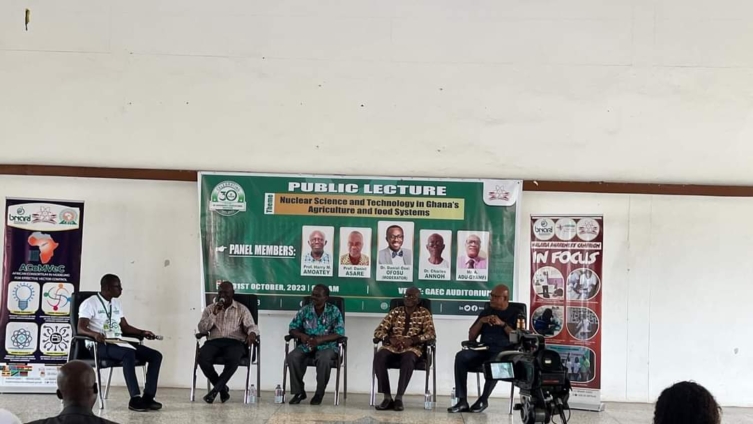
Mr. Adu-Gyamfi, speaking after a Public Lecture on Nuclear Science and Technology in Ghana’s Agriculture and Food Systems, highlighted the potential of food irradiation in curbing these losses and enhancing food security in the country.
He emphasised, "Food irradiation will enable us to eliminate pathogenic and spoilage microorganisms from food. Moreover, it can significantly reduce the levels of insects in maize and cereals."
Again, he stated that this method could effectively delay the ripening of fresh produce, enabling fruits to stay fresh for an extended period, which is essential for reaching markets where fresh products are in demand.
Furthermore, the process can inhibit sprouting in areas where rhizomes and bulbs are prevalent, consequently extending the shelf lives of these crops.
Regarding the accessibility of the technology, Mr. Adu-Gyamfi mentioned that their institution has organised various educational activities, including food fairs and site visits, aimed at sensitising farmers and other stakeholders.
He noted, "We have conducted food fairs where farmers have had the opportunity to taste irradiated foods. Additionally, we encourage producer groups to visit the Atomic Energy Commission to understand the functions of the facility."
In Africa, concerns about nutrition and food security remain paramount, especially with the continent's burgeoning population.
The issue of food loss and waste is particularly urgent. It's estimated that each year, a substantial percentage of grains, root crops, and fruits and vegetables are destroyed, impacting agricultural sustainability.
Smallholder farmers and local producers, the backbone of the agricultural sector, face financial setbacks due to increased produce losses, which restrict the availability of food.
By adopting food irradiation techniques and increasing awareness among stakeholders, Ghana stands to significantly reduce post-harvest losses, ensuring a more sustainable and efficient agricultural system for the future.
Latest Stories
-
Livestream: The Law discusses Supreme Court @150
12 minutes -
MTN Momo staff walk to promote wellness and fitness
28 minutes -
How GRA’s Modified Taxation Scheme is boosting revenue compliance & SMEs competitiveness
49 minutes -
Stonebwoy Can Do It: A call to unite behind 2026 BHIM Fest
1 hour -
World Shea Expo returns to Tamale for 2026 edition
1 hour -
Prioritise cocoa sector with better prices, timely payments-Annoh-Dompreh urges NDC
2 hours -
Lands and Mines Watch Ghana endorses Heath Goldfields’ mining capacity
2 hours -
Gbintiri residents protest alleged diversion of 24-hour market project
2 hours -
Justin Bieber headlines Coachella with nostalgia-fuelled set
2 hours -
Ukraine and Russia accuse each other of hundreds of ceasefire violations
3 hours -
Asha Bhosle: The sound of Bollywood dies aged 92
3 hours -
Fire destroys section of 4-bedroom apartment at Tantra Hill
3 hours -
Safe city: Unnoticeable protection
3 hours -
North East Regional Police Commander raises alarm over burning of checkpoints
3 hours -
Free Primary Healthcare Programme set for take-off — Health Ministry confirms readiness
4 hours