

Audio By Carbonatix
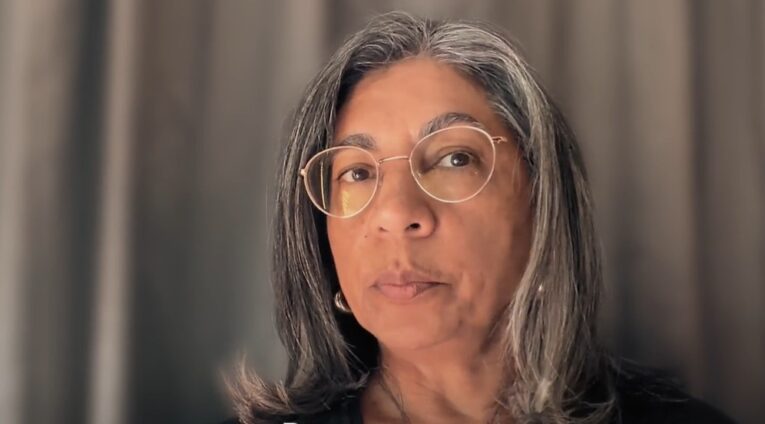
The President of the Open Society Foundations, Binaifer Nowrojee, has called for urgent reforms to curb the growing influence of money in politics across Africa, warning that unchecked political financing is eroding democratic governance, weakening public trust and limiting political participation.
She said while African countries had made significant progress in strengthening constitutional rule, expanding political space and holding competitive elections over the years, the increasing financialisation of politics had emerged as one of the greatest threats to democratic integrity on the continent.
Delivering an address at a three-day High-Level Regional Convening on the Financialization of Politics in Africa in Accra on Tuesday, July 14, Ms Nowrojee said democracy could only flourish when political leadership was based on public confidence rather than financial influence.
"Democracy rests on a simple promise—that every citizen's voice matters. Yet when money is hidden, unregulated, or concentrated in the hands of a few, that promise begins to erode. Political competition becomes less about ideas and public service and more about access to financial resources," she stated.
The conference, held under the theme "Advancing Reform, Transparency, Accountability and Democratic Integrity", brought together policymakers, anti-corruption agencies, electoral management bodies, civil society organisations, researchers and governance experts from across Africa to examine the growing influence of money in politics and identify practical reforms to strengthen democratic accountability.
The event was jointly organised by the African Union Advisory Board Against Corruption (AUABC), the Ghana Centre for Democratic Development (CDD-Ghana), the Open Society Foundations and Transparency International.
The three-day regional convening, running from July 14 to 16 at the Kempinski Hotel Gold Coast City, Accra, is examining the growing financialisation of politics and its implications for governance, electoral integrity and anti-corruption efforts in Africa.
Discussions are expected to contribute to the development of policy recommendations to strengthen political finance regulation, improve transparency and enhance democratic accountability across African Union member states.
Democracy at risk
Ms Nowrojee cautioned that when financial interests dominate politics, elected leaders risk becoming accountable to wealthy financiers instead of the citizens they are elected to serve.
"When that happens, accountability shifts. Leaders become more responsive to financiers than to citizens. Public institutions become vulnerable to capture. And democracy risks serving private interests rather than the public good," she said.
She observed that the cost of contesting elections continued to rise across many African countries, including Ghana, Nigeria, Kenya, South Africa and Zimbabwe, making it increasingly difficult for ordinary citizens to participate in politics.
According to her, the trend disproportionately disadvantages women, young people, rural communities and individuals without access to wealthy political networks.
"Too often, women, young people, rural communities, and citizens without powerful financial networks are pushed to the margins. Democracy becomes less inclusive, less competitive, and less trusted," she stressed.
She noted that the influence of money extends beyond election campaigns, shaping public discourse, determining whose voices are amplified and influencing public policy.
"Money shapes public debate. It influences who is able to compete for office, whose messages are amplified, and whose interests are reflected in policy decisions. Even the strongest constitutions and the most credible elections cannot fully protect democracy if financial power is allowed to capture its institutions."
Momentum for reform
Despite the challenges, Ms Nowrojee said growing international and continental efforts offered hope for stronger regulation of political financing.
She cited the adoption in 2025 of the first internationally agreed standards under the United Nations Convention against Corruption requiring greater openness in the financing of political parties, election campaigns and candidates.
She also highlighted ongoing efforts by the African Union Advisory Board Against Corruption, in collaboration with the Pan-African Parliament and civil society organisations, to develop a Model Law on Political Financing aimed at helping African countries strengthen oversight of political funding.
According to her, governments, oversight institutions, anti-corruption agencies, think tanks and civil society organisations across the continent were increasingly recognising that transparency and accountability in political finance were indispensable to protecting democracy.
Call for comprehensive reforms
The Open Society Foundations President urged African governments and stakeholders to move beyond identifying the problem and focus on implementing practical reforms.
She outlined measures including mandatory disclosure of political funding, transparent systems for public financing of political parties, stronger regulatory oversight, independent enforcement mechanisms, safeguards against illicit and foreign funding, and stronger protections for civic oversight.
"We must move beyond diagnosing the problem and toward building the institutions that can address it," she said.
She emphasised that the objective was not simply to regulate campaign financing but to restore public confidence in democratic institutions.
"Our goal is to strengthen the social contract between government and citizens.
"To ensure that political leadership is earned through public trust, not purchased through private wealth.
"To ensure that elections are contests of ideas, not contests of resources.
"And to ensure that public institutions remain accountable to citizens and citizens alone."
Shared responsibility
Ms Nowrojee stressed that strengthening democratic integrity required collaboration among governments, political parties, electoral commissions, anti-corruption agencies, civil society organisations, researchers, the media and the private sector.
She reaffirmed the Open Society Foundations' commitment to supporting African institutions in advancing reforms that promote transparent and accountable political financing.
She said the Accra convening would strengthen the Community of Practice on Money in Politics in Africa, deepen regional cooperation and support implementation of the African Union's proposed Model Law on Political Financing.
"Our success will be measured by whether people across Africa believe that their voices matter.
"Whether they can trust that elections are truly fair, that leaders serve the public interest, and that institutions are accountable to citizens rather than financial patrons.
"And whether every African—regardless of wealth, background, age, or status—has a meaningful opportunity to shape the future of their country."
She concluded by urging African governments and democratic institutions to build political systems where leadership is determined by competence, ideas and public service rather than financial influence.
"And that is the future we must build together: a future where governments answer to their people, where decisions are made in the public interest, and where the opportunity to lead is not determined by wealth but by the strength of one's ideas and commitment to service."
READ ALSO: Political office viewed as investment when money determines political success — Bagbin
Latest Stories
-
Power restoration fault suspected in Kumasi Central Market fire
4 hours -
The 7-foot giant of Ngleshie Amanfro: Seven-foot Ghanaian Ephraim Saawa dreams of joining the national basketball team
5 hours -
Government promises support for Kumasi Central Market fire victims
5 hours -
Vibes The Movie: Big Ghun’s Ghanaian film earns five nominations at 2026 REFFA
6 hours -
MamaCare CEO warns unresolved conflicts among health workers could undermine maternal and neonatal care
6 hours -
Health professionals urged to translate medical knowledge into practice to save mothers
6 hours -
Retired judge Justice Francis Korbieh charges 1,568 new lawyers to uphold integrity
8 hours -
Conflicts among care providers linked to maternal, neonatal deaths – Expert
8 hours -
GIS marks 10th TIME conference, champions improved teaching practices
8 hours -
BRICS Or Balance? What Ghana’s bid really means
8 hours -
GPRTU wants full TRAFFITECH-GH implementation to start in 2027
9 hours -
How 10-mile walks for basic education birthed a 50-year legal career for Justice Korbieh
9 hours -
Mahama announces plans to import electric wheelchairs for PWDs
9 hours -
KGL U17 Colts 2026: Western beat Prempeh Elite Academy to set up final final with Greater Accra Region
9 hours -
Late Solanke strike salvages 10-man Spurs draw at Man United
9 hours