

Audio By Carbonatix
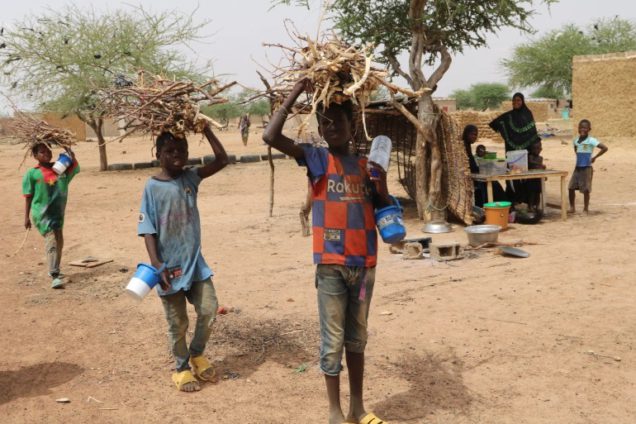
Across several African countries, biomass remains the backbone of household energy, but a new study warns that the same system keeping millions cooking is also accelerating forest loss, health risks and environmental degradation.
The synthesis, “Assessment of key sustainability determinants for existing tree-based energy options from biomass procurement, processing consumption in Africa,” commissioned by the African Forest Forum (AFF) and supported by the Swedish International Development Cooperation Agency, examines tree-based energy systems in Madagascar, Rwanda, Zambia, Nigeria and Togo.
It finds that charcoal and fuelwood remain the dominant energy source for cooking and heating across rural and urban households, but unsustainable harvesting and weak regulation are pushing forests to the brink in many areas.
The report shows a clear pattern of growing urban demand is driving intensive rural extraction.
In Rwanda, cities such as Kigali depend heavily on surrounding rural areas for charcoal and firewood, shifting pressure onto already fragile landscapes.
In Madagascar and Nigeria, expanding urban populations are fueling long and informal supply chains that depend on continuous forest extraction.
Zambia still has relatively strong biomass resources in some regions, but pressure is increasing in areas where fruit trees are being cut for charcoal. In Togo, forest depletion is already severe in some protected areas, with reports of rapid resource loss.
Inefficient technologies worsening deforestation
A major finding is the continued use of outdated and inefficient energy technologies.
Across all countries, traditional charcoal kilns and three-stone cooking systems dominate.
In Nigeria, researchers estimate energy losses of up to 70% due to inefficient production methods. In Togo, traditional earth kilns operate at very low efficiency compared to improved alternatives, which are still not widely adopted.
Madagascar and Zambia report similar reliance on outdated systems that consume large volumes of wood for relatively little energy output.
The result is higher wood demand, faster deforestation and increased carbon emissions. The study also highlights serious health impacts linked to indoor air pollution.
In Madagascar, household smoke from charcoal and firewood contributes to thousands of premature deaths each year. In Nigeria and Togo, women and children are the most affected, exposed daily to toxic fumes from poorly ventilated kitchens.
Across all five countries, the continued use of open fires remains a major public health concern. Biomass energy systems are largely informal, fragmented and weakly regulated.
In Rwanda, market systems are poorly structured, with limited oversight. In Zambia, charcoal trade supports incomes particularly for women and young people but remains largely unregulated.
In Togo, women dominate retail charcoal trade, accounting for more than 90% of sellers, yet the sector remains informal and insecure.
Madagascar and Nigeria show similarly complex supply chains involving multiple intermediaries, reducing profits for producers and making regulation difficult.
Women carry the burden, but lack support
A strong gender pattern emerges across the study. Women are central to fuel collection, cooking and charcoal trade across all countries. In Nigeria, they also face high exposure to smoke-related illnesses.
Despite their central role, women often lack access to finance, modern technology and decision-making power in the energy sector.
The report warns that without targeted support, gender inequalities in the biomass economy will persist.
Although all five countries have energy, forestry or climate policies in place, implementation remains limited.
Rwanda and Zambia report weak coordination between institutions. Togo highlights outdated regulations governing wood trade. Madagascar relies heavily on donor support, while Nigeria struggles with weak enforcement and poor cross-sector coordination.
The result is a policy gap between national plans and what happens in forests and markets.
Despite the challenges, the study identifies opportunities for change. Rwanda points to agroforestry systems, clean cookstoves and alternative fuels such as briquettes. Zambia highlights sustainable woodlots and improved production technologies.
Togo sees potential in modern kilns and biogas systems. Madagascar promotes eco-charcoal and reforestation efforts. Nigeria calls for a broader approach combining forest management, clean energy investment and stronger governance.
The report indicates that Africa’s biomass energy system remains deeply embedded in daily life, but is increasingly unsustainable in its current form.
Without urgent improvements in technology, governance and investment, researchers warn that continued reliance on charcoal and firewood will deepen forest loss, health risks and inequality across the region.
Latest Stories
-
Former NPP Chairman and Minority Leader Samuel Odoi-Sykes passes on
3 minutes -
Ayawaso West Assembly cracks down on unauthorised market near Villagio
16 minutes -
Lastec CEO Lasisi Oseni nominated for Ghana Auto Fix Award
21 minutes -
Polo Beach Club land belongs to La Traditional Council, not Labadi Beach Hotel – Freddie Blay
22 minutes -
‘Don’t speculate’ – Upper West Minister charges SOCO facilitators as project delivers 127 projects, 173 more underway
23 minutes -
Finance Ministry approves 3 months’ rent allowance for security personnel
37 minutes -
Ten people linked to Kenya’s first-ever Ebola case quarantined as screening concerns grow
51 minutes -
Ghana warns medical travellers to South Africa to obtain visas for treatment beyond 90 days
58 minutes -
Canada suspends plans to expand assisted dying to people with mental illness
59 minutes -
Minority accuses Sports Ministry, NSA of creating fake portfolios for VISA applicants
60 minutes -
6th Inter Tourism Expo comes off in Cape Coast this October; register now
1 hour -
Afenyo-Markin accuses government of diverting attention from cocaine seizures linked to Ghana
1 hour -
GJA gives Armed Forces 14 days to account for alleged assaults on Sika Official, Bullet TV’s Philip Abutiate
1 hour -
PAC gives CWSA 30 days to recover GH¢10m in unpaid water bills from police, army, hospitals, other public institutions
1 hour -
Major Accra roads to get facelift ahead of Ghana’s 70th Independence anniversary – Agbodza
2 hours