

Audio By Carbonatix
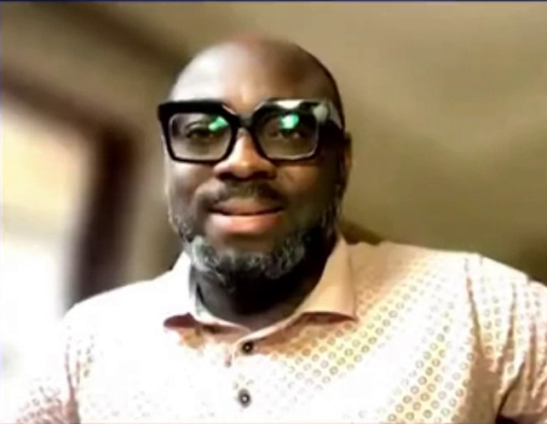
A Professor of Financial Economics at the University of Ghana Business School says the Attorney General’s recent offer to reconsider the prosecution of Dr Kwabena Duffuor and others if 60% of the alleged losses are recovered is an admission that government had a role in the collapse of the affected banks.
“The Attorney General has realised that, yes, of course, government had a role in the collapse of those banks,” Prof Lord Mensah stated on JoyNews’ PM Express on Wednesday, July 30.
He argued that the state is now choosing pragmatism over prosecution because it acknowledges its contribution to the banking sector’s failure.
“That is why the Attorney General thinks getting a part of what the cake is better than losing everything,” he said.
Prof. Mensah pointed to the interconnected nature of financial institutions and government obligations.
“The existence of the bank satisfies several stakeholders, including the government itself,” he explained.
“If it turns out that the government owes the bank, and at the same time the bank is collapsing, then obviously government needs to consider what it owes the bank, and then net it off the possible assets that they are recovering.”
He said the situation should have been handled from a technical and structured financial standpoint, not through aggressive closure and prosecution.
Asked about global best practices when banks face distress, Prof. Mensah said the first step depends on the nature of the problem, especially whether it’s a liquidity or solvency crisis.
“If you look at the bank’s balance sheet and it turns up that it’s purely a liquidity problem, then obviously you may call for liquidity injection from the shareholders,” he explained.
“Now, if the shareholders are not able to do it, then possibly you may have to look at getting a partner, or possibly government may also come in.”
In some situations, the state has a clear economic interest in helping the bank stay afloat.
“Government may also want to pump in money to ensure that at least the bank becomes stable. And the money will not go free.
"The money becomes part of ownership in the bank,” he noted.
“While the bank survives and is able to build up again, the government can sell off its equity once again.”
He emphasised that this route preserves multiple national interests.
“You’re going to save employees, their jobs. You save homes. You save government interest, which is the consistent taxes that government will be getting. And then also, you save the shareholders.”
Latest Stories
-
GES opens 2026 teacher recruitment for licensed B.Ed graduates
2 minutes -
Ghana must value skilled trades, build resilient learners — Ibn Chambas
10 minutes -
Ghana must rethink education around relevance, resilience and responsibility — Ibn Chambas
13 minutes -
Prince Harry faces defamation lawsuit from charity he co-founded
15 minutes -
South Korea deploys thermal cameras to track escaped zoo wolf
17 minutes -
Calls for royal meeting with Epstein survivors grow ahead of US visit
20 minutes -
Ibn Chambas advocates blend of technology and human values in education
21 minutes -
UMA improves healthcare access in Asutifi North with GH₵700k ‘Kim Taylor Legacy’ Walkway
26 minutes -
Scholarships Authority and Fanaka University offer sponsorship for procurement and supply chain studies
30 minutes -
Bisa Kdei drops new single ‘Go N Look’ featuring Medikal
36 minutes -
Benin facing rising terrorism in north as French military presence faces growing criticism
37 minutes -
UEW Public Lecture Series 2026: Education debate ‘about the soul of Ghana’s future’ — Dr Ibn Chambas
38 minutes -
EU fingerprint and photo travel rules come into force from today
1 hour -
Anti-LGBTQ+ Bill: Ghanaians demand expedited passage, not dialogue – Ntim Fordjour to Mahama
1 hour -
EU airline industry warns of fuel shortages if Strait of Hormuz stays closed
1 hour