

Audio By Carbonatix
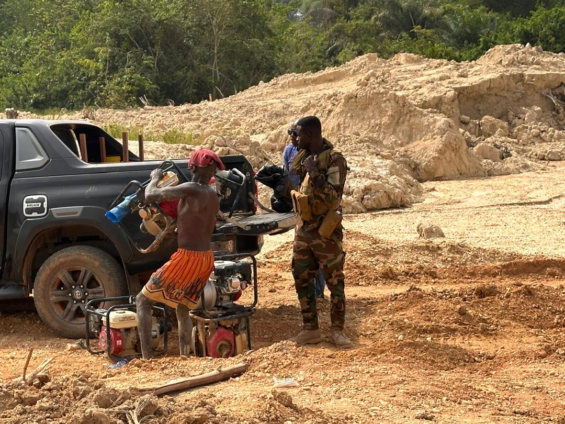
The phrase “alternative livelihood” has become a cliché in our national conversations on environmental destruction and illegal mining, popularly known as galamsey. It is often thrown around as a panacea, yet in practice, it remains abstract, detached from the realities of those it is meant to convert. At best, it becomes a rhetorical escape route for policymakers, with little real traction on the ground.
My premise is simple: alternative livelihood is not a slogan, it is a design challenge. If it is to work, it must be deliberate, data-driven, and built around the interests, passions, and motivations of the perpetrators themselves. It must present itself as a superior option, better, easier, and more rewarding than galamsey or other destructive practices.
Beyond Abstraction: Designing for Buy In
One of the main failures of past initiatives is that they treat perpetrators as if they were empty vessels waiting to be filled with any random alternative. This approach ignores human motivation. People will not abandon something as seemingly lucrative as galamsey unless what you offer them is:
- More profitable or equally rewarding.
- Easier to understand and operate, requiring minimal skills and common sense.
- Proven, visible, and sustainable, with obvious benefits that leave little room for doubt.
This means alternatives must be idiot proof by design. They must be crafted in such a way that even a hesitant participant can see clear advantages without needing complex persuasion.
Learning from the World
The irony is that some of the wealthiest countries today do not rely on gold or natural resources, yet they fund our development through loans. Take Switzerland and New Zealand. Both nations earn more from cattle and dairy than Ghana earns from gold. If we can show perpetrators of galamsey this reality, not just in theory but with hard data and demonstrations, half the battle will be won.
Imagine presenting to them a simple analysis: the global beef and dairy industry is worth over a trillion dollars annually, dwarfing the gold trade. Nations with no gold mines, but with disciplined livestock economies, sit comfortably at the top of global wealth indices. If those nations can build prosperity from cattle, why can’t we?
The Proof Must Be Practical
But numbers alone are not enough. Perpetrators must be walked through the process of change. This means:
Access to Technology: Not just modern equipment, but user-friendly tools adapted for rural environments.
Access to Finance: Micro credit or cooperative financing models that lower entry barriers.
Access to Market: Guaranteed offtake agreements that remove doubts about selling their produce.
We cannot expect a galamsey operator to switch to cattle, bamboo, or aquaculture if he is unsure who will buy the output or if the market appears distant and unreliable. Show them the market size, demonstrate the profitability, and back it with working examples, and buy-in becomes natural.
Crafting the Narrative of Wealth
Alternative livelihood must also be a narrative of wealth. When young men see that dairy in New Zealand or bamboo in Asia has made nations wealthy without wrecking rivers, they are more likely to listen. When they see that these alternatives are not just possible but sustainable across generations, resistance fades.
It is not enough to lecture them about destroying water bodies; we must show them that protecting the rivers while raising cattle, bamboo, or poultry can pay them more in a year than poisoning the rivers for gold.
A New Model for Policy
The government must therefore stop treating alternative livelihoods as a tick box exercise. We need a design-led national framework anchored on:
- Research and Data: Mapping high-potential industries with proven global demand.
- Demonstration Farms and Pilots: Real-life, visible proof points in every region.
- Market Integration: Secured buyers, local and international, before alternatives are rolled out.
- Technology Deployment: Making new ventures less laborious and more attractive than mining.
- Narrative Change: Selling the vision of wealth through alternatives as an aspiration, not a punishment.
The Way Forward
The fight against galamsey cannot be won by force alone. Fear of the law is weak motivation compared to the pull of prosperity. The only true deterrent is to make better options so attractive, so obvious, and so rewarding that choosing them becomes the rational choice.
If Ghana can prove to its people that nations without gold have built stronger economies from cattle, bamboo, fisheries, or technology, then we can shift the paradigm. This is how we must craft our alternative livelihood initiatives, not as abstract ideas, but as living, breathing designs for prosperity.
Because in the end, what we are offering is not just an alternative, it must be a better life.
Latest Stories
-
Kpando MP highlights progress on road projects
57 seconds -
Government secures $92m for Engineering and Agriculture University
7 minutes -
Several Ghana-bound vegetable trucks detained in Nigeria
1 hour -
Black Sherif questions Wendy Shay’s absence in “Artiste of the Year” talks ahead of TGMA 2026
2 hours -
Government confirms arrival of 100 new buses to ease transport challenges
3 hours -
$600m tomato imports undermining Ghana’s economy — Chamber of Agribusiness
4 hours -
Rainstorm wreaks havoc: Faulty transformers, feeder failures leave parts of 3 regions without power
4 hours -
CUTS International calls for urgent competition law amid sachet water price hikes
5 hours -
‘I never did this advert’, AI clones hijack Ghanaian identities for profit
5 hours -
25-year-old woman battles trauma after surviving deadly Nkwanta attack
5 hours -
Vice President honoured at Tortsogbeza as South Tongu leaders highlight development needs
5 hours -
Kwahu Business Forum 2026: Corporate citizenship, sustaining African businesses take centre stage with KGL as the case study
7 hours -
Trump seeks $152m to reopen notorious Alcatraz prison
9 hours -
Ex-Chelsea player Oscar retires with heart issue
9 hours -
CA Foundation drives constitutional literacy in Kpone Katamanso municipality
9 hours