

Audio By Carbonatix
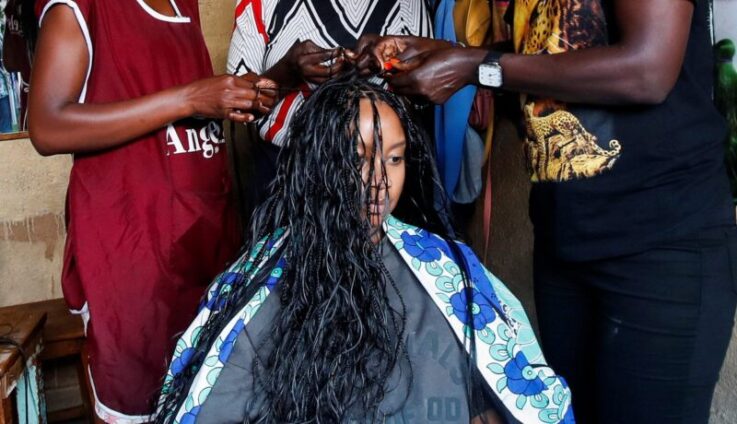
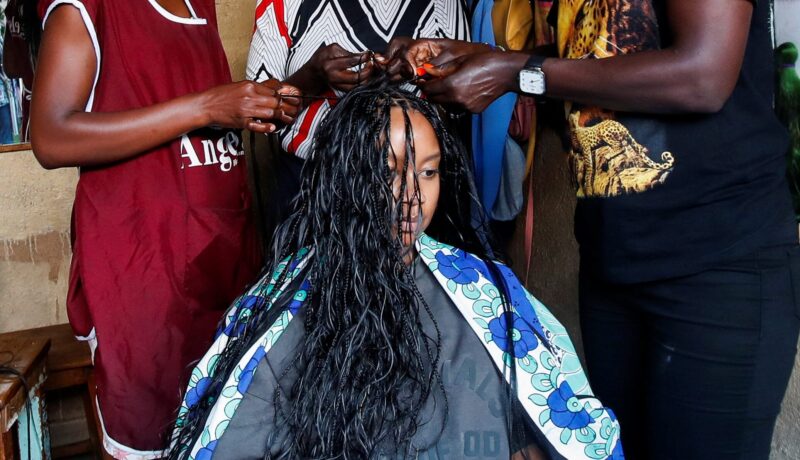
Kenyan hair braider Jemima Atieno spent decades building her business in Nairobi's bustling Kenyatta market, only to lose ground to social media after the pandemic as her customers went online to find similar services.
"I don't know how somebody can get to social media," the 52-year-old told Reuters, reflecting a gender divide that has seen Kenyan men reap benefits from the country's expanding online gig economy while women have been left behind.
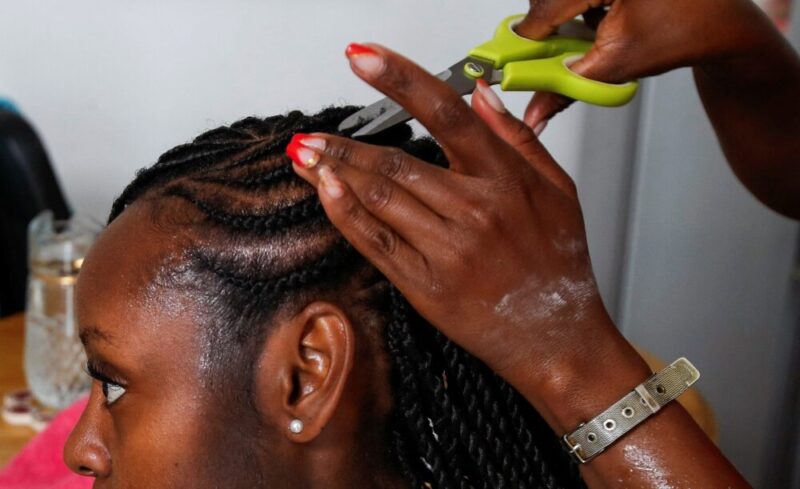
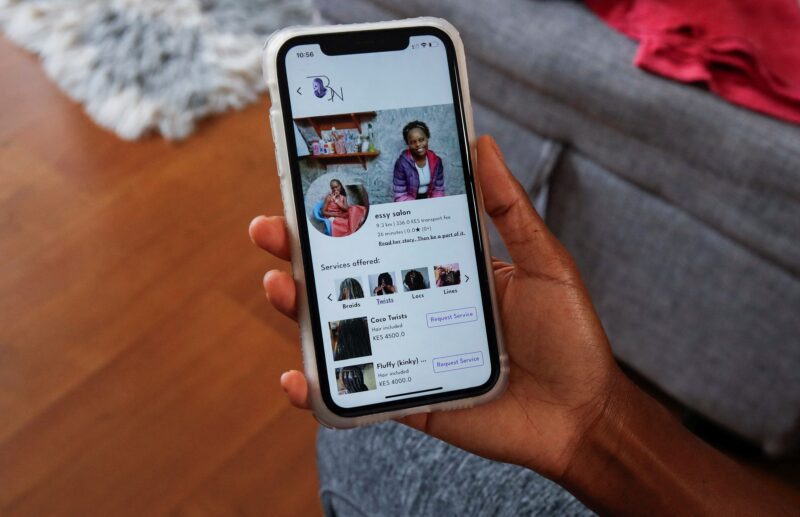
But her business received a boost when she discovered "Braiding Nairobi," an app where users can order braiding services directly to their home, similar to what Uber, Glovo and other digital platforms have done for food and grocery deliveries.
Founder Natachi Onwuamaegbu, 25, told Reuters she launched the app in May after interviewing braiders at Kenyatta market, home to hundreds of salons, for a storytelling project.
Braiders told Onwuamaegbu their business went up after she published their stories on Instagram and an online blog.
She realized she could create an even playing field "where you don't have to be super proficient in Instagram and social media to be able to gain access to a wider web of customers."
Kenyan women have less reliable internet access than men, and lower education levels translate to fewer digital literacy skills, according to a 2023 International Labour Organisation report.
Only 28% of gig workers in Kenya are female, and a majority are under 25, according to a 2023 study supported by the Alexander Von Humboldt Institute for Internet and Society.
Some braiders don't have reliable data or are not comfortable using the app, so Onwuamaegbu calls them directly to confirm orders.
So far, 180 customers and around 100 hair braiders have signed up, with more on the waitlist as Onwuamaegbu seeks to expand the app slowly.
Experts warn that Kenya lacks laws to regulate the gig economy.
"There needs to be in place some sort of policies to ensure some security for the gig workers," said researcher Kutoma Wakunuma. "But these policies are slow in the making."
But braiders told Reuters the economic benefits outweigh the risks.
"In this app, everything is convenient -- the prices, the style, the client needs," said Esther Mulandi, deftly weaving a customer's braids. "For me, it's working and growing very fast."
Latest Stories
-
First Atlantic Bank posts strong 2025 results as profit surges 30.5%
2 minutes -
Maguire signs contract extension with Man United
4 minutes -
The WTO is debating trade: The world runs on investment
31 minutes -
Minority questions gov’t purchase of fuel-powered buses, pushes for electric alternative
33 minutes -
GFA Executive Council to decide on new Black Stars coach ahead of 2026 World Cup
34 minutes -
One injured as fire destroys 14-bedroom house at Kwame Danso
42 minutes -
GACL struggling despite recording profit, levy needed for expansion – Agalga
45 minutes -
Kwahu Business Forum: Ghana Sports Fund calls for stronger corporate backing for sports dev’t
54 minutes -
Polling is no longer measuring opinion, it’s manufacturing it – Opong-Fosu
1 hour -
Penplusbytes’ statement on police action against deepfake and misinformation activities in Ghana
1 hour -
QNET, EOCO partnership showcased at UN global fraud summit as model for fighting organised crime
1 hour -
Mussa Dankwah is like a ‘lotto doctor’ – Miracles Aboagye
2 hours -
Investors target Ho Airport for training and maintenance hub — GACL Chair
2 hours -
NDC’s ‘grand deception’ on anti-LGBTQ+ bill exposed – Ntim Fordjour
2 hours -
Speak out against Mahama government’s LGBTQI+ u-turn – Ntim Fordjour to clergy
2 hours