

Audio By Carbonatix
Archaeologists have announced the discovery of an ancient city in Peru's northern Barranca province.
The 3,500-year-old city, named Peñico, is believed to have served as a key trading hub connecting early Pacific coast communities with those living in the Andes mountains and Amazon basin.
Located some 200km north of Lima, the site lies about 600 metres (1,970 feet) above sea level and is thought to have been founded between 1,800 and 1,500 BC - around the same time that early civilisations were flourishing in the Middle East and Asia.
Researchers say the discovery sheds light on what became of the Americas' oldest civilisation, the Caral.
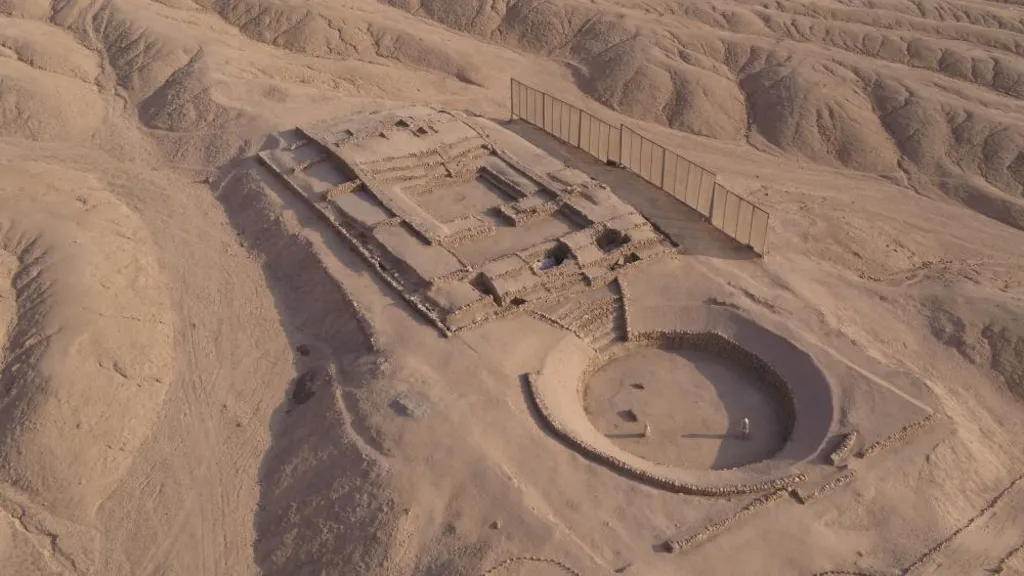
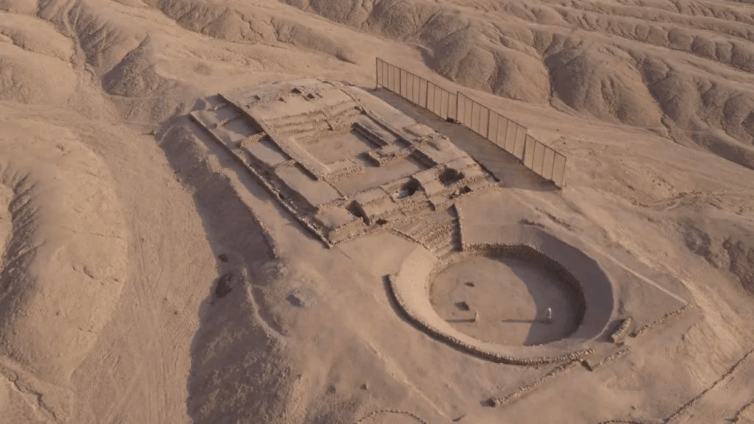
Drone footage released by researchers shows a circular structure on a hillside terrace at the city's centre, surrounded by the remains of stone and mud buildings.
Eight years of research at the site unearthed 18 structures, including ceremonial temples and residential complexes.
In buildings at the site, researchers discovered ceremonial objects, clay sculptures of human and animal figures and necklaces made from beads and seashells.
Peñico is situated close to where Caral, recognised as the oldest known civilisation in the Americas, was established 5,000 years ago at around 3,000 BC in the Supe valley of Peru.
Caral features 32 monuments, including large pyramid structures, sophisticated irrigation agriculture and urban settlements. It is believed to have developed in isolation to other comparative early civilisations in India, Egypt, Sumeria and China.
Dr Ruth Shady, the archaeologist who led the recent research into Peñico and the excavation of Caral in the 1990s, said that the discovery was important for understanding what became of the Caral civilisation after it was decimated by climate change.
The Peñico community was "situated in a strategic location for trade, for exchange with societies from the coast, the highlands and the jungle", Dr Shady told the Reuters news agency.
At a news conference unveiling the findings on Thursday, archaeologist Marco Machacuay, a researcher with the Ministry of Culture, said that Peñico's significance lies in it being a continuation of the Caral society.
Peru is home to many of the Americas' most significant archaeological discoveries, including the Inca citadel of Machu Picchu in the Andes and the mysterious Nazca Lines etched into the desert along the central coast.
Latest Stories
-
UniMAC wins 2026 Commonwealth Day debate at Parliament
10 minutes -
Agrotech Fair to spotlight local agric machinery, agro-processing equipment and cutting-edge technologies – EXIM BanK CEO
37 minutes -
Ghana unlikely to face immediate fuel shortage despite Middle East tensions – Senyo Hosi
52 minutes -
SSNIT ends 2025 with over GH₵25bn asset value, investments – Director-General
55 minutes -
Tema Oil Refinery plans capacity boost to 45,000 barrels per day
1 hour -
NCA Chief highlights 5G’s potential for mining and agriculture in Ghana
1 hour -
Invest in sports infrastructure, not World Cup fan sponsorship – Edem Agbana to gov’t
1 hour -
Private sector support vital for STEM growth
1 hour -
Police crack down on ECG cable theft, arrest 10 suspects
1 hour -
Local mining firms face discrimination under new royalty regime – Steve Manteaw
1 hour -
Telcos risk sanctions over poor call quality as NCA tightens standards
1 hour -
Star Oil refuses to apologise over ICUMS fuel disruption claims
1 hour -
Labour Minister appeals to CLOGSAG to call off strike amid ongoing talks
1 hour -
IGP explains withdrawal of Special Operations Taskforce from Tamale
2 hours -
Ketu North MP Edem Agbana urges strategic investment in youth development
2 hours