

Audio By Carbonatix
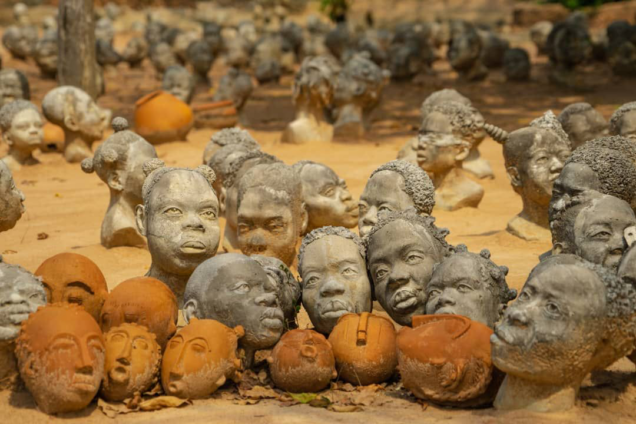
Before the invention of the modern camera, the Akans, one of the largest and predominant ethnic groups in Ghana, documented family portraits of the deceased through sculpture. For generations, this practice served as a culturally significant commemoration of African ancestors until colonialism disrupted the art form and the practice of Ancestor Veneration was misrepresented and demonised in most parts of Africa. Akans view death as a transition to the realm of the ancestors, where life continues in another form. Ghanaian artist and educator Kwame Akoto-Bamfo is charting a path toward sparking renewed interest in traditional African funerary practices through his art and educational campaigns.
The artist’s work first came to public attention in 2015 through a series of online campaigns and finally as a large-scale installation in Cape Coast in Southern Ghana. His “Nsiso” was first exhibited to the public as the West African nation celebrated its 60th Independence from British colonial rule.
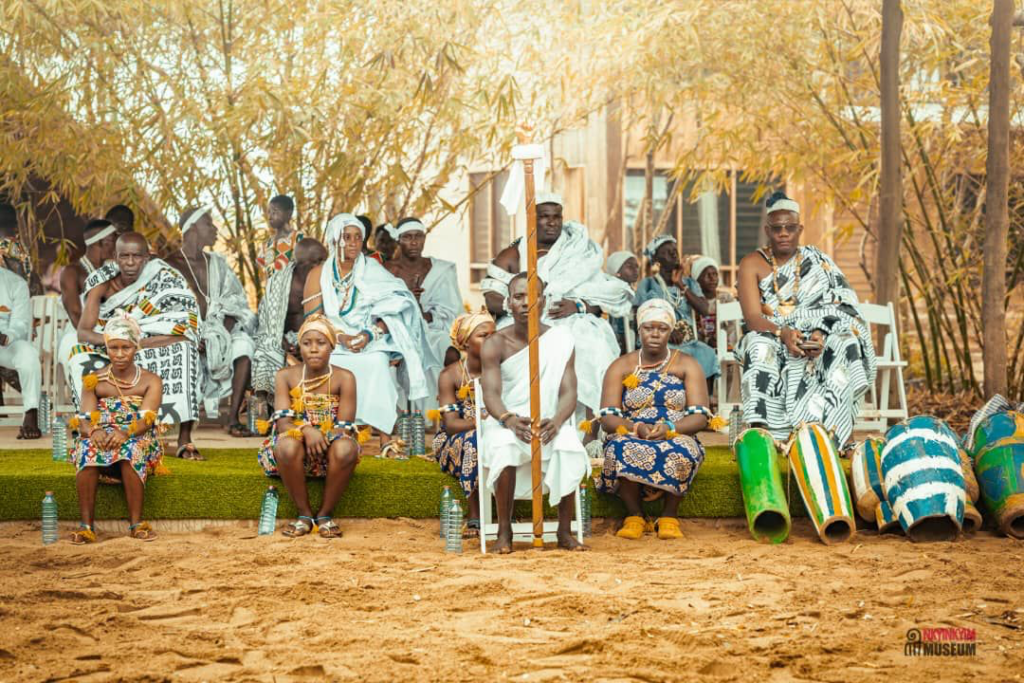
In 2019, the Nkyinkyim Museum was started by the artist as an initiative of his non-profit organization known as Ancestor Project. The museum, located 180 km outside of Accra at Nuhalenya-Ada, has become a space for people of African descent to engage in restorative healing processes through art and education. The museum’s annual Ancestor Veneration ceremony has succeeded in closing the circle of rites around African traditional Funerary arts. Its Sacred Area now features thousands of unique heads in an evolving collection that will reach 11,111 in number, symbolizing strength when unified, spiritual forces work in harmony. Visitors to the Sacred Area are encouraged to adhere to traditional practices including removing shoes and knocking before entering, pouring libations, and keeping the artworks free from selfies and photography that undermine or commercialize sacred funerary art practices.
“I am Akan, so my Nsiso began with Akan traditional rites, but currently our ceremonies have opened up to other African ethnic groups including the Ga-Dangme, Yoruba, Ewe, and African Americans in the diaspora,” says Akoto-Bamfo. He said during the third annual Ancestor Veneration in October 2024, “I am very grateful to the Adibea of Ada, all the Ga-Dangme royals, Ewe royals, Yoruba royals and the African diaspora for supporting the rebirth of our sacred funerary art and rites.”
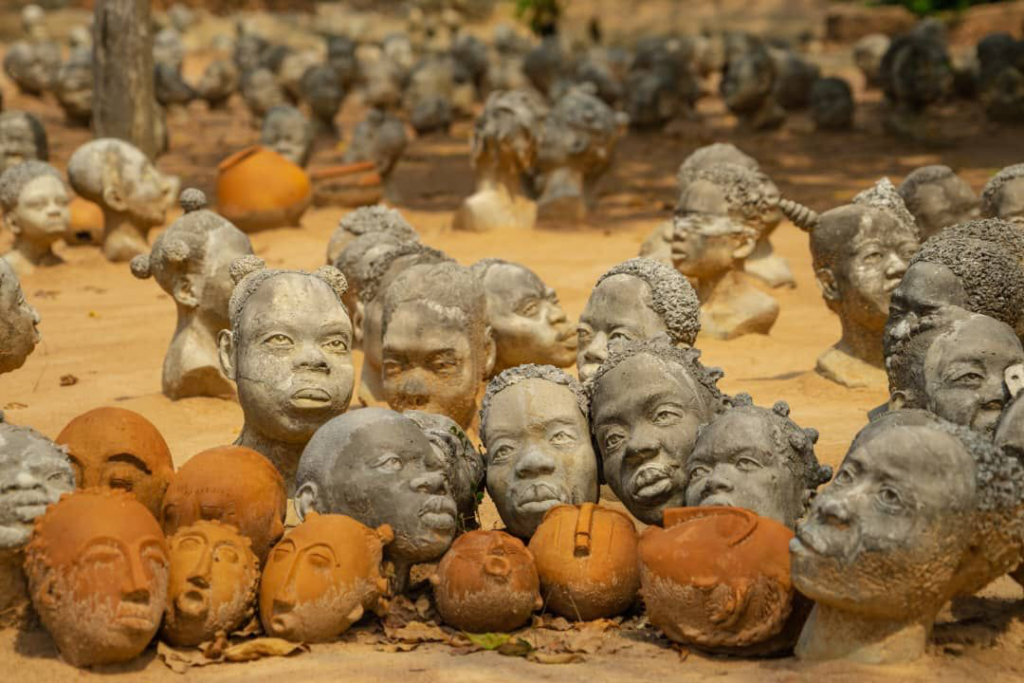
Akan Nsisu funerary art and practices have direct parallels with Ife and Benin bronze heads dating to the 13th century. “The funerary portraits at Nkyinkyim are rendered in various tribal styles as well as very hyper-realistic styles.” The artist said of his hyper-realistic funerary portraits, “A lot of people think the hyper-realistic portraits are not African, but they are very mistaken. Have you seen the Ife and Benin heads?”
The various rituals performed around the portrait heads complete the rites that make the portrait heads sacred. The Ancestor Veneration ceremony organised by Nkyinkyim Museum and supported by Adibea Royals and various African Royals ensures that the spirit of the ancestors through the portraits that represent them are fed and commemorated. Chief Nene Titrim Buertey III, the original Chief of Adibea, said of the program, “It is very important for Africans and diasporans to be here, to learn more of our past and our customs and traditions. It is very, very important. We have our relatives, the diaspora, in different places that we can’t know ourselves. So I’m sure with Nkyinkyim Veneration we can use this platform to voice it out so that any of our relatives that are outside countries should know and hear of us, that this is Adibiawe, in Africa.”
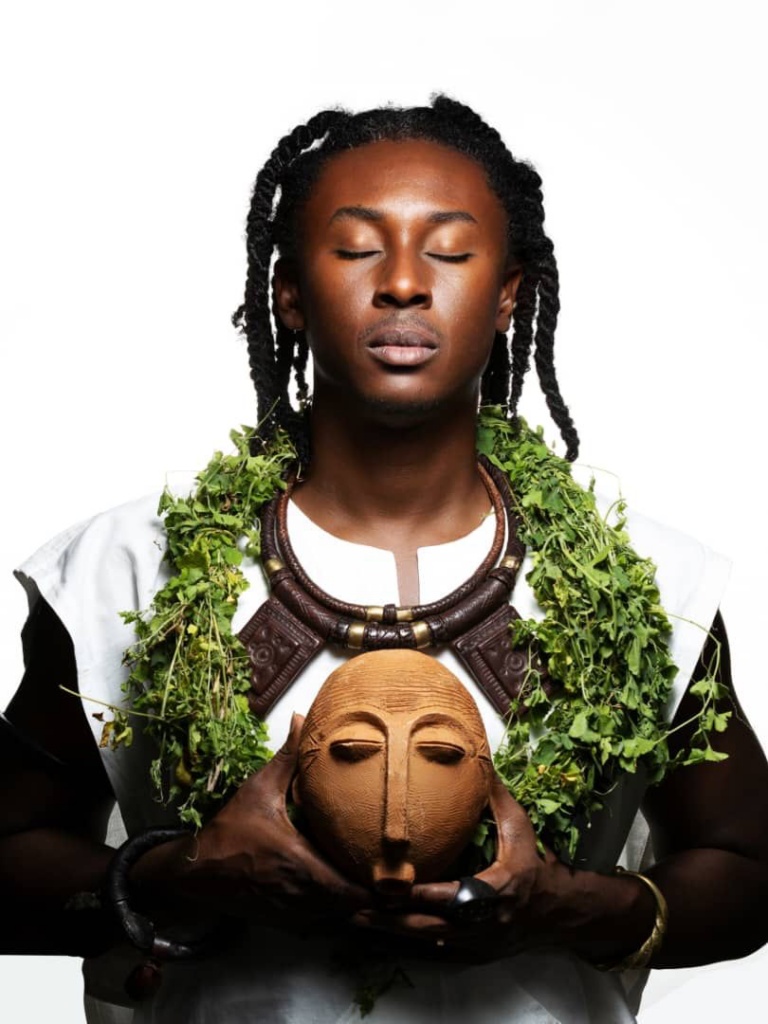
The impact of Akoto-Bamfo’s diasporic vision for reclamation and healing are far-reaching. “My son’s ashes are buried here, I won’t miss this ceremony for the world,” said Judith Carroll, an African American woman who attended the 2024 Ancestor Veneration ceremony in October. Akoto-Bamfo says of his success thus far, “We have been able to over the years un-demonise African drums, African music and even African hair. Our traditional systems and especially healing art still carry a lot of that negative stigma. My team and I and a whole lot of supporters in the African diaspora are willing to shed light on our traditional systems.“
******
Kwame Akoto-Bamfo is a graduate of Kwame Nkrumah University of Science and Technology and a Fellow of Yale Directors Forum at the Institute of Heritage Studies, Yale University. He believes that art and culture can be used to heal the African continent and its people from the legacies of colonialism and enslavement.
Latest Stories
-
Navy foils illegal fuel bunkering operation along Volta coastline
3 minutes -
Gov’t assures minimal power disruption during WAPCo gas pipeline maintenance
28 minutes -
Burna Boy and Sporty Group unveil new single “For Everybody” celebrating Africa’s sports heritage and cultural excellence
36 minutes -
Achieve By Petra partners Richie Mensah to drive financial independence
42 minutes -
Kwakye Ofosu says cost of living eased under Mahama government
2 hours -
Total banking deposits stood at GH¢302.0bn in October 2025, but foreign currency deposits contracted by 21%
2 hours -
Interior Minister calls for collective action to enhance security in Ashanti Region
2 hours -
Baobab: Tree of life dying as climate change ravages Northern Ghana
2 hours -
Extradition of Ofori-Atta and Tamakloe-Attinou could take up to three years – Victoria Bright
3 hours -
Government pledges support for Accra commuters amid transport challenges
3 hours -
GES probes alleged feeding problems at Savelugu Senior High School
3 hours -
Government is reviewing Saglemi Housing deal and private takeover – Kwakye Ofosu
3 hours -
Nana Ama McBrown, Kate Henshaw headline Women of Valour London 2026
3 hours -
David Asante’s contributions at GPCL must be recognised – Vicky Bright
3 hours -
I don’t want my people to be mistreated by ICE — Ambassador Victor Smith tells US Senator
3 hours