

Audio By Carbonatix
People are now moving between districts and regions at similar levels to before the novel coronavirus hit Ghana in early 2020.
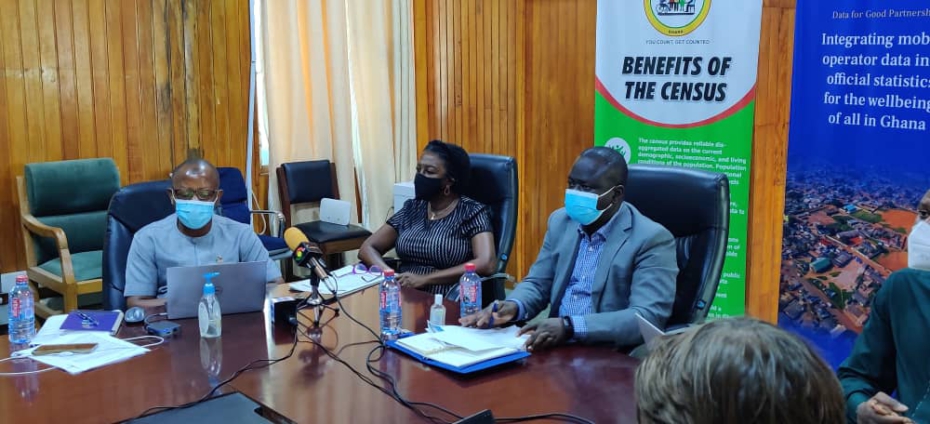
That is according to a new report on travel within the country by Ghana Statistical Service (GSS), Flowminder Foundation and Vodafone Foundation.
The GSS and Flowminder discovered that following a sharp reduction i n travels during the partial lockdown of 2020, people i n at l east half the regions are now moving within and between regions as much as they were before the beginning of the pandemic, after analysing anonymised and aggregated (group-level statistics) telecommunications network data provided by Vodafone Ghana.
Analysts examined how population movements were i mpacted by various mobility-related policies since the start of the pandemic. The report highlights three mobility trends: a decrease during partial lockdown (March 2020); gradual recovery from June to December 2020; and a possible decrease from mid-January 2021 in response to the presidential address about the second wave of Covid-19 in the country.
Government Statistician Professor Samuel Annim said: “The partial l ockdown and mobility restrictions are likely to have slowed the rate of Covid-19 i nfections in the country. A recovery to pre-pandemic mobility levels could be positive for participation in the economy but poses a challenge in containing Covid-19 outbreaks”.
“This analysis reinforces the urgency of a successful vaccination campaign. There is a risk of this increased mobility l eading to i ncreased i nfection rates unless people continue adhering to measures like mask wearing, hand washing and physical distancing and that they have the vaccine when it is their turn.”
By February 2021, half of the country’s regions - or more - had recovered to their pre-COVID in-region travel patterns, and the remaining i s close to have recovered, including the two most populous regions (Greater Accra and Ashanti) that seem to be experiencing a comparatively slower recovery.
“Large scale changes i n mobility are both a cause and an effect of the COVID-19 pandemic. Vodafone’s data, which i s anonymised and processed in a way that maintains the privacy of the subscribers, is helping the government better understand how people’s travel patterns have changed over the past year, which can be used to support upcoming policy decisions and keep control of the epidemic,” said Patricia Obo-Nai, Chief Executive Officer (CEO) of Vodafone Ghana.
While the analysis provides insights on how people have been moving nationally and regionally compared to the start of 2020 and to 2019, l imitations i nherent to the data need to be considered.
“The analysis relies on data from Vodafone Ghana, which provides a good i ndicator of changes in a population’s movements as a significant proportion of the population is included in the dataset, but changes in phone usage behaviour over time also play a role i n the analysis.
"These can make the comparison of current mobility with l ast year’s mobility difficult,” explained Wole Ademola Adewole, Implementation Coordinator at Flowminder.
Click here to access the report from GSS’ website.
Methods used to produce these i ndicators are available on Flowminder’s website dedicated to supporting the COVID-19 pandemic response at covid19.flowminder.org.
This work i s part of the l ong-standing Data For Good partnership between the Ghana Statistical Services, Vodafone Ghana, the Flowminder Foundation, Vodafone Foundation and the William and Flora Hewlett Foundation.
This mobility report follows two previous analyses produced by the partnership in April and May 2020 which estimated how population movements had been affected by mobility restrictions and l ockdown measures.
Latest Stories
-
I have supported highway authority financially to fix roads in my constituency – A Plus
52 minutes -
US, Iran fail to reach peace agreement after marathon talks in Pakistan
1 hour -
ECG kicks off Phase Two of transformer upgrades at Lashibi; brief outages expected
2 hours -
Port crises loom as 11,000 drivers threaten four-day strike
3 hours -
A source of excellence across generations – Vice President Opoku-Agyemang lauds Mfantsipim
4 hours -
(Photos) Mfantsipim School launches historic 150th anniversary
4 hours -
Knights and Ladies of Marshall group backs Catholic Bishops’ stance on anti-LGBTQ+
5 hours -
Bright Simons writes: All the Filla in the Ibrahim Mahama/E&P – Gold Fields Saga
5 hours -
Monetise Idiocy In Ghana
5 hours -
The Ghanaian prophet and the mysterious death of his scottish wife Charmain Speirs
6 hours -
Nearly 400 sentenced in Nigeria for links to militant Islamists
6 hours -
Ghana’s recovery supported by gold strength despite global oil price pressures – Standard Bank Research
7 hours -
Methodist Church hails Mfantsipim@150; calls for “fresh consecration” to excellence
7 hours -
‘Excellence is our inheritance’ – Nana Sam Brew-Butler hails Mfantsipim’s 150-year reign in leadership
7 hours -
Kwaku Azar writes: A-G vs OSP
7 hours