


Audio By Carbonatix
It may not be as prestigious as champagne, but Ivory Coast wants to get a protected status for attieke, the national food. The BBC's Enoh N'Dri asks whether it will work.
What is attieke?
Attieke (pronounced atchekay) is a traditional couscous made from ground cassava roots eaten by many Ivorians of all ages for breakfast, lunch and dinner.
It originated from the coastal areas of Ivory Coast centuries ago.
But it has travelled far beyond the country's borders to become one of the best known foods across French-speaking Africa and the diaspora in Europe and North America.
How do you cook it?
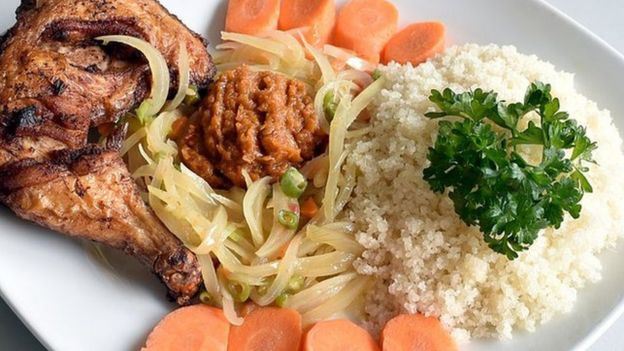
It is cooked in several different ways. The most popular is "attieke poisson grillee" - prepared with fried fish and sliced tomato, onion and green pepper.
There's also "attieke sauce tomate" - a tomato sauce cooked with fresh or dry fish.
A third is "attieke huile rouge". In this case the couscous is mixed with palm oil, which turns its almond colour to orange, accompanied with a hot pepper soup.
It can also be eaten with grilled chicken or smoked fish
How do you prepare it?
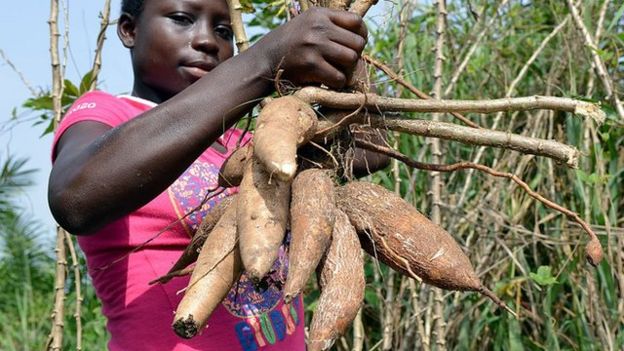
Attieke is traditionally made by women in villages across the country and in the outskirts of Ivorian main cities, especially in southern and central Ivory Coast.
The cassava root is peeled, grated and mixed with a previously fermented cassava.
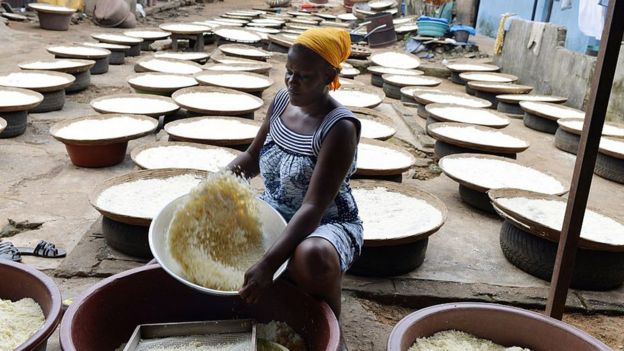
The pulp is then pressed to remove the starch and later processed manually and dried and then steamed.
It is then sold in local markets, in both individual portions and larger bags.
Why does the government want to protect it?
One of the main reasons the Ivorian government gave is that many people outside Ivory Coast - in Africa and even south-east Asia - claim to be making and selling attieke.
They use the Ivorian unique style name and brand to sell their product while "they are using only a part of the process", government spokesman Bruno Kone said.
The announcement follows a severe shortage of attieke in Ivory Coast's markets this year, leading President Alassane Ouattara to blame "cartels" and ask police to investigate and dismantle them.
Trade unions and consumer organisations applauded Mr Ouattara and his decision received unanimous support in a country often divided by politics and with raw memories of two decades of crisis and the 2010-2011 post-election war.
A sign that attieke is one of few things that still unites Ivory Coast's 20 million people from 62 ethnic backgrounds.
What difference will it make?
The Ivorian government is asking the African Regional Intellectual Property Organization to protect attieke.
But Aripo does not have a compliance policing unit so it is not clear how it would be enforced on the continent, let alone elsewhere.
Given that markets in Ivory Coast and elsewhere in West Africa are full of pirated music and DVDs, it is hard to see anyone going round to inspect bags of attieke and confiscate any that are not certified.
Latest Stories
-
Livestream: Newsfile discusses LGBTQ references in SHS manual, detains fugitives and home-bound developments
40 minutes -
South Africa to showcase G20 legacy and investment-ready economy at World Economic Forum 2026
50 minutes -
India to expand scholarship schemes for Ghana and other African countries
54 minutes -
Karaga MP Dr Amin Adam upgrades basic school infrastructure, distributes 400 dual desks
3 hours -
Uganda’s president heads for victory as his main rival cries foul
3 hours -
Lt Col Dela Galley makes history as first female commander of Ghana Military Police
4 hours -
Nollywood special effects artist, James Akaie dies on set following gas explosion
4 hours -
27-year-old sentenced to seven years for pouring acid on former student
4 hours -
Ghana’s US envoy links job creation to ending youth deportations
5 hours -
Blair and Rubio among names on Gaza ‘Board of Peace’
6 hours -
Minister calls for inter-ministerial force to fix Accra’s rush-hour transit crises
6 hours -
Sarkodie’s Rapperholic UK edition sells out Royal Albert Hall
7 hours -
Academic exodus: Ghanaian PhD students in UK forced to withdraw as Scholarship Secretariat fails to pay fees
7 hours -
Antoine Semenyo’s £65m Manchester City switch sparks discussions in UK Parliament
8 hours -
Transport crises, Prof. Frimpong-Boateng v NPP and LGBTQI issues take centre stage on Joy Prime’s ‘Prime Insight’
8 hours