

Audio By Carbonatix
A law auditing expert says the Auditor General (AG) lacks the political will to surcharge principal spending officers for supervising financial irregularities within the various State Owned Enterprises (SOEs).
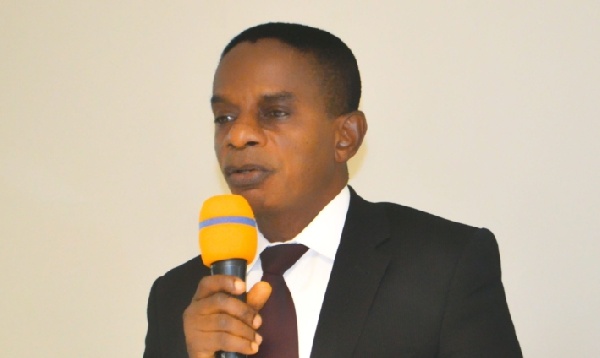
Professor Samuel Antwi said although the law gives the AG the power to surcharge, he could be afraid of losing his job since his appointment is political.
He said the AG might be removed should his activities mount pressure on the government in power.
"I think it's lack of political will on the part of the Auditor General. The law has given you power, what again are you looking for?" he quizzed.
"Let's understand the recent history of the office of the Auditor General. They [A-Gs] interface a lot with politicians and powers that be.
"When the Auditor General tries to act according to some aspects of the law, reference to recent times - of course, the Auditor General is appointed by the president so if they see that you're getting too hard on them, you can lose your job.
"You have security of tenure but they [politicians] can make your life a little bit difficult as an auditor general," he explained.
"Surcharge the principal spending officer who refused to do his work," he emphasized.
Nonetheless, the AG needs to call "the bluff of the politicians" and operate according to the law, Prof Antwi added.
According to him, it is the only way the country can properly manage and account for its finances.
The expert iterated that the country needs to be serious with its financial management.
He decried government's recent pursuit of an IMF programme, saying that the financial irregularities revealed in the AG's report could have been worth more than the $3b bailout request from the IMF.
This, he said, could have helped build many hospitals and solve other pertinent issues.
The AG's report disclosed a disturbing amount of over ¢15 billion loss due to irregularities.
According to the report, outstanding debts and loans recoverable from the total loss amount to 99.37%.
There are also cases of payroll irregularities hovering around ¢11m. Amongst these, there are procurement and contract irregularities.
The country has been experiencing financial losses over the years. Significant are those from 2018 to 2022.
In 2018, it was ¢3 billion, then moved to ¢5 billion in 2019. In 2020, it shot up to ¢12 billion, increased to ¢17 billion in 2021 then finally dropping a little to ¢15 billion in the year under review, 2022.
Latest Stories
-
At least 30 feared dead in crush at Haitian tourist site
4 hours -
Four arrested over murder of Scottish businessman in Kenya
4 hours -
New Mainoo deal closer, says Man Utd boss Carrick
4 hours -
Sinner beats Alcaraz to return to world top spot
5 hours -
An inappropriate joke nearly ended his career. Now he’s back with more humour
5 hours -
GPL 2025/26: Dreams FC stage stunning comeback to hammer Eleven Wonders
6 hours -
Livestream: The Probe examines Kumasi’s looming water crisis
6 hours -
MTN Ghana gears up to lead Africa’s AI revolution
6 hours -
Philanthropist Alhaji FuZak donates Da’wah bus to Ambariya Sunni community
6 hours -
GUTA calls for suspension of Publican AI system over trade disruptions
6 hours -
TTAG raises alarm over proposed recruitment of 7,000 teachers, demands national posting roadmap
7 hours -
Civilians feared killed after reports of air strike on Nigerian market
7 hours -
Bishop Simon Kofi Appiah installed as new Jasikan Diocese Bishop
7 hours -
Trump’s Strait of Hormuz blockade threat raises risks and leaves predicaments unchanged
7 hours -
US Court backs extradition of former MASLOC CEO Sedina Tamakloe-Attionu to Ghana
7 hours