

Audio By Carbonatix
The Ghana Audit Service has clarified that not all irregularities highlighted in the Auditor-General’s reports amount to embezzlement, corruption, or misuse of public funds.
Many of the flagged issues are administrative lapses, including incomplete documentation, delayed financial reporting, and failure to follow laid-down procedures, rather than deliberate attempts to misappropriate state resources.
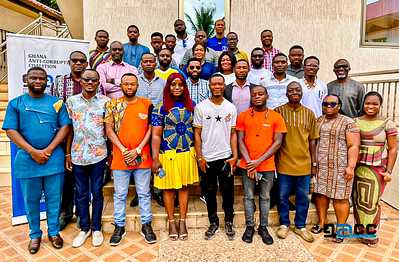
This clarification was made during a two-day media training organised by the Ghana Anti-Corruption Coalition (GACC) in partnership with the Ghana Audit Service and supported by the Hewlett Foundation.
The programme, held for journalists from selected media houses across the Ahafo, Bono, Bono East, Ashanti, and Eastern Regions, aimed to strengthen the capacity of the media to report accurately and responsibly on findings contained in the Auditor-General’s reports.
Assistant Director of Audit and Information Officer Frederick Lokko, speaking at the training, urged journalists to seek clarification from the Service before publishing stories based on audit findings.
He emphasised the need for the media to understand that not every irregularity flagged in the Auditor-General’s report meant public funds had been stolen.
He cautioned journalists against sensationalising audit figures and presenting all reported irregularities as evidence of corruption, stressing that such reporting could mislead the public and erode trust in governance processes.
Mr Lokko also encouraged journalists to make use of the Right to Information (RTI) Act to seek clarification on audit findings when needed.
He reminded participants that the Audit Service’s website was regularly updated with accurate and accessible information to support fact-based reporting.
Assistant Auditor-General responsible for the Audit Unit, Patrick Neequaye, also underscored the need for balanced and precise reporting.
He advised journalists to always verify figures from the Audit Service’s official publications before publishing and to craft headlines carefully to avoid giving the impression that government funds have been squandered when that might not be the case.
He said the Auditor-General’s reports were meant to promote accountability and improve financial management, adding that “misrepresenting the findings undermines that purpose and could misinform the public.”
Adding a practical perspective, investigative journalist Stephen Nartey , urged participants to analyse audit reports holistically.
He advised them to focus on data, context, and systemic issues, rather than drawing conclusions based on isolated figures.
Mr. Nartey encouraged journalists to report findings objectively, including cases where no irregularities are discovered, to give audiences a balanced understanding of audit outcomes.
Latest Stories
-
The Paradox of Plenty — When every smartphone becomes a newsroom
25 minutes -
GTA sensitises taxi drivers in ‘Know Ghana’ tourism campaign
2 hours -
Archbishop Agyinasare calls for responsible speech amid growing social media abuse
2 hours -
‘It will be inexcusable for gov’t not to honour payment of teachers’ arrears by 30th October’ – Haruna Iddrisu
2 hours -
Forbes’ World’s Best Employers 2026: No Ghanaian firm ranked among 900 companies
2 hours -
Electronic processing of teachers’ data: ‘The decision is the Controller’s’ – GES boss
2 hours -
Teachers’ Strike: Haruna Iddrisu questions paper-based processing of promoted teachers’ data
2 hours -
Savannah Region: Kunfusi bridge collapses again, leaving nearly 4,000 residents cut off
2 hours -
Teachers’ strike: GES targets Monday deadline to submit promotion data to Controller
2 hours -
Inflation to average 11.3% in 2027 – Fitch Solutions
3 hours -
‘I didn’t campaign for NDC to come and do this nonsense’ – Kpebu on EOCO’s conduct
3 hours -
Fitch Solutions maintains policy rate forecast of 14% by December 2026
3 hours -
Diaspora Nasara Caucus congratulates Mohammed Ali Suraj, new NPP executives
5 hours -
Dr Antwi-Boasiako’s cybersecurity book showcased at UN crime prevention congress
5 hours -
We will empower the grassroots and protect every vote – NPP’s 1st Vice Chair Kojo Bamba
5 hours