

Audio By Carbonatix
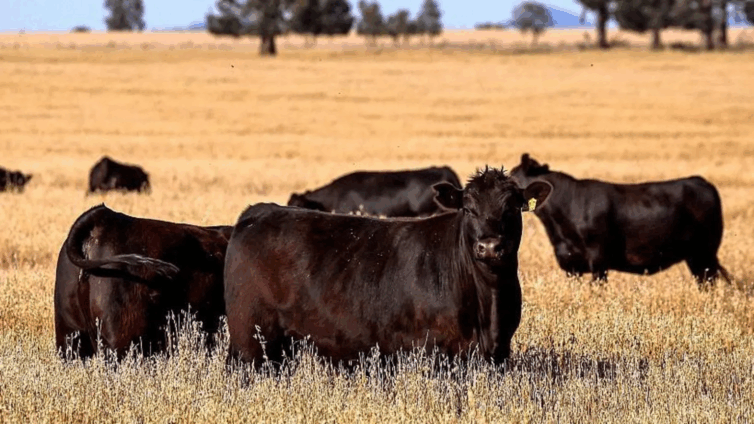
Australia will lift restrictions on the import of beef from the US, a trade barrier which had angered the Trump administration.
American beef has effectively been banned from the country, which has some of the strictest biosecurity laws in the world, since 2003 after an outbreak of bovine spongiform encephalopathy, commonly known as mad cow disease.
The White House cited the restrictions when explaining tariffs imposed on Australia in April, as part of US President Donald Trump's so-called Liberation Day scheme.
The Australian government has denied the timing of the decision was related to the trade tiff, saying a decade-long department review found the US had improved beef safety measures.
Canberra technically lifted the ban on US beef in 2019, but cattle from Mexico and Canada remained on the blacklist, and the integration of their supply chains meant this essentially barred beef from the States too.
However, the US has recently introduced better cattle tracing protocols, allowing authorities to track where they were raised and respond more effectively in the event of a disease outbreak.
Australia's Agriculture Minister Julie Collins said the department had undertaken a "rigorous science and risk-based assessment" and was now "satisfied" that the US is managing any biosecurity threats.
"This decision has been purely based on science," she said in a statement.
"The Albanese Labour government will never compromise on biosecurity."
But the opposition has suggested the government may have done just that.
"It looks as though [the ban has] been traded away to appease Donald Trump, and that's what we don't want," Nationals leader David Littleproud told the Australian Broadcasting Corporation (ABC).
"I want to see the science."
Cattle Australia chief executive Will Evans, however, told the ABC he was "comfortable" with the decision and that the industry had to "put faith" in the department.
He added that US was an important trading partner with whom Australia needed to maintain a good relationship.
The US is Australia's biggest beef export market, worth A$14bn (£6.8bn, $9.2bn) last year.
Trump singled out the industry when imposing what he called "reciprocal" tariffs of at least 10% on all Australian exports.
However, a report by Meat and Livestock Australia released in June found the beef tariff had not hurt trade, which had risen by about a third so far this year.
Latest Stories
-
Trade Minister applauds GUTA as a pillar of economic growth; Prez Mahama honoured
49 minutes -
President’s brother’s takeover of Damang Mines is ‘untidy’ – Alhassan Tampuli
55 minutes -
It’s not true that gov’t decided not to renew the lease for Gold Fields – Bobby Banson
59 minutes -
Ghana to boost tomato production with 60-hectare irrigated farms and processing initiatives
1 hour -
E&P’s takeover process of Damang Mines was very clean – Inusah Fuseini
1 hour -
Damang takeover: There is not going to be any job loss; it is a lease change – Bobby Banson
2 hours -
Gold Fields didn’t stop mining at Damang mines; such claims are untrue – Bobby Banson
2 hours -
Engineers and Planners currently operate only in Ghana – Bright Simons
2 hours -
Lands Minister has no legal basis to restrict lease to Ghanaian firms – Bright Simons
2 hours -
Gov’t’s refusal to renew Gold Fields’ lease was simply untenable – Bright Simons
2 hours -
SOS Children’s Villages Ghana deepens partnership with Gender Ministry
3 hours -
Gender Ministry celebrates Christina Koch, reaffirms commitment to empowering girls
3 hours -
Live stream: Newsfile digs into E&P’s takeover of Damang Mines, OSP powers and Anti-LGBTQ Bill
3 hours -
Moody’s maintains Ghana’s rating at Caa1, revises outlook to positive
4 hours -
Zambia elevates tourism education to national priority as President Hichilema backs continental summit
4 hours