

Audio By Carbonatix
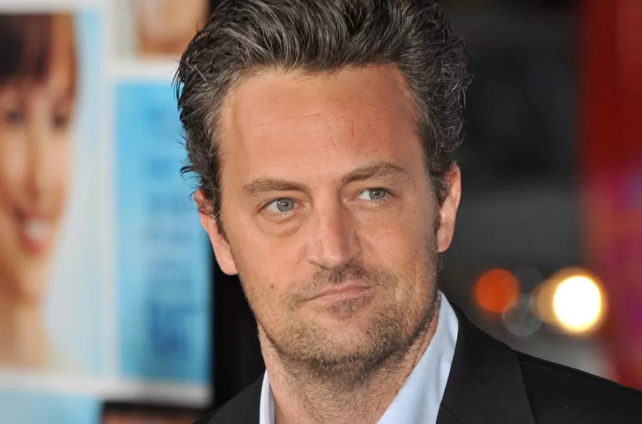
“Friends” star Matthew Perry died as a result of “acute effects of ketamine” and subsequent drowning, an autopsy report shows.
The report, released Friday by the Los Angeles Medical Examiner’s Office, shows Perry’s blood tested positive for ketamine, which is known to treat depression and anxiety.
“At the high levels of ketamine found in his postmortem blood specimens, the main lethal effects would be from both cardiovascular overstimulation and respiratory depression,” the report states. The death was ruled an accident, according to the report.
Perry was found floating face down in the pool of his Pacific Palisades home on October 28. Authorities said at the time that no foul play was involved.
The actor, 54, was found “unconscious in a stand-alone jacuzzi,” a spokesperson for the LA Fire Department told CNN in a statement at the time.
Perry was “reported to be receiving ketamine infusion therapy for depression and anxiety,” the autopsy report states.
The report further explains that ketamine has medical and surgical uses as an anesthetic and is also known as a recreational drug “mainly due to its ‘dissociative’ nature, indicating disconnection of mind and body. It can also have short duration hallucinatory and psychedelic effects.”
Perry’s last known treatment was a week and a half prior to his death, the autopsy states, well beyond the time it would still be in his system from the treatment.
A live-in assistant found Perry’s unresponsive body in the pool after returning home from running errands, the investigative summary of his autopsy report shows.
“The assistant jumped into the pool, moved the decedent into a sitting position on the steps, and called 911,” says the report.
Drowning is considered a contributing factor to Perry’s death “due to the likelihood of submersion into the pool as he lapsed into unconsciousness,” the autopsy states.
“The assistant did not report any recent illnesses, complaints, drinking, or drug abuse,” the report states.
What medical experts are saying
Ketamine is a powerful medication used in hospitals primarily as an anesthetic, although studies have also found that it has significant promise in treating severe depression, anxiety and suicidal ideation. It can be used illegally as a club drug that creates an intense high and dissociative effects.
In 2019, the US Food and Drug Administration approved a close relative called esketamine, which is used as a nasal spray, for treatment-resistant depression.
Experts say that although the levels of ketamine in Perry’s system were very high, it’s unclear whether they would have been deadly on their own.
Dr. Ed Boyer, a professor of emergency medicine at the Ohio State University Wexner Medical Center, said that “the elevated concentrations of ketamine suggest high levels of use.”
“Considering his last ketamine therapy was at least a week before, misuse – even recreational use – cannot be ruled out,” he added
Dr. Victor Weedn, a professor in the George Washington University Department of Forensic Sciences, said that people can react differently to different levels of ketamine and that it could become fatal because of its effects on breathing.
Perry was ‘happy’ and ‘heathy’ before his death
Perry was open about his past experience with addiction. While promoting his book “Friends, Lovers, and the Big Terrible Thing: A Memoir,” which was released in November 2022 and addressed his addiction at length, Perry said on the “Q With Tom Power” podcast, “The best thing about me, bar none, is that if somebody comes to me and says, ‘I can’t stop drinking, can you help me?’ I can say ‘yes’ and follow up and do it.”
The autopsy report this week notes that Perry had reportedly not used drugs for 19 months before his death. It also states that though he was a “heavy tobacco user for many years,” he was not a smoker when he died.
His “Friends” costar Jennifer Aniston said this month that she had been in contact with Perry on the day of his death, and that he “was happy.”
“I was literally texting with him that morning, funny Matty,” she said in an interview with Variety. “He was not in pain. He wasn’t struggling.”
“He was happy. He was healthy,” she added. “He had quit smoking. He was getting in shape.”
Latest Stories
-
The Traffitech-GH SMS spot-fine system: The good, the sad, and the funny – Bright Simons writes
8 minutes -
Hawa Koomson pledges experienced and mature leadership of NPP women’s wing
1 hour -
Young woman found dead at Kasoa Peace Town
2 hours -
Playback: The Law examined lawful arrest in Ghana
2 hours -
Mahama urges African governments to treat healthcare as an investment, not budget cost
3 hours -
Bawumia congratulates John Boadu and new NPP executives, pledges support ahead of 2028
3 hours -
‘No talent should be left out’ – Bawumia pledges inclusive NPP campaign for 2028
3 hours -
Prof. Mike Oquaye recounts how he blocked the Special Prosecutor’s attempt to arrest Bawku Central MP
3 hours -
Make health sovereignty a priority for Africa – Mahama
3 hours -
Dorimon Naa, Wa West DCE lead massive clean-up exercise; threaten sanctions against recalcitrant residents
4 hours -
Photos from Adom FM Y2K Jam
4 hours -
Praye Tiatia steals the show at Adom FM Y2K Jam [Watch]
4 hours -
Boakye Agyarko congratulates John Boadu, pledges support for NPP leadership
4 hours -
Antwi HiMight thrills fans with Antwi ne Antwi hits at Adom FM’s Y2K Jam [Video]
4 hours -
Amb. Edward Boateng congratulates Boadu, Kodua on election wins
5 hours