

Audio By Carbonatix
Following the recent resurgence of the longstanding Bawku conflict, the Global Security for Africa, Research and Good Governance (GLOSARGG) has outlined an eight-point roadmap aimed at achieving lasting peace in the Bawku enclave.
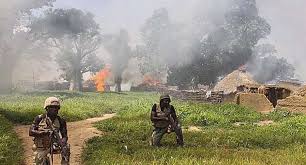
In recent days, tensions in the conflict-prone area have claimed the lives of at least six individuals. The killings were allegedly linked to an operation conducted by military operatives in the region.
Over the years, hundreds of lives have been lost to the conflict, with numerous businesses and properties also destroyed. Currently, the Asantehene, Otumfuo Osei Tutu II, is spearheading mediation efforts to bring the hostilities to an end.
In addition to these interventions, a security analyst and Executive Secretary of GLOSARGG, Mr Francis Ahovi, said, "To address the Bawku conflict, strategies should be looked at from a local communal or chieftaincy-based conflict point of view."
He has proposed the following eight-point plan.
- Establish a Multi-Stakeholder Conflict Resolution Taskforce
- Composition: Representatives from the National Peace Council, Regional Security Council (REGSEC), traditional leaders (from both factions), civil society, youth leaders, and local religious bodies.
- Mandate: Mediate grievances, build consensus on disputed claims (e.g., land or chieftaincy), and provide clear timelines for peacebuilding.
- Deploy a Specialised Community-Based Intelligence Team
- Rationale: Prevent retaliatory attacks by gathering early warning signals.
- Approach: Engage local volunteers trained in conflict monitoring, reporting to district security and peace committees.
- Tools: Utilise WhatsApp-based tip-off systems and community radios for local reporting.
- Enforce a Localised Curfew and Controlled Movement Policy (Temporarily)
- Scope: Impose curfews in the most volatile zones of Bawku while maintaining open corridors for essential services.
- Objective: Disrupt night-time mobilisation of armed youth and external actors fuelling tension.
- Exit Plan: Gradual lifting of curfew based on improvement in peace indicators.
- Intensify Disarmament and Demobilisation of Armed Youth
- Strategy: Offer community amnesty and reintegration programmes in exchange for voluntarily surrendered weapons.
- Partners: Collaborate with the Ghana Police Service’s CID and conflict mediation NGOs to map armed groups.
- Outcome: Reduce circulation of illegal weapons and diminish the violent capacity of actors.
- Deploy Civic and Peace Education Campaigns
- Target Audience: Youth groups, women, and local vigilantes.
- Medium: Community theatre, radio jingles, peace walks, mosque/church announcements.
- Message: Promote social cohesion, debunk hate speech, and highlight the economic cost of violence.
- Activate a Conflict Early-Warning and Early-Response Mechanism (CEWER)
- Lead: National Peace Council and National Commission for Civic Education (NCCE), in partnership with local peace actors.
- Function: Facilitate real-time alerts, rapid community dialogue sessions, and intelligence sharing with REGSEC.
- Institutionalise Dialogue-Based Leadership Succession (For Chieftaincy or Land-Related Conflict)
- Framework: Support traditional council reforms to clarify succession processes.
- Legal Backup: Engage the House of Chiefs and Ministry of Chieftaincy to validate and register mutually agreed leadership claims.
- Monitoring and Evaluation (M&E) of Peace Agreements
- Mechanism: Conduct quarterly reviews involving local actors and peace observers.
- Purpose: Track adherence to agreements, identify emerging threats, and adjust strategies as needed.
Latest Stories
-
Government reaffirms commitment to combat Human Trafficking at first 2026 HTMB meeting
13 minutes -
TaxForGalamsey: Awula Serwah slams ‘ignorance’ defence in levy scandal, demands sanctions for MMDCEs
35 minutes -
Collecting levies from galamseyers is wrong; sanctions must be enforced – Kenneth Ashigbey
44 minutes -
BeTechConnected launches Future of Work Africa Podcast to amplify African voices on jobs, innovation
54 minutes -
Rejecting pesewa coins is illegal, fuels inflation – BoG warns traders
1 hour -
New Juabeng MP seeks details on GRA’s customs AI system
1 hour -
TaxForGalamsey: Levies were institutional, not personal – Kwakye Ofosu explains lack of sanctions
2 hours -
Feeding Hungry Pupils: 38-year-old female teacher initiates food bank to promote teaching and learning at Abankoro
2 hours -
Education Minister announces 2027 start date for Jomoro College project in Western Region
2 hours -
‘Sit us down and explain ‘it’—Customs agents raise alarm over new GRA AI system
2 hours -
Gov’t commits GH¢25m seed fund to Ghana Defence University project
2 hours -
Fighters condemns PAC Chair Abena Osei-Asare over Agbana comments; renew call for inclusive politics
2 hours -
72 Days to Mundial: Ghana’s risky gamble after sacking Otto Addo
2 hours -
Health Ministry boosts cardiovascular care with new guidelines, GH¢6m equipment support
2 hours -
OmniBSIC Bank delivers 104% profit growth, assets and deposits double in 2025
3 hours