

Audio By Carbonatix
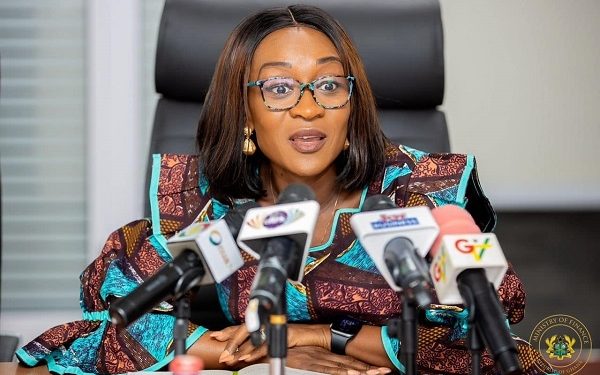
The Economic Fighters League (Fighters) has strongly criticised comments by Public Accounts Committee (PAC) Chair Abena Osei-Asare, describing her reference to fellow legislator Edem Agbana as a “young man” as dismissive and reflective of a broader culture of exclusion within Ghana’s Parliament.
In a press statement issued on March 31, the group said the remark, captured in a widely circulated video, carried “clear condescension” and undermined the spirit of inclusivity expected in the country’s highest legislative chamber.
According to the pressure group, such language reinforces perceptions that certain individuals, particularly younger politicians, do not belong in Parliament.
“It is obvious that Madam Osei-Asare may not be accustomed to seeing many young people in Parliament, but that is no reason to make them feel they do not belong. Everybody belongs,” the statement said.
The group further pointed to what it described as an irony in the situation, noting that the same exclusionary attitudes are often directed at women in politics, including Mrs Osei-Asare herself.
“It is particularly ironic that this posture reflects the same exclusionary and hierarchical attitudes that women in politics… continue to confront in their own struggle for equal recognition and participation in decision-making,” the statement added.
The Fighters used the incident to highlight what they termed deeper structural challenges within Ghana’s political system, arguing that the current electoral framework limits diversity and marginalises alternative voices.
They reiterated their long-standing advocacy for electoral reforms, particularly the adoption of a proportional representation system, which they believe would create a more inclusive and representative Parliament.
“This incident also highlights a deeper structural problem within our political system… This is precisely why we have consistently advocated for Proportional Representation,” the group stated.
The statement concluded with a call for a shift in political culture, urging leaders to prioritise respect, equality, and the fair consideration of ideas, regardless of age, gender, or status.
The controversy has sparked broader conversations about generational inclusion and decorum in Ghana’s parliamentary discourse, as calls grow for a more respectful and representative political environment.
Latest Stories
-
President Mahama ends Resetting Ghana tour of Ahafo Region
19 minutes -
African negotiators seek delivery of climate commitments at COP31
20 minutes -
BoG develops AI rules for financial sector
23 minutes -
‘Big Push’: Government assures contractors of prompt payments
27 minutes -
Court fines miner for breaking into gold buying shop
37 minutes -
Tarkwa court jails labourer for three years over GH¢123,000 theft
2 hours -
GAEC must retain nuclear scientists for Ghana’s nuclear ambitions – Minister
2 hours -
Man reportedly mistaken for game and shot by hunter dead in forest
2 hours -
19-year-old mason jailed 15 years for defiling seven-year-old pupil
2 hours -
Ghana’s banking sector assets rise 20.47% to GH¢500.2bn – BoG Governor
2 hours -
22 injured as Sprinter bus overturns at Sege after tyre burst
2 hours -
UN housing expert urges Ghana to strengthen Rent Control Department amid housing affordability concerns
2 hours -
Delta-BCI partnership reaches 166,000 people with breast cancer education
3 hours -
Power restoration fault suspected in Kumasi Central Market fire
8 hours -
The 7-foot giant of Ngleshie Amanfro: Seven-foot Ghanaian Ephraim Saawa dreams of joining the national basketball team
8 hours