


Audio By Carbonatix
Breast Care International (BCI) has applauded the development of new technology for treating cancer in Sub-Saharan Africa.
When the new technology 'Tiny Drones to Deliver Cancer' is used, it will eliminate cancer treatment side effects such as hair loss and others.
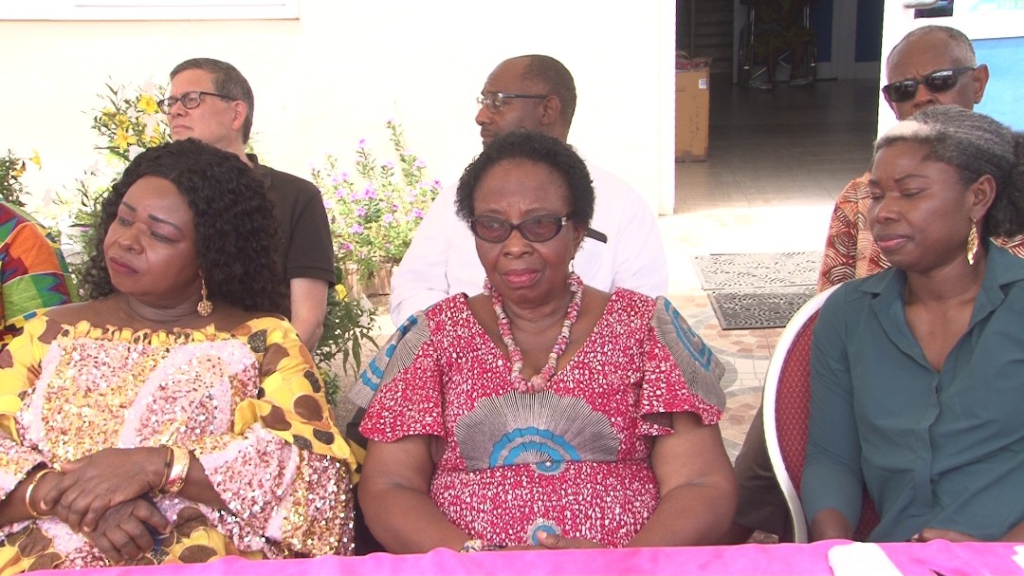
The technology will support Breast Care International and Peace Love Hospital's efforts in Ghana to combat cancer, particularly breast cancer.
Dr Beatrice Wiafe Addai, President of Breast Care International, is enthusiastic about the technology and believes it will improve patients' lives.

Prof Wilfred Ngwa, a Cameroonian lecturer at John Hopkins University in the United States, devised the new technology.
'Tiny Drones to Deliver Cancer' is a cutting-edge new technology that kills cancer cells that have spread throughout the body. The method combines tiny nanoparticles and medication in a grain-sized drone.
Patients are commonly implanted with rice-sized materials to guide radiotherapy treatment of cancers.
Once in situ, the smart technology will competently release microscopic particles or medicine to improve local tumour cell death during radiotherapy and act as a beacon to call in the patient's white blood cells at no further burden to patients.
The white blood cells are then trained to kill cancer cells and patrol the entire body, allowing them to combat cancer that has spread more effectively.
Dr Mrs Beatrice Wiafe Addai, President of Breast Care International, is enthusiastic about the technology and believes it will improve patients' lives.
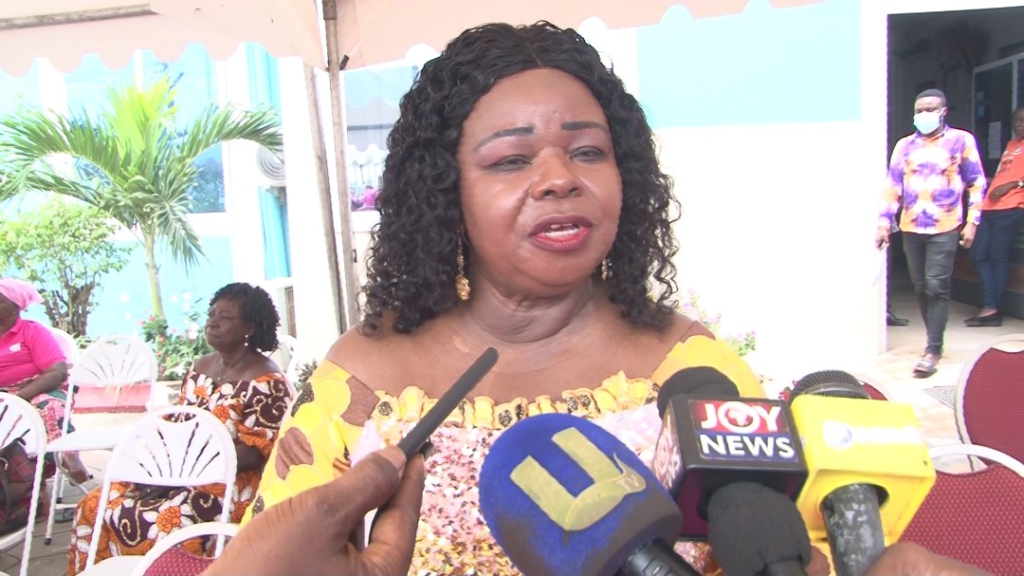
She was speaking during a meeting with the Peace and Love Breast Cancer Survivors (PALSA) in Kumasi.
The Lancet Oncology Commission report supports the management, research, reporting, prevention, treatment and palliative care of cancer in Sub-Sahara Africa.
Professor Ngwa, who also lectures at Harvard University, hinted that clinical trials are starting at Harvard and John Universities in 2022 and follow up in Ghana in 2023.

Prof Ngwa said most of the cancers reported in Africa are late; cancer has spread to the parts of the body, and the only option is to do surgery.
“With the new technology, ‘Tiny Drones to Deliver Cancer’, no matter where cancer has spread, will train the immune system and fight it, without any side effects like the chemo and radiotherapies with loss of hair, among others,” he assured.
Latest Stories
-
President Mahama is not sincere with Ghanaians on LGBTQ bill matter – Hassan Tampuli
17 minutes -
Gov’t to establish Prison Industrial Hub to equip inmates with income-generating skills – Prison Service boss
36 minutes -
Alhassan Tampuli donates cement, roofing sheets to support storm victims in Gushegu
36 minutes -
Alhassan Tampuli appeals for urgent support for storm victims in Gushegu
39 minutes -
The hypocrisy must stop; pass Anti-LGBTQ+ Bill now – Alhassan Tampuli to Mahama
43 minutes -
Imprisonment should be rehabilitative, not punitive – Ghana Prisons boss at UNGA
1 hour -
Ga Adangbe traditional priests petition Mahama over McDan aviation licence revocation
1 hour -
Anti-LGBTQ Bill: NDC’s arrogance is worrying – Hassan Tampuli
1 hour -
Let’s give OSP time to mature, not to scrap it – Hassan Tampuli
2 hours -
Nigeria convicts 386 Islamist militants in mass trials
2 hours -
Djibouti president wins election with 97.8% of vote, state media says
2 hours -
We don’t have mandate to deduct tax from rent allowance of security services personnel – Interior Ministry clarifies
2 hours -
Ablakwa receives Presidential Special Envoy on Reparations to advance global agenda
2 hours -
Christina Koch becomes first woman to travel around the moon on Artemis II
2 hours -
Epstein survivors’ calls to meet King Charles and Queen harder to ignore as US visit approaches
2 hours