

Audio By Carbonatix
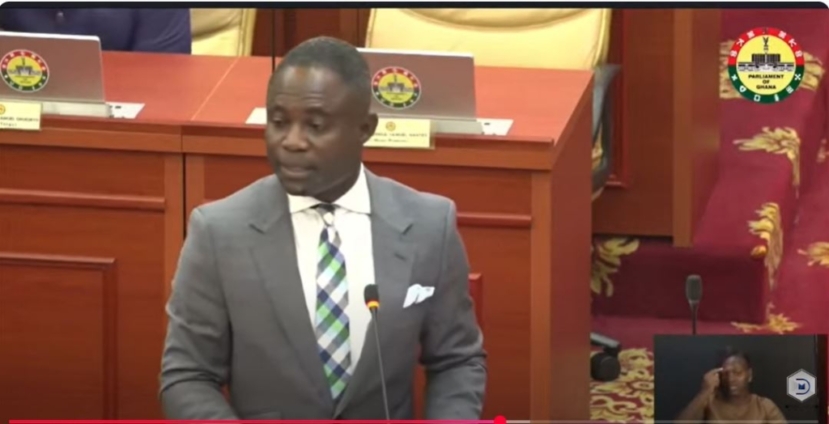
The recent surge in COVID-19 cases at the University of Ghana has prompted the Minister of Health, Kwabena Mintah Akandoh, to call on Ghanaians to remain vigilant and adhere to safety protocols while reassuring the public that there is "no need for panic".
The minister, addressing Parliament today, July 1, emphasised that the current outbreak is localised, caused by a known and generally mild variant, but he stressed the importance of continued caution due to its fast-spreading nature.
"This is not a new virus, and we are not back to 2020," Mr Akandoh affirmed, referring to the early days of the pandemic.
He explained that the cases are linked to the Omicron sub-variant, which Ghana's health system has successfully managed before.
"It spreads fast, yes – but it is mostly mild. And we know how to manage it."
While the University of Ghana's recent hall week celebrations were identified as the primary driver of the spike, bringing large crowds together with little adherence to face masks or social distancing, the minister's core message to the wider public was one of proactive prevention.
He outlined simple, yet critical, precautions that apply not only to COVID-19 but also to other circulating respiratory viruses like seasonal flu:
- Regular Handwashing: Wash hands frequently with soap and water.
- Mask Usage: Wear a mask in crowded or poorly ventilated places.
- Stay Home When Unwell: Isolate yourself if you are feeling sick.
- Avoid Gatherings if Sick: Refrain from attending social events if you are experiencing symptoms.
- Seek Early Medical Attention: Go to the nearest clinic as soon as symptoms are noticed.
The minister highlighted Ghana's robust influenza surveillance system and the confirmation capabilities of the Noguchi Memorial Institute for Medical Research, which detected the current outbreak early.
This, he noted, should reassure all Ghanaians that the surveillance system remains active and ready to detect and respond effectively should cases emerge outside the university campus.
As of July 1, the University of Ghana community has recorded 316 suspected cases, with 107 confirmed, and importantly, no hospitalisations or deaths.
All confirmed cases are reported to be recovering well.
Mr Akandoh concluded by urging calm, cooperation, and responsible public health practices.
"We’ve beaten back bigger waves before, and we can do it again—with calm, cooperation, and good public health practices," he stated, reinforcing the collective responsibility of Ghanaians in keeping communities safe. "COVID-19 is not over—but neither is our resolve."
Below is the full statement.
Latest Stories
-
Anti-LGBTQ Bill: NDC’s arrogance is worrying – Hassan Tampuli
7 minutes -
Let’s give OSP time to mature, not to scrap it – Hassan Tampuli
11 minutes -
Nigeria convicts 386 Islamist militants in mass trials
16 minutes -
Djibouti president wins election with 97.8% of vote, state media says
20 minutes -
We don’t have mandate to deduct tax from rent allowance of security services personnel – Interior Ministry clarifies
35 minutes -
Ablakwa receives Presidential Special Envoy on Reparations to advance global agenda
52 minutes -
Christina Koch becomes first woman to travel around the moon on Artemis II
1 hour -
Epstein survivors’ calls to meet King Charles and Queen harder to ignore as US visit approaches
1 hour -
UN Secretary-General names Ghana’s Anita Kiki Gbeho as South Sudan envoy
1 hour -
Mali withdraws recognition of Sahrawi Republic, backs Morocco’s autonomy plan
1 hour -
Gov’t distributes over 8,500 laptops to One Million Coders project
1 hour -
Julius Debrah, ‘man to beat’ as NDC’s James Agbey dismisses Musah Dankwah’s polls
1 hour -
GPRTU in Savannah Region to protest alleged eviction in Damongo
2 hours -
Re: Reinsurance does not replace process — A response to the SIGA–SIC defence
2 hours -
Gender Ministry supports Harriet Amuzu in ongoing abuse case
2 hours