

Audio By Carbonatix
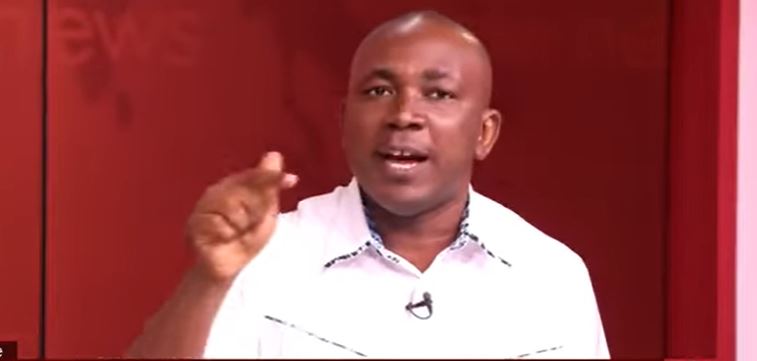
Professor of Finance at the University of Ghana Business School (UGBS), Prof. Godfred Bokpin, has backed the World Bank’s position that Ghana’s 2022 economic collapse was largely the result of homegrown vulnerabilities rather than global shocks such as COVID-19 or the Russia-Ukraine war.
Speaking on JoyFMs’ Top Story Friday, Prof. Bokpin described Ghana’s economic downturn as an “accident waiting to happen,” stressing that structural flaws and fiscal mismanagement had set the stage long before the pandemic.
“The World Bank is right. I think my considered view, we have moved on. This is a settled matter, because we had affirmed this position time and again since, actually the third quarter of 2021 when we saw the vulnerability. Of course, the position has been that our economy was heading dangerously.
"COVID only fast-tracked it. It was an accident waiting to happen. So COVID did not initiate our vulnerability; COVID-19 exacerbated it. COVID-19 magnified the existing vulnerability, and then Russia-Ukraine was more or less like the icing on the cake,” he explained.
Prof. Bokpin said the real crisis began when Ghana lost access to the international capital markets in 2021, after investors detected cracks in the economy.
“Nobody, per the data, could convince us that Ghana's debt-induced macroeconomic instability essentially started from the third quarter of 2021. The investors had seen the cracks,” he noted.
He recalled that even in 2019, the government’s own debt sustainability analysis had confirmed that nearly all indicators were breached.
However, he accused the state of treating significant debts as “below budget line” or “off-balance sheet,” including loans taken by state enterprises such as Cocobod, to give the false impression of stability.
“Remember, the biggest issue at that time was about debt accountability and transparency. We were creating the impression that our debt was sustainable, but that wasn’t the case,” he said.
The professor pointed to the Bank of Ghana’s role in financing the government expenditure after market access was lost, revealing that the central bank printed over GH¢40 billion.
“The exposure of the government to the Bank of Ghana in terms of overdraft and related arrangements came to about GH¢77.6 billion, which had to be restructured,” he added.
He explained that by the time the International Monetary Fund (IMF) stepped in, Ghana’s debt-to-GDP ratio in present value terms had climbed to 109 per cent, far beyond sustainable thresholds. At the same time, liquidity indicators such as the debt service-to-revenue ratio, which should have remained below 18 per cent, were already between 22 and 25 per cent.
According to him, even before COVID-19 struck, Ghana’s fiscal vulnerabilities were apparent but concealed by borrowing from international markets.
“Once we lost market access, we became exposed, not only internationally but domestically. We were priced out in terms of medium- to long-term bonds and had to rely solely on Treasury bills,” he explained.
Prof. Bokpin added that Ghana’s collapse was the inevitable result of weak debt management, poor accountability, and fiscal indiscipline.
“It is not necessarily COVID that exposed us. We had created this, and it was just a matter of time,” he stressed.
Latest Stories
-
KiDi brings the hits to London in sold-out UK headline concert
7 minutes -
The last goodbye of Ghanaian shot dead in the US
25 minutes -
MCC opens door to Ghana again as MiDA revives development partnership
35 minutes -
CSIR moves to turn scientific research into jobs, national growth
46 minutes -
More patrons troop in as 3rd Republic Bank-JoyNews Habitat Fair clinic enters final day stretch
53 minutes -
German, Russian foreign ministers hold rare talks amid rising tensions
56 minutes -
Gov’t to develop policy for Ghanaian Sign Language in education
1 hour -
Accra Academy defend ODADEƐ ’90 5-a-side title
2 hours -
Ghana risks EU gas market access over methane emissions – Expert warns
2 hours -
Salt Pond’s $200m warning: Why Ghana cannot afford to exclude Fisheries Commission from future decommissioning
2 hours -
Venezuela frees 39 political prisoners after post-Maduro talks
3 hours -
GoldBod financing model faces test as cedi, reserves come under pressure – Gideon Boako
3 hours -
EU unlocks humanitarian aid for crises worldwide
3 hours -
Tenth woman’s body found as South Africa police probe killings
3 hours -
Black woman found hanging from tree was dead before body was ‘staged’, police say
3 hours