

Audio By Carbonatix
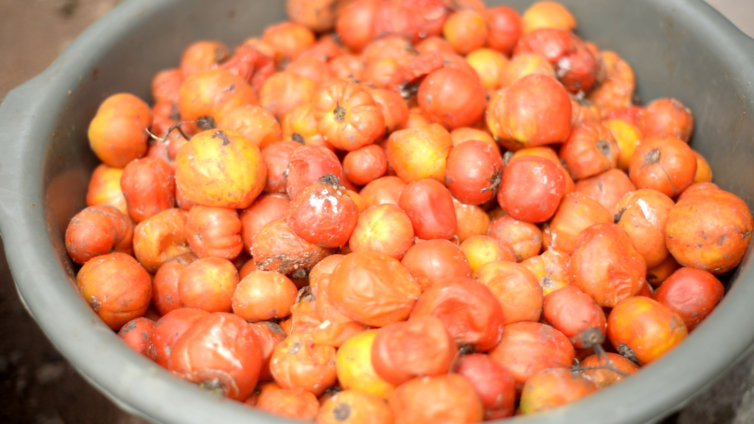
Consumption of spoiled tomatoes is on the increase with more patronage by some commercial food operators in Ghana.
Spoiled tomatoes may have higher nutritional and healthful plant-based chemicals than fresh tomatoes but are highly contaminated with harmful microbes, thus not safe for consumption.
That is the conclusion of a study by the Kwame Nkrumah University of Science and Technology (KNUST), Kumasi, with sponsorship from the Foundation for Food and Agriculture Research and Rockefeller Foundation.
Consumption of tomatoes provides health benefits. However, they’re highly perishable due to their high moisture content, soft nature, postharvest handling and are highly prone to microbial contamination.
The study was undertaken to determine the nutritional and phytochemical compositions of fresh and spoiled tomatoes. In addition, the researchers also sought to determine the levels of microbial load in sampled tomatoes.
For the study, fresh tomatoes and spoiled tomatoes were obtained from different tomato sellers at Borla Market in Kumasi in the Ashanti region of Ghana and analysed.

The researchers found all the spoiled tomatoes had considerably higher levels of nutrients (crude fibre, higher potassium, and high folic acid) as compared to the fresh tomatoes except for moisture and vitamin C.
Again, higher levels of plant-based chemicals known as phytochemicals were found in the spoiled tomatoes, particularly lycopene, beta carotene and chlorogenic acid.
The researchers attribute the results to advance ripening and moisture loss in spoiled tomatoes.
“As ripening goes on, these phytonutrients are synthesized,” lead scientist Prof. Faustina Dufie Wireko-Manu of the KNUST Food Science and Technology said.
The researchers, however, warn spoiled tomatoes are highly contaminated with harmful microbes.
“We found the spoiled tomatoes were contaminated with molds, E Coli and other harmful bacteria, beyond recommended levels by Foods and Drugs Authority (FDA).
"They’re highly contaminated with microbes and therefore not safe for human consumption,” explained Prof. Faustina Dufie Wireko-Manu.
Latest Stories
-
The Ghanaian prophet and the mysterious death of his scottish wife Charmain Speirs
43 minutes -
Nearly 400 sentenced in Nigeria for links to militant Islamists
1 hour -
Ghana’s recovery supported by gold strength despite global oil price pressures – Standard Bank Research
1 hour -
‘Excellence is our inheritance’ – Nana Sam Brew-Butler hails Mfantsipim’s 150-year reign in leadership
2 hours -
Kwaku Azar writes: A-G vs OSP
2 hours -
Mfantsipim–Adisadel rivalry built excellence, not division – Sam Jonah
2 hours -
Vice President launches Mfantsipim’s 150 years of shaping Ghana’s greatest mind
2 hours -
I assure Otumfuo, Mahama will join him to commission KNUST Teaching Hospital by end of this year – Haruna Iddrisu
3 hours -
Barcelona dominate derby to extend La Liga lead
3 hours -
Gov’t to roll out free special education for persons with disabilities from July 1 – Education Minister
3 hours -
Importers and Exporters Association declares full support for Publican AI port system
4 hours -
“We used it to test our officiating officials’ readiness” – Bawah Fuseini after CAA Athletics event
4 hours -
Volleyball emerges as Ghana’s fastest rising sport
4 hours -
National Sports Fund needs strong leadership from the top – Administrator David Wuaku
4 hours -
JoySports Exclusive: Steve McLaren in talks with GFA after expressing interest in Black Stars job
4 hours