

Audio By Carbonatix
The Bank of Ghana says it has reached an agreement with the Finance Ministry to commit to zero financing of this year’s budget and subsequent ones.
Joy Business is learning that the proposed policy is a pre-condition for the country to secure a fund programme from the IMF.
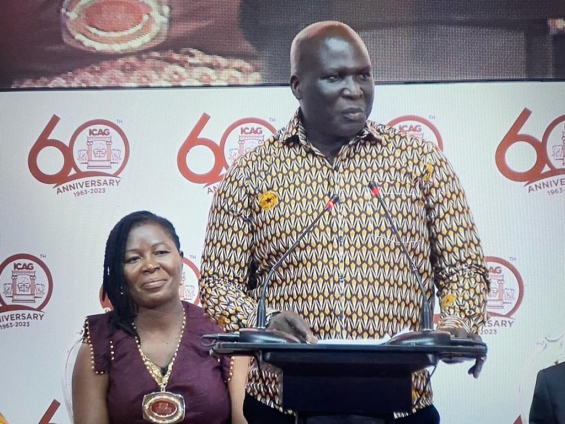
Speaking at the launch of the 60th anniversary celebrations by the Institute of Chartered Accountants Ghana (ICAG), Head of Banking Supervision at the Bank of Ghana, Osei Gyasi, said the move is also necessary to contain the country’s rising debt as well as control inflation.
“Monetary financing of the government deficit which was pursued to prevent domestic default arising from systemic auction failures during 2022 will end under the programme”, he said.
Mr. Gyasi added “to achieve this, the Bank of Ghana and the Ministry of Finance will commit to zero-financing of the budget in 2023 and beyond which is expected to trigger a disinflation path and downward trends in the policy rate as well as restore the country’s reserve buffers to at least three months of import cover by end-2025.”
Domestic Debt Exchange
According to the Central Bank’s Head of Banking Supervision, the most critical step that will draw the country closer to approval of the proposed ECF programme by the IMF board is to undertake the Debt Restructuring programme.
According to him, the Domestic Debt Exchange programme (DDE) is a guarantee to Ghana’s debt sustainability over the medium term.
“The successful implementation is expected to improve the debt metrics, compliment the current monetary policy stance and reset the economy to macroeconomic stability”, he added.
Regulatory interventions
Mr. Gyasi said in anticipation of some adverse effects of the programme on the financial sector, his outfit has issued some regulatory interventions to compliment the announced financial stability fund to mitigate the potential impact of regulated financial institutions.
He reassured that “the Bank of Ghana will engage all stakeholders and make policy interventions where necessary to ensure the impact on the banking industry is minimal.”
He however commended the ICAG for the key role it played in the process leading to the implementation of the DDE programme.
He indicated that the Central Bank’s resolve to formally engage the institute to help institutionalise and nurture the partnership to influence policy direction.
Latest Stories
-
‘We’ve become quite experienced in negativity’ – Liverpool’s Slot
1 hour -
Legendary manager Lucescu dies days after resigning
2 hours -
One dead as train travelling 99mph collides with lorry in France
2 hours -
Airlines cut flights and hike fares as fuel prices surge
2 hours -
Kane inspires Bayern to first-leg advantage over Real Madrid at Bernabéu
2 hours -
Wireless Festival cancelled after Kanye West blocked from coming to UK
2 hours -
Wa West MP commissions five boreholes for the benefit of his constituents
2 hours -
Havertz’s late strike hands Arsenal narrow first-leg advantage over Sporting
2 hours -
Damang mine award: Minority not against Ghanaian participation; we’re asking for fair process – Konadu
3 hours -
NPA to enforce stricter registration rules for petroleum tankers
3 hours -
Manhyia South MP laments decline in hospitality operations in his constituency
3 hours -
How a simple clean charcoal innovation could benefit Ghana’s climate future
3 hours -
NPA, COMAC launch Safety Week 2026 to promote risk management in petroleum sector
3 hours -
Stakeholder engagement resolves onion trade impasse
4 hours -
Gender Ministry holds staff durbar, welcomes new Chief Director
4 hours