

Audio By Carbonatix
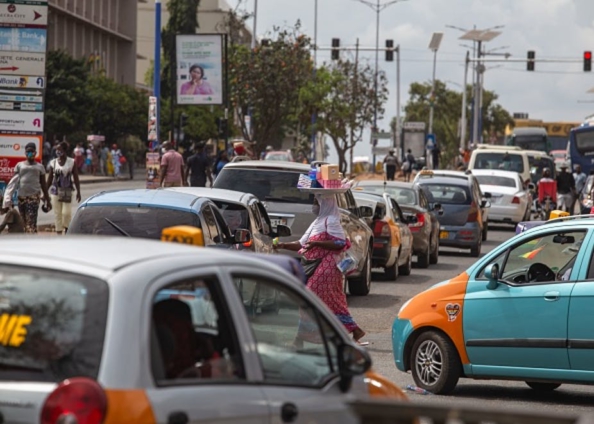
The central bank announced its biggest ever interest rate hike on Monday as it seeks to slow rampant inflation that threatens to create a debt crisis in one of West Africa's largest economies.
The Bank of Ghana (BoG) raised its main lending rate by 250 basis points to 17%, signalling an aggressive stance against the rocketing price of goods from flour to sugar to fuel, and against a depreciating local currency that has dented investor confidence.
"The uncertainty surrounding price development and its impact on economic activity is weighing down business and consumer confidence," the bank's governor, Ernest Addison, told a news conference. "The risks to inflation are on the upside."
Ghana was long seen as a rising star among Africa's emerging market economies, but underwhelming oil revenues and supply chain disruptions amid the Covid-19 pandemic have dampened expectations.
Consumer inflation reached 15.7% year-on-year in February, the highest since 2016. Food, transportation and housing prices have seen the greatest spikes. read more
Restaurants and bakeries have downsized menus and laid off staff. The national taxi drivers union has threatened to strike over spiralling fuel costs.
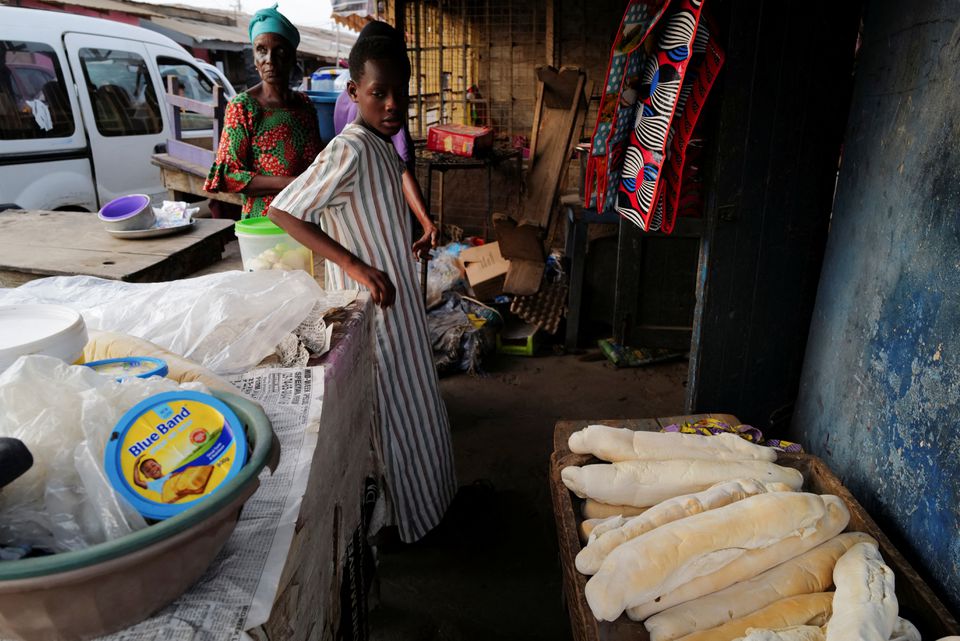
The war in Ukraine will likely make things worse. Ghana imports nearly a quarter of its wheat from Russia and around 60% of its iron ore from Ukraine, Addison said, though he expects inflation to return to its targeted band of 8% plus-or-minus 2% by the end of the year.
Meanwhile, Ghana's cedi has weakened by about 20% against the dollar this year, making it the second-weakest currency after the Russian rouble in a list of some 20 emerging market units tracked by Reuters.
Addison blamed that in part on recent downgrades by credit ratings agencies Moody's and Fitch, which he said shook investor confidence.
According to central bank figures, Ghana's total public debt stands at $50.8 billion (351.8 billion Ghanaian cedi), about 80% of the country's gross domestic product.
The central bank has made efforts to improve the situation. Monday's rate hike marks the first time it has increased the prime rate twice within one year since 2015, after a previous one in November.
Economists have warned the fiscal deficit may spark a full-on debt crisis if more money doesn't come in.
Ghana's ruling party says the solution lies in a 1.75% tax on all electronic payments, locally known as the 'e-levy', a proposal so detested by the opposition that it caused a brawl in parliament last year.
Latest Stories
-
BoG cautions public against 20 unlicensed mobile loan apps
3 minutes -
Mahama urges tougher enforcement of building regulations over recent collapses
8 minutes -
FWSC denies reports of salary deductions for striking teachers
12 minutes -
Rooted like a tree, responsive like a river: Dr Amin Adam calls for new model of Imamship to meet modern realities
20 minutes -
La Traditional Council secures suspension of SSNIT’s La Pleasure Beach redevelopment plans
24 minutes -
Joy FM listeners support mother seeking treatment for 3-year-old daughter after alleged sexual abuse
29 minutes -
German Unity Day celebrated with music, art and Ghana-Germany friendship in Accra
31 minutes -
MEHSOG and GFD build capacity of Ashanti Region journalists on inclusive disability reporting
33 minutes -
A woman should not have to choose between being fed and being safe
37 minutes -
“Wontumi doesn’t like where he is”– Palgrave Boakye
46 minutes -
The Labadi shoreline demolitions: Who owns the beach?
56 minutes -
Cedi will continue to be stable – Deputy Finance Minister
58 minutes -
Minority urges full probe into World Cup visa allegations after Ampofo Ankrah’s removal
58 minutes -
Asiedu Nketiah backs greater church role in running mission schools
1 hour -
Galamsey activities redirect Mankran Stream, destroy farms, and threaten flooding in Okroase
1 hour