

Audio By Carbonatix
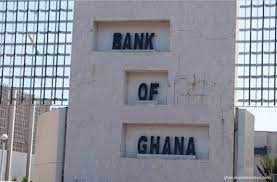
Honorary Vice President of IMANI Africa, Bright Simons, says the Bank of Ghana ought not to compare its losses to other central banks’ losses.
According to him, the size of the loss as a percentage is so astronomical attempting to compare to others will not be beneficial for the bank.
Speaking on JoyNews’ Newsfile, Saturday, he said measuring the losses accrued by the Bank of Ghana using the bank’s equity and government’s expenditure as a yardstick, one realizes just how incredible the losses are.
“What is the size of the loss as a percentage of that central bank’s equity? You can also look at it as a percentage of the government’s expenditure. If you look at it that way the Bank of Ghana’s losses are incredible.
"So for instance, as a percentage of expenditures in Ghana, they were roughly 35% of exchanges of the prior year. So that’s a huge amount compared to Brazil 1.5%, Czech Republic 1.8%, Thailand 7.7% etc. so to have a loss that is 35% or one-third of the expenditure of the government from the year before is dramatic.
“The other way to look at it in terms of equity and there it is even mind boggling because the Bank of Ghana has a tiny equity that when you express as a percentage it makes no sense like 600000% or something like that, so we’re not even going to go there,” he said.
He added that “In short the Bank of Ghana’s losses is so wild that it requires better investigation than so far they’ve been willing to concede.”
He further revealed that comparing the central bank’s losses as a percentage of gross domestic product to other countries’ makes no sense whatsoever.
“You can also look at the central bank loss as a percentage of the gross domestic product, the country’s total economic output in a year. And if you do that and you do the benchmarking, the Bank of Ghana’s attempt to suggest that these losses are ordinary or routine because other places are also making losses all of a sudden makes no sense because the scale in other places compared to what we are seeing in the Bank of Ghana’s case is dramatically different.
“So for instance the whole of the Euro area, if you strike an average of the losses that were accounted for in recent times you get something like 0.2% of gross domestic product or GDP. In the case of the Bank of Ghana, you get something around 8% so that is almost 40 times as high as what we saw in Europe,” he said.
“In short there is really very little benefit in attempting to compare to other places when your losses are astronomical. When the losses are astronomical, you don’t even start comparing to others,” he concluded.
Latest Stories
-
Real-Time VAT on cross-border digital services – not a new tax and does not violate double taxation principle
26 minutes -
Digitalisation, AI key to Ghana’s tourism transformation – GHATOF
38 minutes -
Stronger GTA-private sector partnership needed to grow tourism – GHATOF
48 minutes -
Amazon eyes Ghana for broadband expansion after talks with Mahama
2 hours -
National Investment Quiz 2026: Six schools qualify for quarter-finals
2 hours -
‘Do not let Russia pay for its madness with lives of your people’ – Zelensky to Ghana, 46 other countries
2 hours -
6,079 promotion cases fully processed and paid – CAGD says amid nationwide teachers’ strike
2 hours -
Teacher unions to meet government Monday over nationwide strike
3 hours -
Photo story: Republic Bank-JoyNews Habitat Fair clinic wraps up after three days of housing solutions, expert engagement
3 hours -
National Peace Council urges investment in youth to sustain Ghana’s peace
3 hours -
Afenyo-Markin urges youth to speak up against injustice
3 hours -
CAF annuls Edo Queens victory, orders WAFU B final to resume from extra time
4 hours -
Interior Minister urges traditional authorities to enforce anti-bushfire bye-laws
4 hours -
3rd Republic Bank-JoyNews Habitat Fair Clinic ends on a high note after three days of strong patronage
4 hours -
Ten climbers missing after avalanche hits Himalayan base camp
4 hours