

Audio By Carbonatix
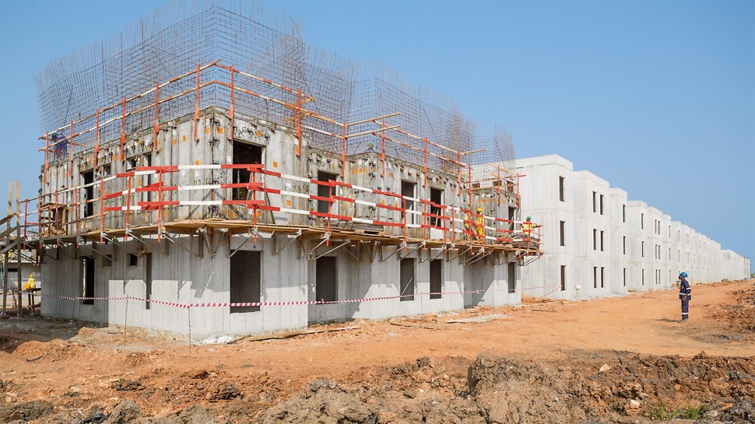
Ghana's construction and real estate sector has experienced a remarkable boom in recent years, positioning the country as a significant hub for investment and development in West Africa.
This growth is driven by a combination of factors, including a robust economy, political stability, and an increasing demand for residential, commercial, and industrial properties.
Economic Growth and Urbanization
Ghana's steady economic growth, averaging around 6% per year, has spurred urbanization and increased disposable income, leading to a surge in demand for housing and commercial spaces. Cities like Accra, Kumasi, and Takoradi are expanding rapidly, with new residential developments, shopping malls, office buildings, and industrial parks transforming the urban landscape.
Government Initiatives and Policies
The government of Ghana has implemented several initiatives to support the construction and real estate sector. Programs such as the One District One Factory (1D1F) and the Affordable Housing Project aim to boost industrialization and provide affordable housing to meet the needs of the growing population. These initiatives have attracted both local and international investors, fostering a competitive and vibrant market.
The real estate market in Ghana offers lucrative investment opportunities, particularly in the luxury and middle-income housing segments.
The value of the real estate market in Ghana is projected to reach US$458.52 billion this year.
The rise of gated communities, high-rise apartments, and mixed-use developments reflects the increasing demand for quality living spaces and modern amenities. Additionally, the commercial real estate sector is thriving, with new office complexes, retail centers, and hospitality projects catering to the needs of businesses and tourists.
Challenges and Prospects
Despite its growth, the construction and real estate sector in Ghana faces challenges such as high land costs, regulatory hurdles, and infrastructure deficits. However, ongoing reforms and investments in infrastructure, including road networks, utilities, and public services, are addressing these issues and enhancing the overall investment climate.
Future Outlook
The future of Ghana's construction and real estate sector looks promising, with continued urbanization, economic development, and government support driving sustained growth. As the country positions itself as a regional hub, the sector is expected to attract more foreign direct investment, further boosting development and innovation.
Ghana's construction and real estate sector is on an upward trajectory, offering significant opportunities for investors, developers, and stakeholders. With a favorable economic environment and proactive government policies, the sector is poised to play a crucial role in the country's continued growth and modernization.
Latest Stories
-
Chef Abbys: Feeding 50,000 people, putting food security on Ghana’s agenda
25 minutes -
Ho set to host Republic Bank–JoyNews Habitat Fair as multiple firms prepare to showcase housing solutions
33 minutes -
NPP demands public inquiry into alleged $600,000 World Cup visa fraud, wants Sports Minister, GTA CEO summoned
40 minutes -
I want my brand to be bigger than just music – Yaw Wazinga
44 minutes -
Houthi missile attack on Yemeni presidential palace kills two, minister says
44 minutes -
I hoped to win an award; I worked hard – 2026 Best Graduating Law Student
54 minutes -
Fraudsters increasingly target bank customers instead of banking systems – Fraud detection expert
55 minutes -
44 teacher sexual abuse cases tracked since 2015; school heads feature in 40% of recent cases — JoyNews Research
57 minutes -
Unchecked imports and the Middle East crisis threaten Ghana’s fragile food inflation anchor
1 hour -
Ecobank Junior Saver Big Pitch to reward 10 winners with GH¢2,000 each
1 hour -
AMA demolishes unauthorised pigsty obstructing Agbogbloshie waste evacuation exercise
1 hour -
I was filled with disbelief – Akosua Achia Sarpong Esq. shares her first reaction
1 hour -
Snake Village: A look at Volta Region’s hidden snake village and its tourism potential (Video)
1 hour -
Election Watch Ghana calls for constitutional reforms to strengthen Electoral Commission independence
2 hours -
NACOC, Postal and Courier Services Regulatory Commission intensify efforts to curb drug trafficking
2 hours