

Audio By Carbonatix
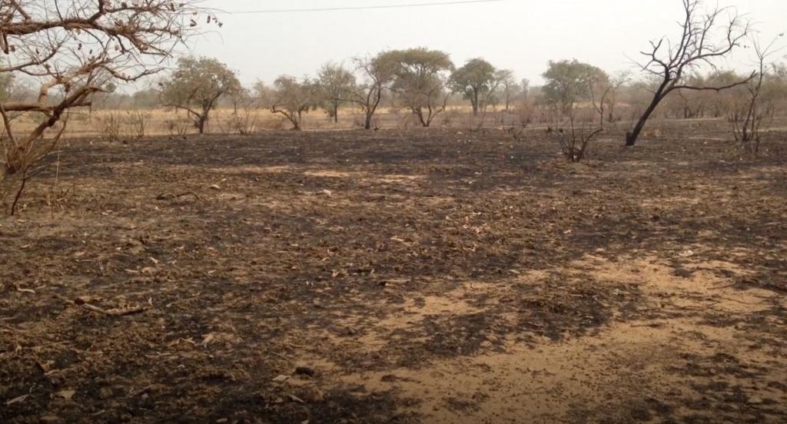
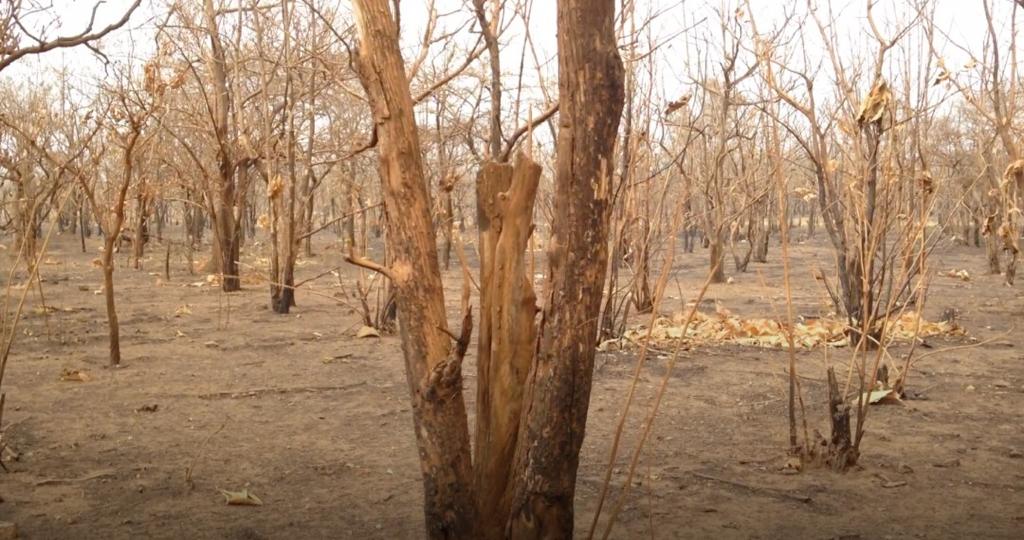
A total of 249,373 hectares of forest reserves and plantations, equivalent to over 600,000 average football pitches, were lost to bush fires between 2011 and 2021, data from the Forestry Commission has indicated.
The fires occurred mainly in savannah and the transitional zones, which include areas in Sunyani, Juaso, Lawura, Yendi, parts of Upper East, Walewale, Bibiani, Buipe, Begro, Mpraeso, Goaso, and Bole districts.
Scientists said the annual bush fires posed serious threat to the food security of the country if comprehensive steps were not taken to deal with them.
Dr. Edward Yeboah, the Principal Research Scientist and Acting Director of CSIR-Soil Research Institute told the Ghana News Agency that annual bush fires were depleting the soil, with long-term effects on crop production.
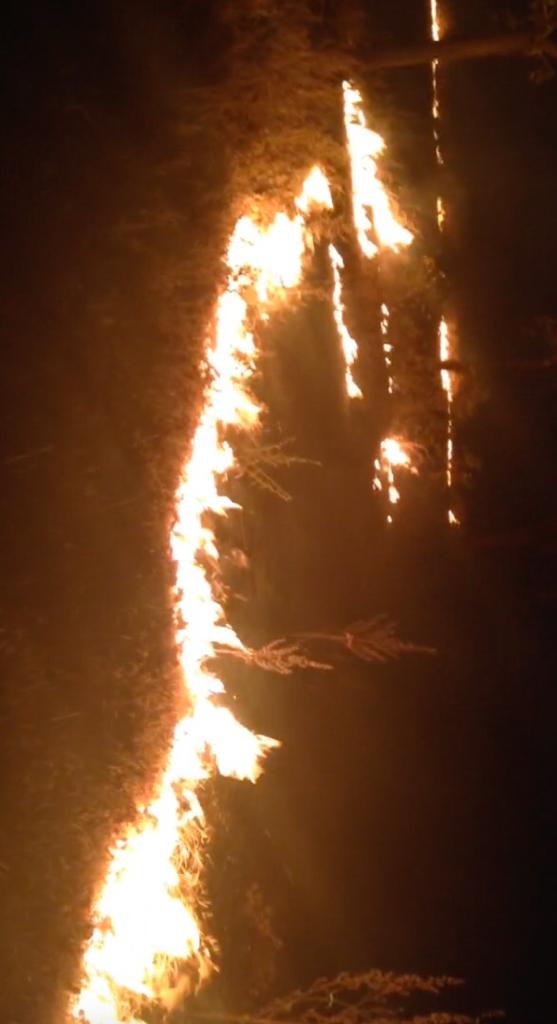
He said they were also negatively impacting water bodies, air quality, emissions, and vegetation cover.
Every year, between November and March, the activities of hunters, farmers, and herdsmen consume large hectares of land through bush burning.
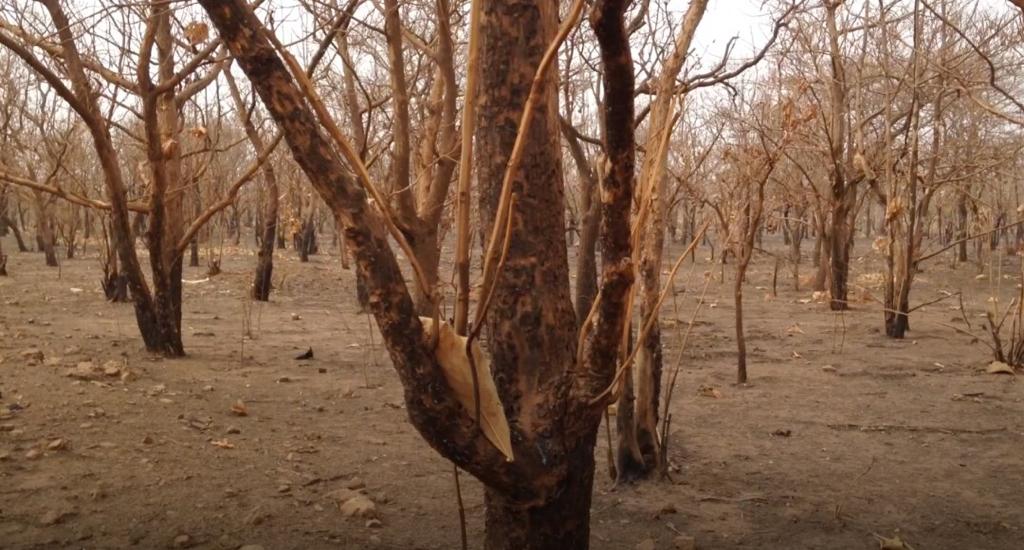
Dr Yeboah said long-term bush burning could make the soil lose micronutrients needed for plant growth.
"This increases the potential for accelerated erosion and leaching. It takes away much needed nutrients as well as destroys the physical, chemical, and biological properties of the soil needed for plant growth, " he said.
"Burning of organic matter from the soil leads to the loss of properties such as water and nutrients. As a result, productive agricultural lands get deteriorated and cannot hold 50 percent of water," he added.
He said a study conducted by the CSIR revealed that 80 percent of agricultural soils in the country were becoming acidic due to unsustainable practices, especially annual bush fires.
"Soil acidity occurs naturally at a very slow rate as soil is weathered. This process is, however, accelerated mainly by unsustainable productive agriculture like bush fire, improper application of inorganic fertilisers and non-application of liming materials," Dr Yeboah said.
"Beneficial microorganisms such as bacteria that decompose soil organic matter are hindered in strong acidic soils. This prevents Organic Materials (OM) from breaking down, resulting in the accumulation of OM and the tying up of nutrients, particularly nitrogen, that are held in OM."
"In strongly acidic soils, the metabolic processes of plant roots are halted, leading to mortality.
"Nutrients are also not readily available in the right form. Phosphorus, for example, is locked up in highly acidic soils. Acidic soils, therefore, cannot sustain crops."
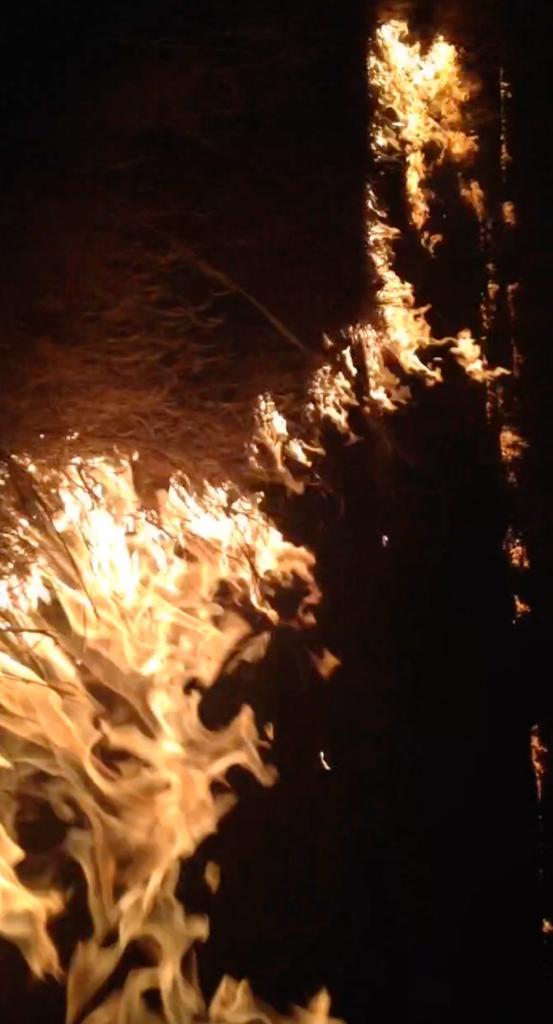
Dr. Charles Nyaaba, the Head of Programmes and Advocacy at the Peasant Farmers Association of Ghana, described bush fires as an awaiting national food production and supply disaster, saying: "We are sitting on a time bomb waiting to explode very soon." He told the GNA that many people working in the formal sector had taken up farming as a second job, but bush fire was lowering their interest.
"I am even aware that some investors who are ready to finance the sector and create decent jobs have backtracked. There have been so many agricultural interventions to boost yield, but bush fires continue to erode gains," he said.
"Thousands of hectares of crops like rice, maize, soybeans and millet are annually consumed and in real time could be equivalent to about five percent of total national food production."
Dr. Nyaaba said the map of biomass in Ghana showed that lands in the Northern part of the country took up more chemical fertiliser than those in the southern part.
He explained: "This is because the soils are not able to accumulate more biomass to decompose and enrich the soil. That is why farmers resurrect the ‘dead soils' with chemical fertiliser every season."
Dr. Nyaaba urged the government to use a portion of the PFJ funds to create a comprehensive nationwide sustained sensitisation programme for locals about the effects of bushfires.
He urged private sector actors in the agriculture value chain to support the government’s "Greening Ghana" initiative.
Dr. Nyaaba recommended that the government supplied more compost fertilisers to farmers in the north to rebuild the soils.
"There are some initiatives that have helped halt locals from burning and they are regenerating the soil, so the government should adopt such best practices," he said.
Mr. Michael Kofi Benni, District Manager at the Forestry Commission's Yendi Office, proposed that awareness creation on the dangers of bushfires be given national attention and sustained.
Latest Stories
-
President Mahama ends Resetting Ghana tour of Ahafo Region
1 hour -
African negotiators seek delivery of climate commitments at COP31
1 hour -
BoG develops AI rules for financial sector
1 hour -
‘Big Push’: Government assures contractors of prompt payments
1 hour -
Court fines miner for breaking into gold buying shop
2 hours -
Tarkwa court jails labourer for three years over GH¢123,000 theft
3 hours -
GAEC must retain nuclear scientists for Ghana’s nuclear ambitions – Minister
3 hours -
Man reportedly mistaken for game and shot by hunter dead in forest
3 hours -
19-year-old mason jailed 15 years for defiling seven-year-old pupil
3 hours -
Ghana’s banking sector assets rise 20.47% to GH¢500.2bn – BoG Governor
3 hours -
22 injured as Sprinter bus overturns at Sege after tyre burst
3 hours -
UN housing expert urges Ghana to strengthen Rent Control Department amid housing affordability concerns
3 hours -
Delta-BCI partnership reaches 166,000 people with breast cancer education
4 hours -
Power restoration fault suspected in Kumasi Central Market fire
9 hours -
The 7-foot giant of Ngleshie Amanfro: Seven-foot Ghanaian Ephraim Saawa dreams of joining the national basketball team
9 hours