

Audio By Carbonatix
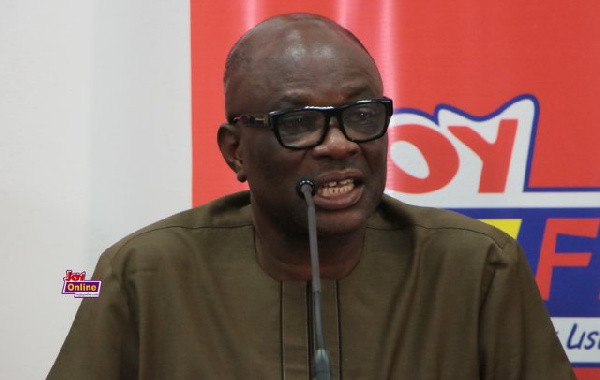
The President of the Ghana Union of Traders Association (GUTA), Dr. Joseph Obeng, is concerned about possible trade tensions among respective signatories to the single continental trade market if existing laws on trade and investment from these respective economies are not harmonized.
“We have no clue about the customs procedures and infrastructure to facilitate tariff-free trade – this is troubling, especially when customs procedures are the heart of this single market arrangement,” he told Charles Ayitey on the Market Place.
All 54 countries who have signed up to the single market, possess individual trade and investment laws.
Ethiopia, for example, prohibited foreign investment in its financial sector, a potential breach of AfCFTA rules. Ghana too prohibits retail trade of foreigners in its local market, another breach of AfCFTA rules.
“As a result, the secretariat could see a flurry of legal challenges from countries on behalf of their corporations,” Dr. Jospeh Obeng added.
Meanwhile, the Ghana International Trade Commission (GITC) has called for patience even as the AfCFTA Secretariat completes negotiations on common tariffs, trade and investment laws.
“Rome was not built in a day. It was best for this single market initiative to have been implemented now than have it delayed over resolvable issues as this. Patience is what we need from trading economies and signatories to this agreement,” he stated on the Market Place.
The International Monetary Fund in its Staff Discussion Notes published on May 13 2020 projects that although the implementation of some operational aspects of the African Continental Free Trade Area (AfCFTA) has been temporarily suspended, the agreement would be very important element to support post-pandemic recovery and to foster economic growth in the medium term in sub-Saharan Africa through the creation of larger and more integrated markets and the promotion of intracontinental trade.
Importantly, the implementation of the AfCFTA will also reduce uncertainty on trading relations within the continent, which—together with an expanded and more integrated market—would foster both domestic and foreign direct investment and help boost economic activity as countries emerge from the pandemic.
For the Secretary-General of the AfCFTA, 2021 sets a new milestone in the economic history of Africa’s trade eco-space.
“Today, we not only celebrate the start of a new year but today, we give Africa a new beginning, with the start of trading as a free trade area under the AfCFTA,” Wamkele Mene stated.
Latest Stories
-
Attendance at trial is a constitutional duty, not an option
25 minutes -
RTI response raises questions over Bryan Acheampong’s military service claims
33 minutes -
Two women granted bail over assault of 12-year-old; another remanded
35 minutes -
Ghana’s IMF programme extension to August 2026 was to allow more time for final review work – IMF
1 hour -
No records of Bryan Acheampong’s enlistment and release from the US Army – Parliament says in RTI response
1 hour -
Daasebre Osei Bonsu III swears oath of allegiance to Asantehene and pledges unity and development for Asante Mampong
1 hour -
We had fruitful deliberations with private transport operators – Transport Minister
1 hour -
45-year-old farmer jailed 15 years for sexually abusing 14-year-old niece
2 hours -
Lawrence Ofori joins Casa Pia after mutually parting ways with Moreirense
2 hours -
Brazil have talent for World Cup, but victory not guaranteed – ESPN’s Bertozzi
2 hours -
NPP race: Don’t waste your vote, Bawumia is winning – Annoh-Dompreh to NPP delegates
2 hours -
NDC still brought Mahama even when he lost by over one million votes – Annoh-Dompreh to NPP
2 hours -
Ofori-Atta becoming a ‘brave coward’ – Franklin Cudjoe backs Arise Ghana protest
2 hours -
Trump links Greenland threat to Nobel Peace Prize snub, EU prepares to retaliate
2 hours -
More than 160 churchgoers kidnapped in twin Nigeria attacks – Clergy
3 hours