

Audio By Carbonatix
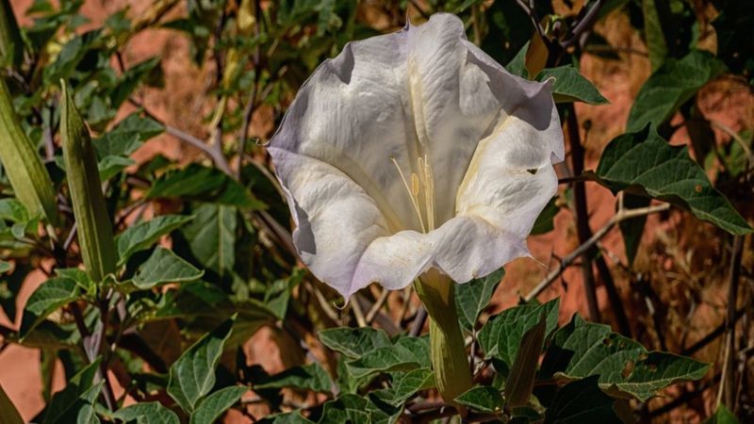
Cave art in California created by indigenous Americans about 400 years ago depicts a hallucinogenic plant, according to new research.
Pinwheel Cave in southern California gets its name from a red, wheel-shaped drawing on its ceiling.
Researchers had previously discovered the chewed remains of plants, stuffed in crevices in the ceiling of the cave.
California cave depicts hallucinogenic plant, study finds https://t.co/MDvd9DL095
— BBC North America (@BBCNorthAmerica) November 25, 2020
Now the remains have been confirmed as Datura, a plant used historically for its psychoactive effects.
While many have believed that prehistoric rock art was influenced by hallucinogens, this latest research suggests that the rock paintings at Pinwheel Cave depicted the Datura plant itself, rather than any visions caused by the plant, the study said.
However, the findings do present "the first clear evidence for the ingestion of hallucinogens at a rock art site", the study, which was published in the Proceedings of the National Academy of Sciences, added.
"I was like: 'Wow, we found the smoking gun of hallucinogens at a rock art site,'" David Robinson, a lecturer in archaeology at the University of Central Lancashire who led the study, told ScienceMag.org.
The painting showed the artist was "representing the plant that causes the hallucinogenic experience - not the vision that is caused by the plant," Dr Robinson said, adding that "they're venerating the plant, saying: 'That plant's cool.'"
Sandra Hernandez, a Tejon tribal member who worked on the study, agreed that the art was depicting the flower.
"I kind of marvelled at the shapes that they captured in the rock art compared to the actual flower unfurling," she said.
The discovery of various different tools and food scraps suggest that the cave was likely a communal area, the researchers said, and the rock art could have been "acting as visual catalysts for communal experiences".
The artwork could have helped with "setting the scene", like religious artwork in other settings, to help people who were sharing the tradition of taking the hallucinogenic plant in that cave, Dr Robinson told Live Science.
Latest Stories
-
Prudential Life settles GH¢100,000 medical bills under its PRUCares Valentine Experience Initiative
2 hours -
Wa West Picnic: Peter Lanchene Toobu champions peace, health and unity in landmark celebration
2 hours -
Dr Mensah Market flooded after downpour in Kumasi
2 hours -
Armed men reportedly storm Adjen Kotoku Onion Market amid tensions
3 hours -
Tecco Mensah writes: Why football fans must look beyond statistics
4 hours -
Police recover stolen Honda CR-V in Kumasi within 48 hours
5 hours -
Apetorku Gbodzi 2026 Festival opens in Dagbamete with development focus
5 hours -
President Mahama arrives in Lyon to co-chair One Health Summit
5 hours -
Beverly View Plus Hotel draws crowds amid coastal Easter rush in Volta
5 hours -
Maiden Zongo Festival held in Wa amid calls to tackle drug abuse among the youth
5 hours -
FDA warns of fake HIV test kits on Ghanaian market
6 hours -
Africa urged to build resilient health systems as donor support tightens
6 hours -
Easter gesture: Ablakwa settles medical bills for 85 North Tongu constituents
8 hours -
Africa must harness its population strength—Titus-Glover
8 hours -
Visa-free access doesn’t mean unlimited stay – Lom Ahlijah
8 hours