

Audio By Carbonatix
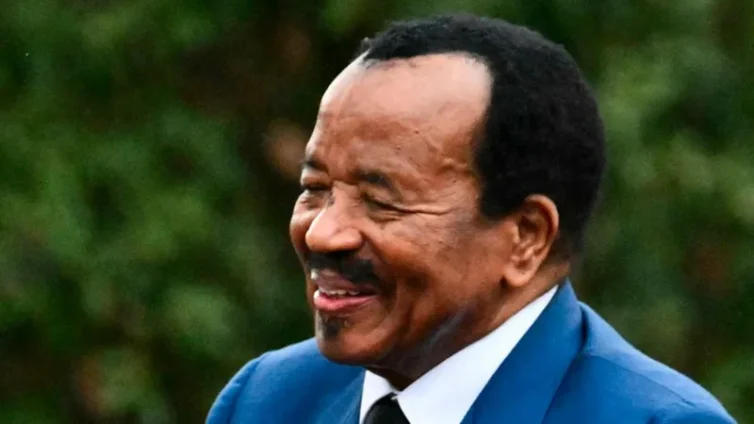
The Cameroonian authorities have banned the media from discussing the health of President Paul Biya, following rumours of his death.
Interior Minister Paul Atanga Nji told regional governors that these stories “disturb the tranquillity of Cameroonians”.
“Any debate in the media about the president’s condition is therefore strictly prohibited,” he insisted, threatening that “offenders will face the rigour of the law.”
The 91-year-old leader – in office for more than four decades – has not been seen in public since 8 September, when he attended a China-Africa forum in Beijing.
Several officials have pushed back against speculation around Biya’s condition, insisting he was in good health and on a private stay in Geneva, Switzerland.
Nji said that the health status of the president was a matter of national security and urged governors to create units to ensure the order was being followed by private media outlets and social media.
Many journalists in the country have said they consider the ban a violation of press freedom.
“By saying that mention should not be made of the president’s [health] situation, I find it an infringement on our rights,” a Cameroonian journalist told the BBC on condition of anonymity. He added that “it’s going to really affect the way we report because we’ll certainly not want to run into trouble with government”.
The media restrictions have also raised concerns about the safety of journalists in a country where media professionals are regularly targeted by officials and insurgent groups.
In the past, Anglophone separatists have kidnapped journalists while the government has arrested and detained members of the media.
“I will continue to report even though I fear they could track me down, because there’s no way my report will not talk about the president’s whereabouts or what could be happening to him. I’ll continue to do my job,” another journalist said.
In a statement on Thursday, global press freedom organisation the Committee to Protect Journalists (CPJ) urged the Cameroonian government to “end its threats to sanction private media journalists who report on the condition and whereabouts of President Paul Biya”.
“The health of the president, who has been in power for 41 years and may seek re-election next year, is of public interest. Any misguided attempt to censor reporting about his health for national security reasons simply fuels rampant speculation,” Angela Quintal, head of CPJ’s Africa Programme, stated.
“The Cameroonian government should simply put the rumours to rest by arranging a public appearance by the head of state,” she suggested.
As speculation about the well-being of President Biya continues, Cameroonians are highly anticipating his return to the country in the coming days, as promised by the authorities.
Latest Stories
-
Israel carries out large wave of air strikes across Lebanon
13 seconds -
BBC upholds complaints over racial slur in Baftas broadcast
21 seconds -
Kukurantumi set to host 2025/26 Women’s FA Cup Final as Hasaacas Ladies face Army Ladies
1 minute -
Where the law stops: Torture, power, and the failure of prevention in Ghana
1 minute -
Only 6% of imports insured locally despite mandatory policy – GSA raises concern
6 minutes -
IndomieFest Accra 2026 delivers Ghana’s premier family festival at Easter
12 minutes -
GIP Secures $20m boost from Norfund, Axis Pensions to deepen SME financing in Ghana
20 minutes -
Newlywed wife of US soldier freed by ICE after detention at military base
36 minutes -
GMet forecasts thunderstorms, gusty winds over southern Ghana
41 minutes -
John Kpikpi supports Taviefe youth with GH¢5000, calls for unity and new leadership
44 minutes -
John Kpikpi courts Taviefe youth, urges shift towards Progressive Alliance for Ghana
51 minutes -
Reconstruct, Don’t Refurbish: Terminal 2 and the high cost of policy misjudgement
58 minutes -
Starmer arrives in Saudi Arabia after US-Iran ceasefire deal
59 minutes -
Maxwell Kwame Odoom-Tsibu
1 hour -
Health NGOs warn of imminent family planning crisis over delayed UNFPA supplies at Tema Port
1 hour