

Audio By Carbonatix
They arrive with smiles, passports, and seemingly innocent intentions. But behind some tourist visas and international travel documents lurk organised criminals whose mission is not sightseeing, cultural exchange, or business.
Their objective is simple: "steal, defraud, rob, exploit, and disappear before justice catches up with them.
While Canada is aggressively tracking, arresting, and dismantling criminal tourism networks, Ghana appears to be leaving its doors wide open to foreign criminals who continue to prey on citizens, infiltrate local markets, and undermine public safety with little fear of consequences.
The question is uncomfortable but necessary, "Why is Canada fighting criminal tourism while Ghana seems to be tolerating it?"
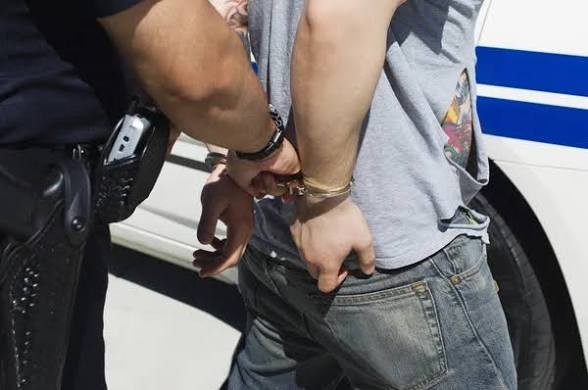
The Durham Regional Police Service (DRPS) in Canada recently announced the results of Project Jetsetter, a major law enforcement operation targeting criminal tourism and organised international crime networks operating within the Greater Toronto Area and beyond.
The results are staggering.
After more than 5,000 investigative hours and over nine separate investigations, authorities tracked more than 200 incidents connected to criminal tourism, leading to over $2.61 million in confirmed financial losses in Durham Region alone. Forty-six suspects have been arrested, more than 1,440 criminal charges have been laid, and 164 additional suspects remain wanted.
Canadian authorities describe criminal tourism as a growing form of organised crime involving individuals who travel internationally for the specific purpose of committing profitable crimes. These are not spontaneous offences. They are carefully planned operations often linked to sophisticated international criminal organisations.
The crimes uncovered through Project Jetsetter include vehicle financing fraud, insurance scams, large-scale retail theft, jewellery distraction thefts, vehicle export schemes, and other coordinated criminal enterprises.
Particularly disturbing is the rise in jewellery distraction thefts targeting seniors. Criminals approach vulnerable victims under the guise of offering help, gifts, or friendly conversation while secretly stealing valuable jewellery and personal belongings.
Canadian police understand a simple reality: "criminal tourism is not merely an immigration issue. It is a public safety threat."
That is why law enforcement agencies, intelligence units, and national policing partners are working together to identify offenders, share intelligence, track criminal movements, and dismantle entire networks.
The message from Canadian authorities is crystal clear: "If you come to Canada to commit crimes, law enforcement will find you."
Unfortunately, the same level of urgency is not always evident in Ghana.
Across the country, there are growing concerns about foreign criminal elements operating under the cover of tourism, business, or temporary residency. Reports of foreign nationals engaging in illegal mining, internet fraud, human trafficking, prostitution rings, robbery, drug trafficking, financial scams, and other criminal activities have surfaced repeatedly over the years.
Many Ghanaians have also expressed concern about foreign traders and criminal syndicates who allegedly exploit loopholes in regulations to dominate sectors reserved for local businesses.
In some cases, foreign nationals have been accused of defrauding citizens, engaging in fraudulent investment schemes, exploiting vulnerable women and children, and participating in criminal activities that threaten community safety.
Yet public perception often suggests that enforcement is inconsistent, investigations are slow, and prosecutions rarely receive the level of attention necessary to deter future offenders.
The contrast with Canada is striking.
When Canadian authorities discovered a criminal tourism problem, they launched a coordinated, intelligence-driven operation involving multiple agencies. They collected evidence, tracked suspects across jurisdictions, laid charges, and publicly informed citizens about the threat.
In Ghana, many citizens frequently ask whether similar coordinated efforts exist to identify and dismantle foreign criminal networks operating within the country.
If they do exist, the public rarely hears about them.
This is not an argument against legitimate tourists, investors, or foreign residents. Ghana has earned a global reputation as one of Africa's most welcoming nations. The country's famous hospitality, political stability, and cultural richness continue to attract millions of visitors and investors from around the world.
That openness should remain a source of national pride.
However, hospitality must never become vulnerability.
A nation that welcomes visitors must also protect its citizens. Genuine investors should be encouraged. Honest tourists should be celebrated. International partnerships should be strengthened.
But criminals, whether local or foreign, must face the full force of the law.
The success of Project Jetsetter demonstrates what is possible when law enforcement agencies treat criminal tourism as a serious threat rather than an isolated problem.
Ghana can draw valuable lessons from this approach.
The country needs stronger intelligence gathering, enhanced border screening, better inter-agency cooperation, improved data sharing, and specialised task forces dedicated to identifying organised criminal networks operating across regions.
Public education campaigns should also encourage citizens to report suspicious activities without fear.
Most importantly, authorities must send a clear message that Ghana is not a haven for criminals masquerading as tourists, investors, or traders.
Criminal tourism thrives where enforcement is weak and accountability is absent.
Canada has chosen confrontation.
Ghana must choose vigilance.
The safety of citizens, the integrity of local businesses, and the future security of the nation depend on it.
If criminal tourists know they will be tracked, investigated, arrested, prosecuted, and deported, many will think twice before targeting Ghana.
But if they believe the system is indifferent or ineffective, they will continue to exploit opportunities at the expense of ordinary Ghanaians.
The time has come for Ghana to move beyond concern and embrace action.
The doors of hospitality should remain open.
The doors to criminality must be firmly shut.
Latest Stories
-
Mental Health Alliance urges government to operationalise Mental Health Fund
7 minutes -
Ghana–Holy See agreement heads to Parliament after Cabinet approval
12 minutes -
Luv FM Corporate Games 2026: Kumasi Central Prisons, Amanfiman Bank win big amid fun
23 minutes -
WAFU B U17: Ghana top Group A after win over Togo
52 minutes -
Ho Central Mosque reopens amid unresolved leadership dispute that led to closure
2 hours -
Minority caucus questions GH¢16.4m in Ablakwa’s SA evacuation spending, demands independent audit
2 hours -
Gender Ministry meets Nana Akua Addo’s husband over domestic violence after hospital discharge
3 hours -
UG Vice-Chancellor urges swift operationalisation of National Research Fund
3 hours -
Pope Leo to have surgery after lump found in lung
4 hours -
Joseph Cudjoe writes: Ghana must break free from the dangerous mindset that natural resources are the foundation for wealth
4 hours -
Children among 109 dead after boat capsizes off Djibouti, UN says
4 hours -
OmniBSIC Bank’s 11th health walk promotes fitness and business growth
4 hours -
2026 World Maritime Day: Danish Embassy organises “The Gulf of Guinea Speaks”
5 hours -
New Economy will tackle unemployment and restore hope – Ato Forson
5 hours -
IMMILAC president recounts personal losses as security women lead breast cancer awareness campaign in Wa
5 hours