

Audio By Carbonatix
Fishermen across the country’s four coastal regions have started a one-week protest against the activities of Saiko, the illegal transhipment of fish at sea.
This follows the airing of a JoyNews hotline documentary 'Saiko: When the last fish is caught' that investigated the activities of industrial trawlers on high seas.
Among other revelations, the industrial trawlers were caught using under-sized nets to catch small fishes (a preserve of local fishermen) only to throw the dead or undesirable fishes back into the sea.
Speaking to JoyNews' Richard Kwadwo Nyarko, a fisherman, said their suspicions had been confirmed by the revelations in the documentary.
They said although they are in their bumper season, they are unable to find any catch at sea, a situation that's killing the fishing industry.
The men, who have begun their strike, have asked government to ban the activities of Saiko in order to save the fishing industry.
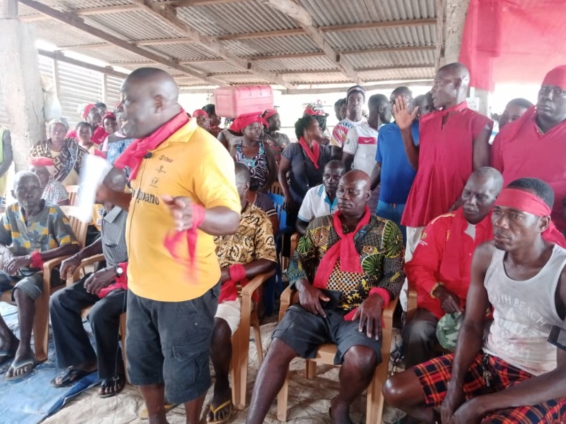
At a press conference attended by JoyNews', red flags were seen hanging where flags of countries or football teams were once hoisted.
The fishermen, fishmongers and their children were all seen draped in red attires in protest against what they consider a serious threat to their livelihoods.
The move, the fishermen told JoyNews is to demonstrate to government the seriousness of the fight against Saiko, stressing the need for the Fisheries Ministry and the Fisheries Commission to go beyond mere rhetorics and ban the activities of the foreign vessels for good.
A spokesperson for the aggrieved fishermen, Nana Kweigya told JoyNews the deafening silence on the fight against Saiko by the government is worrying.
“In the 2020 budget, paragraph 718, government made a specific statement of stopping Saiko, but we have not witnessed that. So we are calling on the highest office of the land; the President and the government to live by their words of stopping Saiko,” he averred.
Nana Kweigya added that government’s intervention at this crucial moment is critical to saving the over three million people that directly depend on the sea for their subsistence.
“Saiko has been found to be a severely destructive form of illegal fishing, which in addition to driving the decline in marine fish stock, destroys the marine environment, and erode the potential to rebuild marine resources,” he said.
Across the four regions, the 7-day protest has been activated to pressure government to end the menace of Saiko.
The fishermen added that they will embark on a series of street protests should government do nothing about their situation.
Latest Stories
-
Power restoration fault suspected in Kumasi Central Market fire
29 minutes -
The 7-foot giant of Ngleshie Amanfro: Seven-foot Ghanaian Ephraim Saawa dreams of joining the national basketball team
1 hour -
Government promises support for Kumasi Central Market fire victims
1 hour -
Vibes The Movie: Big Ghun’s Ghanaian film earns five nominations at 2026 REFFA
2 hours -
MamaCare CEO warns unresolved conflicts among health workers could undermine maternal and neonatal care
2 hours -
Health professionals urged to translate medical knowledge into practice to save mothers
2 hours -
Conflicts among care providers linked to maternal, neonatal deaths – Expert
4 hours -
GIS marks 10th TIME conference, champions improved teaching practices
4 hours -
BRICS Or Balance? What Ghana’s bid really means
4 hours -
GPRTU wants full TRAFFITECH-GH implementation to start in 2027
5 hours -
Mahama announces plans to import electric wheelchairs for PWDs
5 hours -
KGL U17 Colts 2026: Western beat Prempeh Elite Academy to set up final final with Greater Accra Region
5 hours -
Late Solanke strike salvages 10-man Spurs draw at Man United
5 hours -
Gender Ministry to monitor welfare of Nana Akua Addo’s children amid domestic violence case
5 hours -
Benedict Okyere Yeboah: Ghana’s football problem goes beyond sacking a coach
5 hours