

Audio By Carbonatix
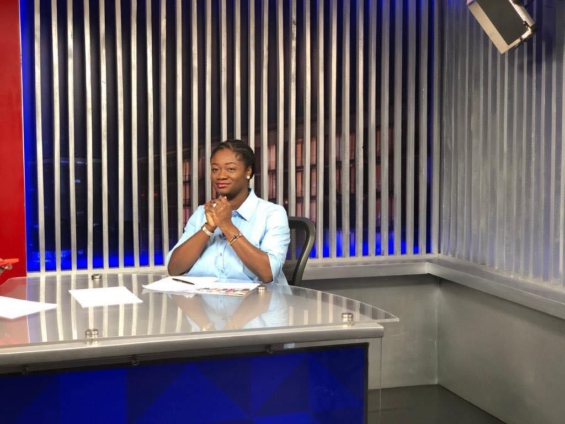
The Chief Executive Officer of the Ghana Enterprises Agency, Kosi Yankey-Ayeh, says the Coronavirus Alleviation Program Business Support Scheme (CAPBuSS) has been one of the most successful interventions her organization has undertaken.
The CAPBuSS which was launched in 2020 was formed as part of government’s intention of providing support to SMEs who were affected by Covid-19 pandemic.
The government set up the special fund with a seed capital of GH¢600 million and subsequently topping it up with GH¢150 million.
According to Ms. Yankey-Ayeh, the CAPBuSS since its inception has successfully provided support to over 300,000 businesses and hopes to do more in the coming years.
Speaking on JoyNews’ PM Express Business Edition, she said, “So the Covid funds, the CAPBuSS I think was one of our most successful interventions. A lot of the work we had done at that time was that the whole world was going through a crisis.
“The President came out and was very bold in his ambition to support MSMEs which was pledging over 600 million Ghana cedis, which at that time was over 150 million dollars to be able to support and hold steady MSMEs in Ghana.
“So a lot of work went into that. To try to build that support, to try to build those businesses and strengthen them. And that’s what the funding did. It provided relief to these businesses; about 302,000 plus businesses benefitted from this intervention.”
She noted that since 2020, over 500 million Ghana cedis have been disbursed via rural banks and mobile money services to beneficiaries.
“And the funds went out to them directly to be able to use to strengthen their businesses and to stabilize their businesses. So a lot of support went out through the CAPBuSS at that time.”
Currently, the GEA through its financial partners is working to recover funds paid to beneficiaries, while putting in place mechanisms to ensure that funds recovered can be re-disbursed to more MSMEs.
“Now what we’ve reached is the recovery phase because those were not free funds, they were actually loans.
“If you go across the country, yesterday, I was in Ashanti Region talking to some of the rural banks and trying to see how we’re managing these recoveries, and as much as possible you’ll see that people have the willingness and the eagerness to pay,” she said.
Latest Stories
-
The Ghanaian prophet and the mysterious death of his scottish wife Charmain Speirs
43 minutes -
Nearly 400 sentenced in Nigeria for links to militant Islamists
1 hour -
Ghana’s recovery supported by gold strength despite global oil price pressures – Standard Bank Research
1 hour -
‘Excellence is our inheritance’ – Nana Sam Brew-Butler hails Mfantsipim’s 150-year reign in leadership
2 hours -
Kwaku Azar writes: A-G vs OSP
2 hours -
Mfantsipim–Adisadel rivalry built excellence, not division – Sam Jonah
2 hours -
Vice President launches Mfantsipim’s 150 years of shaping Ghana’s greatest mind
2 hours -
I assure Otumfuo, Mahama will join him to commission KNUST Teaching Hospital by end of this year – Haruna Iddrisu
3 hours -
Barcelona dominate derby to extend La Liga lead
3 hours -
Gov’t to roll out free special education for persons with disabilities from July 1 – Education Minister
3 hours -
Importers and Exporters Association declares full support for Publican AI port system
4 hours -
“We used it to test our officiating officials’ readiness” – Bawah Fuseini after CAA Athletics event
4 hours -
Volleyball emerges as Ghana’s fastest rising sport
4 hours -
National Sports Fund needs strong leadership from the top – Administrator David Wuaku
4 hours -
JoySports Exclusive: Steve McLaren in talks with GFA after expressing interest in Black Stars job
4 hours