

Audio By Carbonatix
A baseline study by the Ghana Center for Democratic Development (CDD Ghana) has shown that majority of communities in northern Ghana lack adequate productive assets, leaving them vulnerable to economic shocks and violent extremism.
The study, funded by the Global Community Engagement and Resilience Fund (GCERF), covered 15 districts across the Upper East, Upper West, and Northeast Regions.
It found that 70 percent of community members did not possess sufficient resources such as land, livestock, seeds, fertilizers, and water to sustain their livelihoods, while only 30% reported having adequate productive assets.
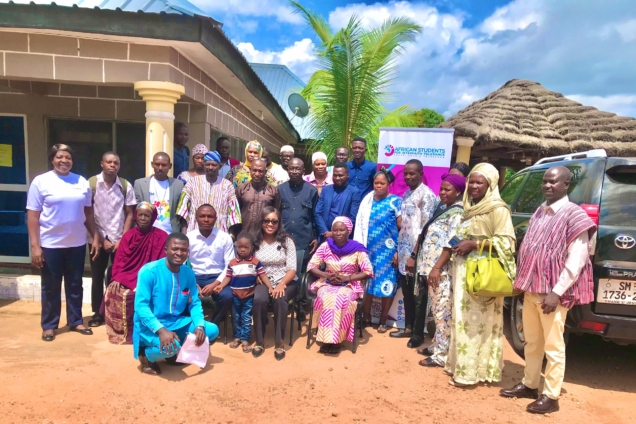
The findings were made known during a dialogue session at Nalerigu in the NortheastRegion with service providers, traditional authorities, opinion leaders, women’s groups, and youth associations.
The study also highlighted disparities in financial management and marketing skills.
The study pointed out that while 51.4% of respondents rated their skills as “good” or “very good,” about 20%, especially Fulbe women, struggled with even basic skills due to barriers in accessing training opportunities.
Speaking at the event, Sharon Willis Brown-Acquah, Programmes Officer with the Security Sector Governance Department at CDD-Ghana, said the findings were tailored to inform interventions under the project to empower vulnerable groups.
She said, “CDD Ghana aims to work with community leaders, traditional authorities, and service providers to promote peacebuilding, social cohesion, and socio-economic development in these regions.”
The Northeast Regional Registration Officer of the National Identification Authority, Abugri Danladi Nabila, commended CDD Ghana for promoting tolerance and inclusivity, emphasising the need to address challenges in accessing services such as the Ghana Card.
He said, “Some individuals fear providing documents due to possible interrogation by district officers. This project will help build confidence and ensure no one is excluded.”
The National Security Zone Officer for the Northeast Region also praised the initiative for enhancing community engagement and sensitization, especially among vulnerable groups.
He said, “Addressing discrimination against the Fulani community requires continuous sensitization. Language barriers remain a challenge. So, the use of local interpreters will be vital to ensure inclusivity.”
The study recommended that Civil Society Organizations (CSOs), Metropolitan, Municipal, and District Assemblies (MMDAs), and traditional authorities intensify public awareness campaigns on social cohesion, trust, and collaboration.
It further urged MMDAs and chiefs to design programmes that guaranteed access to land, livestock, seeds, fertilizers and water resources.
It proposed targeted support for Fulbe communities to improve access to grazing land, veterinary services, livestock, and farming tools to enhance their economic independence and participation in development.
A total of 677 respondents and 42 key informants, including traditional leaders, immigration officers, opinion leaders, journalists, and women and youth group leaders, participated in the study, which assessed socio-economic conditions, vulnerability to violent extremism, and market needs of selected communities.
Latest Stories
-
“US Embassy introduced TRIBE Culture Fest to NSA, GTA” – Kofi Adams
1 hour -
“NSA did not tell us of any embassy arrangement” – Kofi Adams
2 hours -
Glasner suffers loss on Selhurst return as Palace beat Forest
3 hours -
WAFU B U17: ‘We won but I expected more from my boys’ – Kassim Ocansey
3 hours -
Man City cruise to statement win over 10-man Liverpool
3 hours -
Be careful with cross-border lending, foreign currency exposures – BoG to financial institutions
6 hours -
GPL 2026/27: Medeama go three clear as Hearts of Oak recover and Bechem stage stunning comeback
6 hours -
Ntiamoah Foundation launches “BEYOND 20” anniversary campaign
6 hours -
Credit Risk Management Directive: BoG to begin implementation for banks, others from July 1, 2027
7 hours -
Ghana Brands Awards 2026: Leading brands, business trailblazers to shine on November 20
7 hours -
T-bills auction: Demand improves as government exceeds target by about 76%; interest rates soften
7 hours -
Ziope undertakes initiative to build a technologically inclined community, commissions self-help ICT lab
7 hours -
ECG announces power outage in parts of Tema, Central Region due to network fault, maintenance
8 hours -
When the Gospel Becomes a Weapon: The church, blackmail and the abuse of faith
8 hours -
JoyNews’ Jacqueline Ansomah Yeboah selected for UK Media Excellence for Emerging Technologies Fellowship
9 hours