

Audio By Carbonatix
The Chief Executive of the Development Bank Ghana, Kwamina Duker, says changing the mindset of players in the financial industry is pivotal to increasing support to the agricultural sector.
According to him, if financial institutions understand the importance of collaborating with players in the agriculture sector, it would be easier to lend to them.
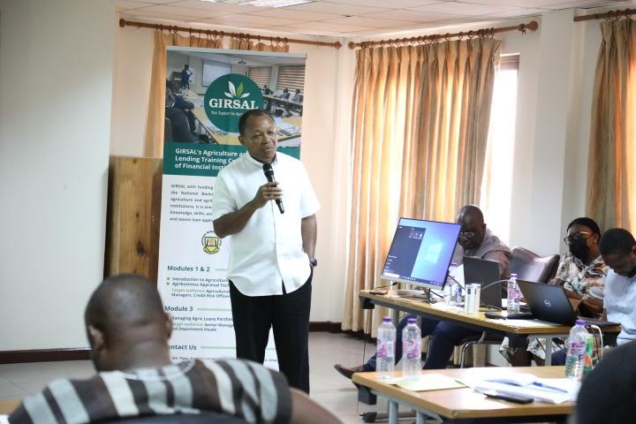
Speaking at a training session organised for financial institutions by Ghana Incentive-based Risk-sharing System for Agricultural Lending, he said, “We’ve got ourselves into a cycle where there’s blame on both sides; the SMEs are blaming the banks and vice versa and there’s no common language."
“However, the way forward is changing mindsets. So, by bringing together the banks, Development Bank Ghana and GIRSAL, we then look at the ecosystem and first ask ourselves, what is causing the risk? Is it the long-term financing? Is that we need SMEs to be more ready? Do they have a good understanding of what banks require to be able to meet loans?”
Mr. Duker believes “it’s not a matter of just giving out the money because that ends with everyone going bankrupt. So, now there’s a mindset of working together, collaborating, and connecting for the common good.”
The Ghana Incentive-based Risk-sharing System for Agricultural Lending (GIRSAL) introduced the Agriculture and Agribusiness Lending Course for financial institutions in 2020 in collaboration with the National Banking College. The programme is to help financial institutions improve their capacity to access agricultural loan applications and manage agribusiness lending.
Chief Executive of GIRSAL, Kwesi Korboe, reiterated his outfit’s commitment to growing the agriculture sector.
He indicated that his outfit has identified three issues that need immediate attention.
“Recently we added advocacy to our mandates where we’re trying to look at the entirety of risk in agric financing. In fact, for this year, we have identified three critical issues; policy on exports at the Tema Port, agric production and the issue of imported chicken. These are some of the things we’re focusing on to help make recommendations to government that these challenges need to be addressed to fully realise the potentials of the sector,” he stated.
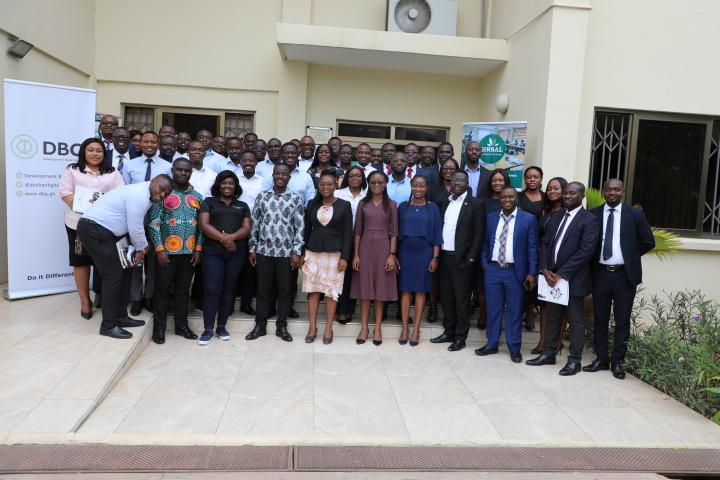
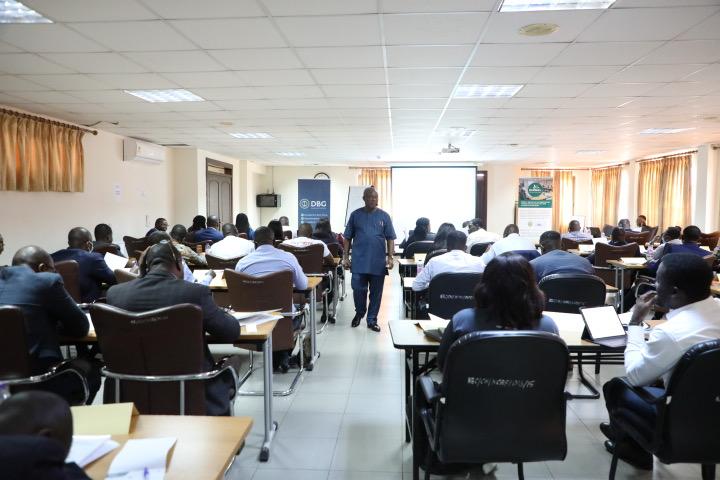
55 participants from 12 financial institutions attended the training session.
Latest Stories
-
Ghana to begin camping with 12 athletes after Accra Open Championships – Bawa Fuseni
7 minutes -
Anthony Joshua declines showdown with Tyson Fury but admits they ‘probably’ clash next
20 minutes -
Tyson Fury dominates Makhmudov, calls out Joshua next
40 minutes -
I have supported highway authority financially to fix roads in my constituency – A Plus
2 hours -
US, Iran fail to reach peace agreement after marathon talks in Pakistan
2 hours -
ECG kicks off Phase Two of transformer upgrades at Lashibi; brief outages expected
3 hours -
Port crises loom as 11,000 drivers threaten four-day strike
4 hours -
A source of excellence across generations – Vice President Opoku-Agyemang lauds Mfantsipim
4 hours -
(Photos) Mfantsipim School launches historic 150th anniversary
5 hours -
Knights and Ladies of Marshall group backs Catholic Bishops’ stance on anti-LGBTQ+
6 hours -
Bright Simons writes: All the Filla in the Ibrahim Mahama/E&P – Gold Fields Saga
6 hours -
Monetise Idiocy In Ghana
6 hours -
The Ghanaian prophet and the mysterious death of his scottish wife Charmain Speirs
7 hours -
Nearly 400 sentenced in Nigeria for links to militant Islamists
7 hours -
Ghana’s recovery supported by gold strength despite global oil price pressures – Standard Bank Research
7 hours