


Audio By Carbonatix
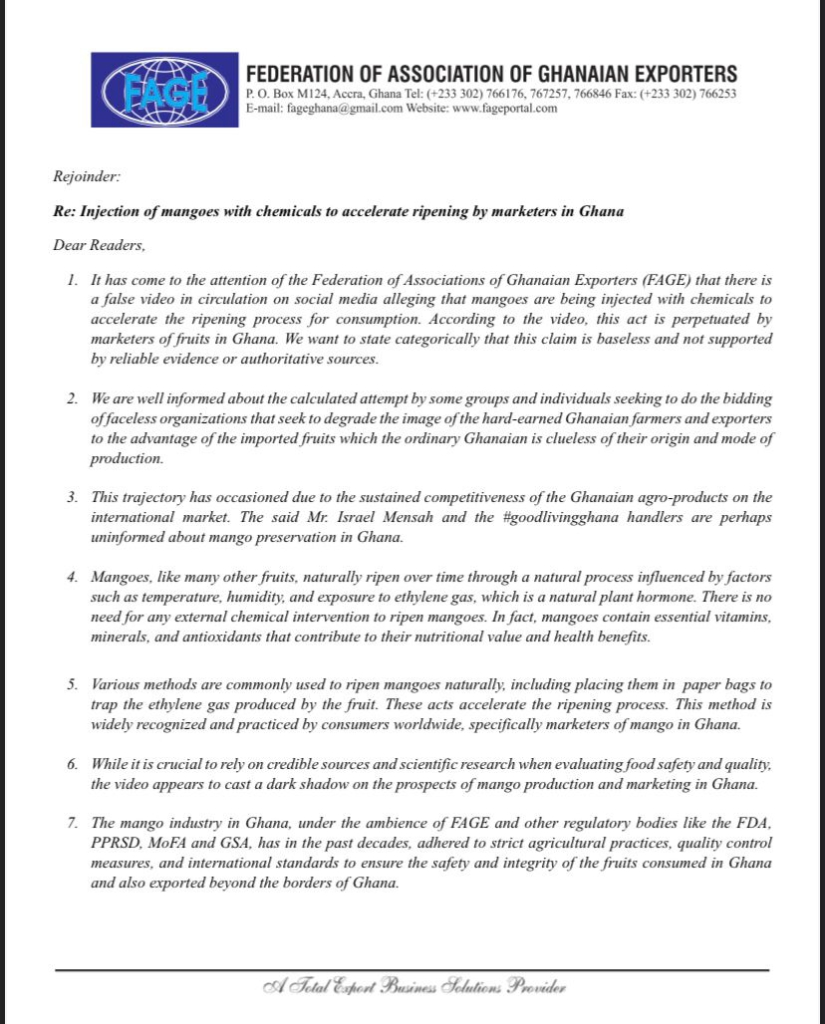
The Federation of Associations of Ghanaian Exporters (FAGE), has debunked claims made in a viral social media video that mangoes are being chemically injected to hasten the ripening process.
According to FAGE, mangoes in Ghana adhere strictly to Good Agricultural Practices (GAP) per international standards, and are thus safe for human consumption as they ripen through a natural process influenced by factors such as temperature, humidity, and exposure to ethylene gas.
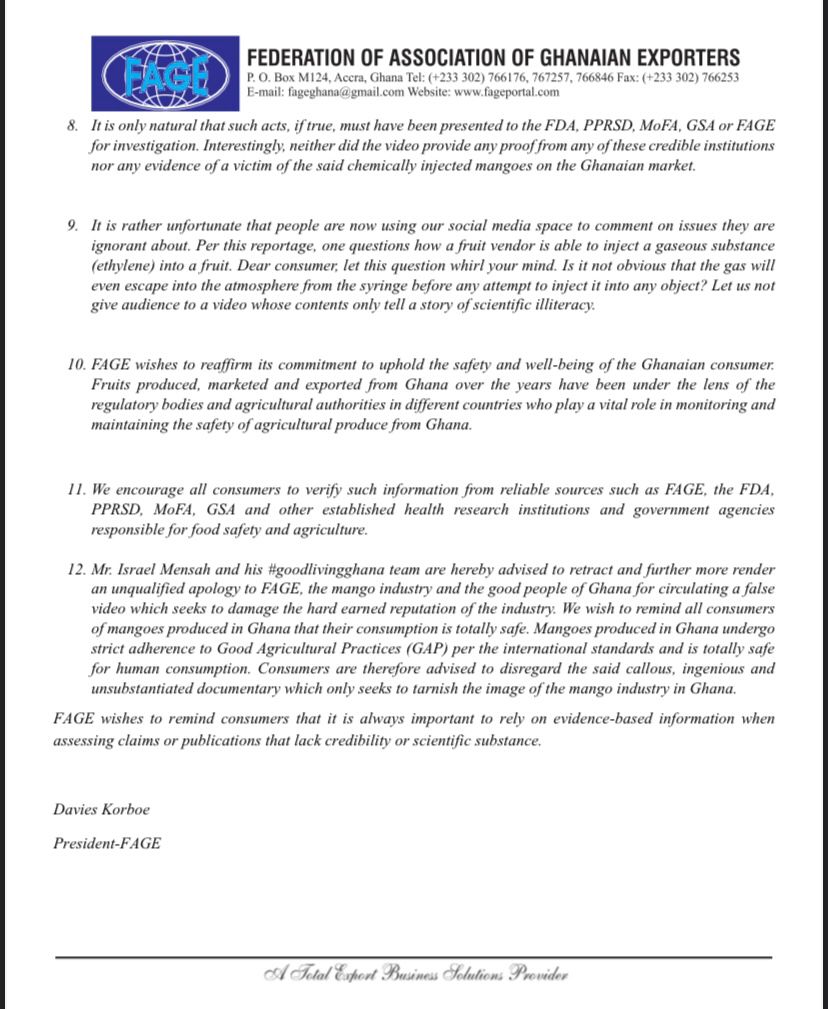
In a press statement signed by its president, Davies Korboe, the federation described the said video as deceptive, and called on its creators to retract and apologize for the harm caused.
For information regarding the quality of food, FAGE urged the public to rely on organisations such as the Ghana Standards Authority (GSA), the Ministry of Food and Agriculture (MoFA), the Food and Drugs Authority (FDA), and Plant Protection & Regulatory Services (PPRSD).
The Federation in a statement said, "We are well informed about the calculated attempt by some groups and individuals seeking to do the bidding of faceless organizations seeking to taint the image of the hard-earned Ghanaian farmers, marketers and exporters to the advantage of the imported fruits which the ordinary Ghanaian is clueless of their origin and mode of production."
"This trajectory has occasioned due to the sustained competitiveness of the Ghanaian agro-products on the international market. The said Mr. Israel Mensah and the #goodlivingghana handlers are perhaps uninformed about mango preservation in Ghana.
Mangoes, like many other fruits, naturally ripen over time through a natural process influenced by factors such as temperature, humidity, and exposure to ethylene gas, which is a natural plant hormone. There is no need for any external chemical intervention to ripen mangoes. In fact, mangoes contain essential vitamins, minerals, and antioxidants that contribute to their nutritional value and health benefits.
It said the mango industry in Ghana, "under the ambience of FAGE and other regulatory bodies like the FDA, PPRSD, MoFA and GSA, has in the past decades, adhered to strict agricultural practices, quality control measures, and international standards to ensure the safety and integrity of the fruits consumed in Ghana and also exported beyond the borders of Ghana.
Read the full statement below:
Latest Stories
-
Asha Bhosle: The sound of Bollywood dies aged 92
25 minutes -
Fire destroys section of 4-bedroom apartment at Tantra Hill
27 minutes -
Safe city: Unnoticeable protection
34 minutes -
North East Regional Police Commander raises alarm over burning of checkpoints
43 minutes -
Free Primary Healthcare Programme set for take-off — Health Ministry confirms readiness
59 minutes -
3 co-wives, 5 children perish in canoe disaster – Maritime Authority insists life jackets use mandatory for all water transport
2 hours -
Iran war lands ‘triple blow’ to flood-ravaged Sri Lankans
2 hours -
Gunmen kill at least 11 people at Afghanistan picnic spot
3 hours -
Woman, 25, in court for stealing baby at Bogoso
3 hours -
Trump unveils giant gold-accented victory arch design for US capital
3 hours -
We spoke to the man making viral Lego-style AI videos for Iran. Experts say it’s powerful propaganda
3 hours -
Hungarians vote in big numbers on whether to end Orbán rule and elect rival
3 hours -
At least 30 feared dead in crush at Haitian tourist site
3 hours -
Boxing: Abdul Ahmed wins WBA Africa Cruiserwight title after dispatching Nigeria’s Eradeye
3 hours -
Nearly 2,000 displaced, schools damaged as windstorm wreaks havoc in Gushegu
3 hours