

Audio By Carbonatix
Children worldwide are more likely to experience poverty than adults, according to UNICEF. Child poverty is multidimensional, encompassing deprivation in areas such as shelter, nutrition, water, education, financial stability, and healthcare.
Since children lack the capacity to provide for themselves, UNICEF attributes child poverty largely to the circumstances of their parents, which are impacted by widening inequalities and rising global challenges such as security and environmental issues.
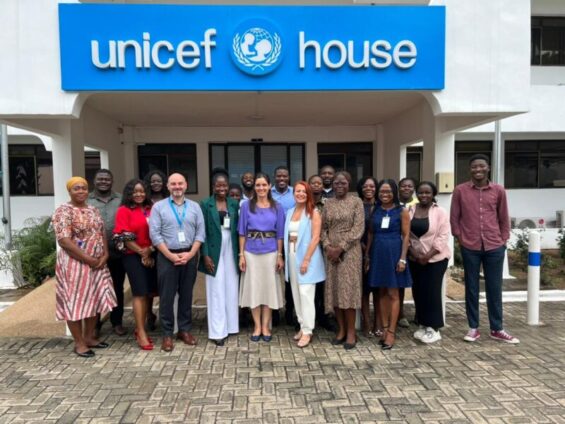
At a recent Media Café event marking International Day for the Eradication of Poverty, UNICEF Ghana's Chief of Social Policy and Inclusion, Paulina Mulhovo, revealed that around "28% of Ghanaian children are considered monetarily poor. Also, nearly three out of four children (73.4%) face multiple forms of deprivation simultaneously, while only a small fraction (2.5%) experience no deprivation at all."

These statistics underscore the depth of child poverty in Ghana and its far-reaching effects.
In an effort to address child poverty, UNICEF through its Social Policy and Inclusion Program partners is working with the Ghanaian government, including the Ministry of Finance, Ministry of Gender, Children and Social Protection, and other entities like CSOs, academia, CHRAJ, and Parliament.

On a global scale, countries like Brazil have led the way in G20 initiatives to eliminate poverty and hunger, supported by their strategic partnership with UNICEF.
Mariana Madeira, Brazil's Ambassador to Ghana, graced the media café to demonstrate her country’s commitment to tackling child poverty.
Madam Madeira emphasised Ghana's opportunity to achieve the goals of the Global Alliance Against Hunger and Poverty.

UNICEF believes that the severe consequences of child poverty can be mitigated if governments prioritize relevant policies and programs.
With policy measures such as cash transfers, health insurance, and other social protections, every child could have an equal chance at a better future.
Ending child poverty is, in UNICEF’s words, “a policy choice” that requires comprehensive, multidimensional action.
Latest Stories
-
Christina Koch becomes first woman to travel around the moon on Artemis II
10 minutes -
Epstein survivors’ calls to meet King Charles and Queen harder to ignore as US visit approaches
16 minutes -
UN Secretary-General names Ghana’s Anita Kiki Gbeho as South Sudan envoy
18 minutes -
Mali withdraws recognition of Sahrawi Republic, backs Morocco’s autonomy plan
22 minutes -
Gov’t distributes over 8,500 laptops to One Million Coders project
23 minutes -
Julius Debrah, ‘man to beat’ as NDC’s James Agbey dismisses Musah Dankwah’s polls
30 minutes -
GPRTU in Savannah Region to protest alleged eviction in Damongo
59 minutes -
Re: Reinsurance does not replace process — A response to the SIGA–SIC defence
1 hour -
Gender Ministry supports Harriet Amuzu in ongoing abuse case
1 hour -
AG joins plaintiff to scrap OSP ?: We should be mindful of the mischief in this – Bobby Banson
2 hours -
Samson Lardy Anyenini questions willingness of Attorneys-General to prosecute political colleagues
2 hours -
It is only fair the OSP is heard in Supreme Court case – Bobby Banson
2 hours -
Asiedu Nketia resumes Ashanti tour, second leg kicks off on Sunday
2 hours -
NLA denies salary cut claims, threatens legal action over reports
2 hours -
BoG Governor honoured for stabilising cedi, improve inflation
2 hours