


Audio By Carbonatix
Clashes in Mauritania between security forces and protesters rallying against the reelection of President Mohamed Ould Ghazouani left three people dead, authorities said Tuesday. An unspecified number of people were reported injured.
Following the clashes, mobile internet access was blocked Tuesday as authorities vowed to arrest those behind the violence.
The protests broke out late Monday in parts of the northwestern African country after Ghazouani was declared the winner of the presidential election.
His main rival, Biram Dah Abeid, a renowned anti-slavery activist, rejected the outcome and claimed the result was falsified.
Authorities said security forces in the southern city of Kaedi — the country’s largest and an opposition stronghold with an overwhelming Black majority — confronted the demonstrators, the Ministry of Interior said, and several arrests were made. The ministry did not identify the three people killed in the violence or elaborate on the circumstances of their deaths.
Demonstrations also broke out in the towns of Nouadhibou, Rosso Zoueirat and Boghe, all also Abeid strongholds.
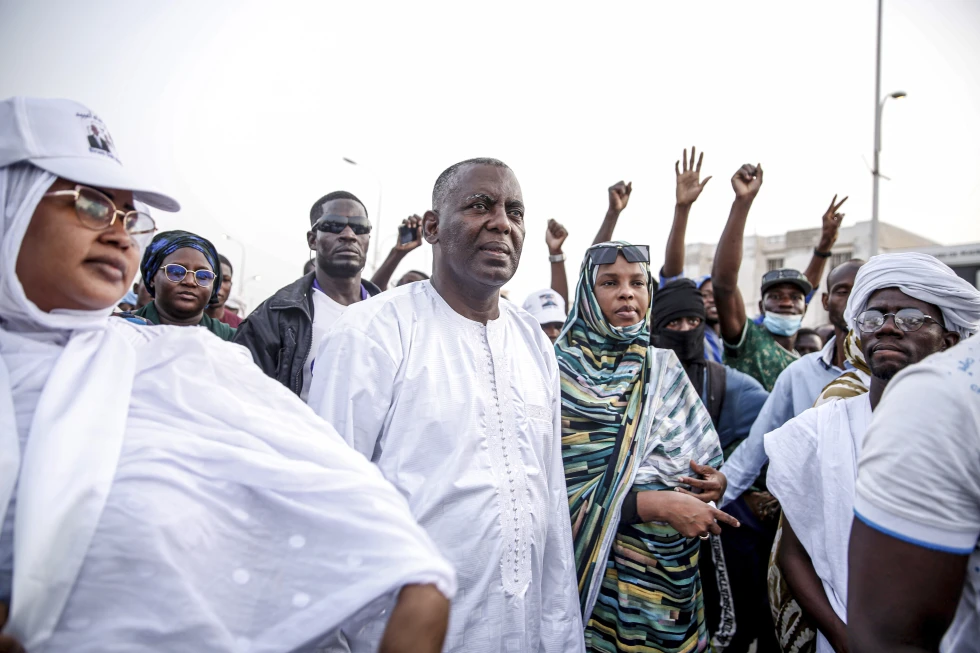
“Kaedi last night saw violent acts of vandalism and sabotage of public and private property, scenes of looting and a general climate of fear which led the security forces to confront it and arrest several demonstrators,” the ministry said in a statement.
“The prosecutor’s office will open an investigation to determine the circumstances of these events and the death of the demonstrators,” the ministry added.
Ghazouani, who had campaigned on a pledge of providing security and economic growth, won 56% of the votes while Abeid received 22%, the electoral commission said Monday. Abeid promptly called for “peaceful demonstrations and peaceful gatherings.”
The commission — which includes representatives of political parties — dismissed the opposition's claims about voting irregularities.
Three international election observation missions also said in their preliminary statements Monday that the voting was held in a “peaceful and transparent atmosphere.”
Ghazouani has been accused by his opponents of corruption and mismanagement but remains popular among Mauritanians who see him as a beacon of stability amid regional tensions, with several neighbouring countries shaken by military coups and jihadi violence.
For centuries, Mauritania’s economic and political elite of Arab and Amazigh people enslaved Black people from the northwestern Sahara.
Mauritania outlawed slavery in 1981, the last country in the world to do so, but the practice continues, human rights groups say.
There are around 149,000 people held in conditions of slavery in this nation of less than 5 million, according to the 2023 Global Slavery Index.
Latest Stories
-
“Feels amazing” – Antoine Semenyo reveals after Manchester City dismantle Liverpool
10 minutes -
Mahama calls for emergency cabinet meeting over rising fuel prices
53 minutes -
Asante Gold reports US$345million loss for 2025
2 hours -
Gov’t making progress in clearing $1.7bn power debt – Mahama
3 hours -
Justice is the engine of growth – Chief Justice
3 hours -
Meet us halfway – Trade Minister tasks private sector with AfCFTA success
4 hours -
After more than 14 years at Atletico Madrid, what next for Simeone?
4 hours -
Conquering the World – Building on the foundations laid by Otto Addo
4 hours -
[Playback] Sarkodie, Kwami Eugene, Tinny, Keche and others thrill fans at Gomoa Easter Carnival
4 hours -
Gomoa Easter Carnival: Experts charge indigenes to own festival to ensure sustainability
5 hours -
Gomoa Easter Carnival: Edem Agbana and Joy Prime fans shower festival with huge endorsements
7 hours -
Gathering of Royals 2026: Empowering women, boosting tomato production
7 hours -
Gov’t to overhaul free zones into manufacturing hubs for local production – Trade Minister
8 hours -
Ghana losing $2.5bn yearly from raw exports – Trade Minister reveals
8 hours -
Mahama unveils plans for Kwahu Airport, Convention Centre
8 hours