

Audio By Carbonatix
By 2050, up to 5 per cent of Africa’s population—about 100 million people—could be forced to move due to the impacts of climate change.
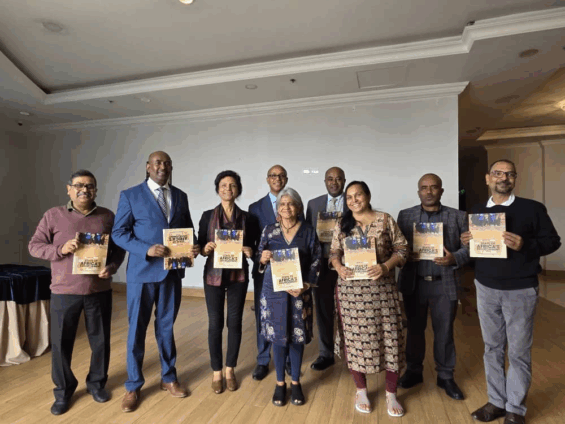
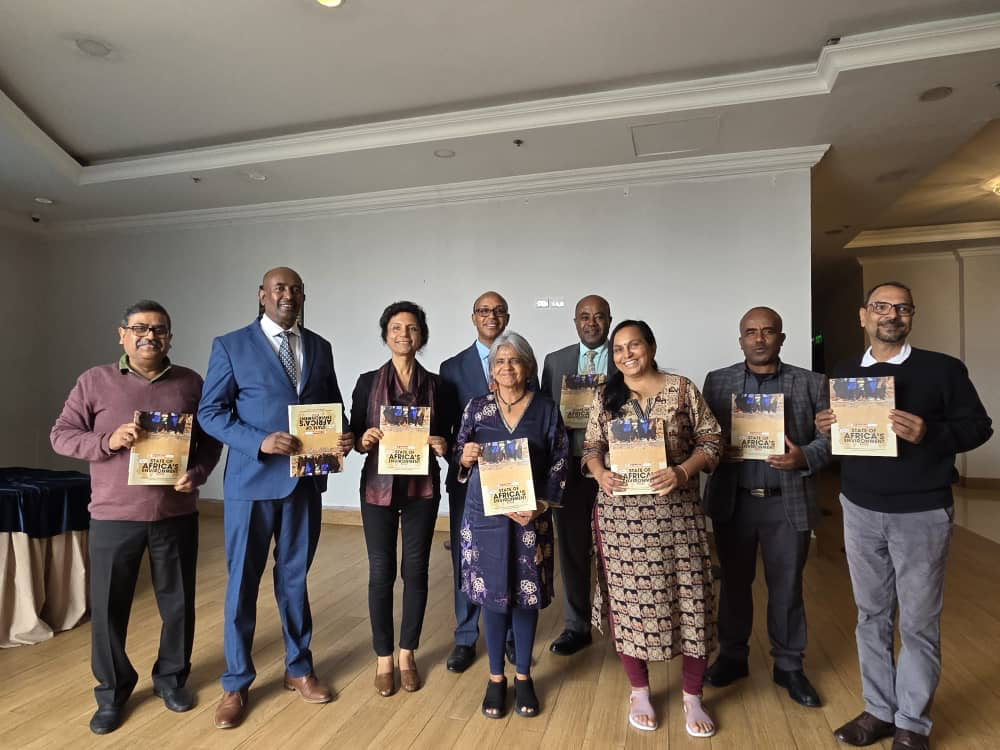
This warning is contained in the State of Africa’s Environment Report 2025, released in Ethiopia by the India-based Centre for Science and Environment (CSE).
The report presents thoroughly researched data and analysis on climate-induced migration and related challenges. “Africa, in fact, would have the highest rate of displacement or migration due to impacts of climate change,” the report states.
Drought, floods, sea level rise, among others already displacing millions
Reliable reports in Somalia indicate that recurring droughts have displaced millions of people. Farming families continue to lose crops and livestock, forcing many into displacement camps or urban centres in search of food, water, and aid.
The situation in Nigeria is not different; the 2022 floods killed over 600 people and displaced 1.4 million, destroying homes, schools, and farmlands. Entire communities along the Niger and Benue rivers remain vulnerable as rainfall grows increasingly erratic.
Rising seas have already swallowed parts of coastal villages, forcing communities inland. Between 2020 and 2030, reports say Africa’s seven largest coastal cities—Lagos, Luanda, Dar es Salaam, Alexandria, Abidjan, Cape Town, and Casablanca—are projected to grow by 40 per cent, from 48 million to 69 million people. Smaller coastal cities are expected to expand even faster: Port Harcourt, Nigeria, could grow by 53 per cent within the same period.
At the current rate, Analysis demonstrates that sea levels are projected to rise by 0.3 metres by 2030, affecting 117 million Africans. Limiting global warming to 2°C could restrict the rise to 0.4 metres, but a 4°C scenario would see a full metre rise by 2100.
In Niger, Chad, and Burkina Faso, expanding deserts are reducing arable land. Farmers and herders are migrating southwards into densely populated areas, often leading to clashes over land and water.
Cyclone Idai in 2019 displaced nearly 600,000 people across Mozambique, Zimbabwe, and Malawi, leaving 783 dead. Scientists warn that such storms will intensify with climate change, driving further displacement.
The Groundswell Model projects that 32 million people in West Africa could be forced to migrate within their countries by 2050 due to water scarcity, land degradation, and sea level rise. Under pessimistic scenarios, Niger could see 19.1 million internal migrants, Nigeria 9.4 million, and Senegal 1 million. In the coastal belt of West Africa alone, up to 2.2 million people could be displaced.
CSE's emphasised that climate change and land degradation are driving an 18 per cent decline in agricultural production across Africa. Cocoa production in West and Central Africa, which supplies 70 per cent of the world’s cocoa, is under serious threat. If global temperatures rise by 2°C, according to the report, half of Africa’s population could face undernourishment.
What experts say during the launch
Director General of the Bio and Emerging Technology Institute in Ethiopia, Professor Kassahun Tesfaye, said: “The data in this report, while alarming, also points the way forward. It shows that our greatest liability—our natural resources and land—is also our greatest asset to build a sustainable bioeconomy.”
He explained that the bioeconomy is “an economic system that uses renewable biological resources to produce food, materials, and energy—a circular economy where waste becomes a new beginning.”
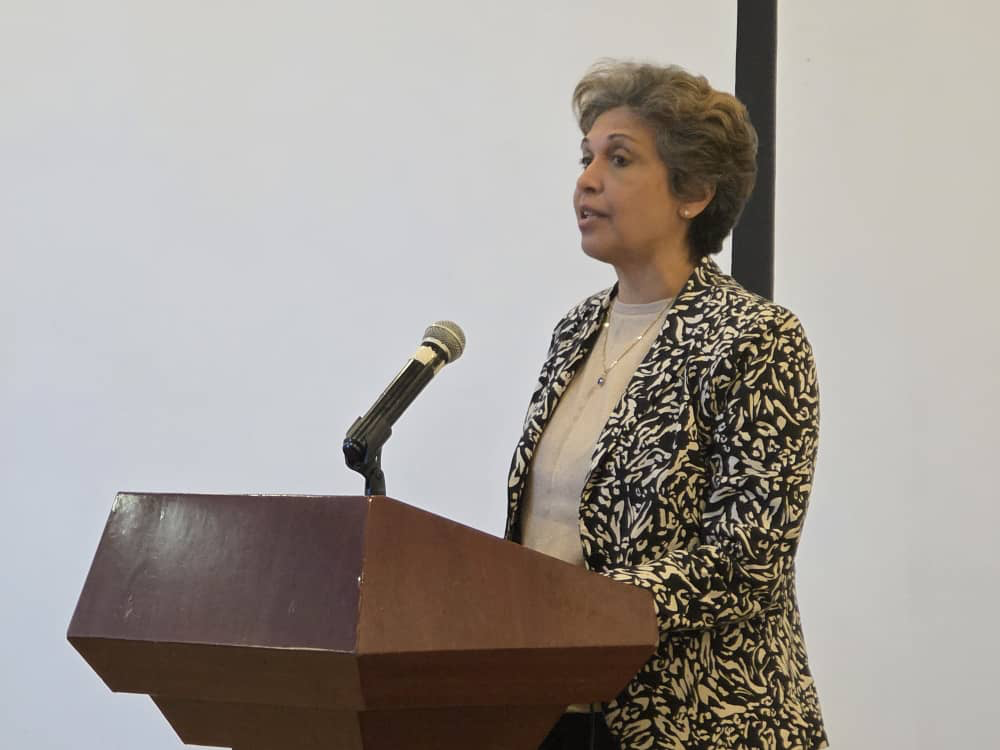
CSE Director General Sunita Narain added: “Change is taking shape in Africa," adding that, every African nation now has some adaptation programme to showcase from net-zero carbon strategies to indigenous knowledge systems tackling drought and extreme weather.
Dr. Rita Bissoonauth of UNESCO described the report as “a moral compass”, highlighting that Africa faces annual direct economic losses of US$1.18 billion in North Africa and US$1.25 billion in sub-Saharan Africa.
Ethiopia’s Adaptation Example Nigussu Lema, Deputy Director General of the Ethiopian Environment Protection Authority, said Ethiopia is focusing on strengthening climate resilience through its National Adaptation Plan (NAP-ETH), which integrates climate adaptation into development planning.
Latest Stories
-
GAUA to consult members before deciding whether to suspend two-month university strike
41 seconds -
Moody’s upgrades Ghana’s credit ratings to B3, but changes outlook to stable
7 minutes -
‘I want to raise well-rounded individuals, not just men’ – Kate Addo on parenting boys
11 minutes -
Yaa Konadu Agyeman’s ‘Exceptionally Yours’ is the perfect romance read for the holiday season
20 minutes -
‘You have to man up’ – Kobby Kyei on the hidden cost of silence for Ghana’s boys
24 minutes -
DVLA extends regional office hours to 10pm under 24-Hour Economy
28 minutes -
‘Ghanaians are becoming like Kweku Ananse’ – Agyinasare warns against culture of lies
29 minutes -
‘The nation failed us’ – Okada Riders’ PRO defends young riders caught between survival and the law
30 minutes -
DVLA plans demerit point system, real-time monitoring of testing stations
31 minutes -
Health Committee Chair lauds NHIA’s swift disbursement of insurance claims
31 minutes -
Okada Association says it’s preparing training centre as gov’t works on new regulations
32 minutes -
Imperial General Assurance backs Team Auto Racing Ghana ahead of historic Angola showrun
40 minutes -
Before they failed the BECE, did Ghana fail them?
41 minutes -
Photos: Mahama swears in Emelia Afi Agbenyo, Joseph Kwaku Asamoah as EC Deputy Commissioners
43 minutes -
Centre for CSR, West Africa partners with Climate x Culture Summit to champion corporate sustainability at Google AI Centre
49 minutes