

Audio By Carbonatix
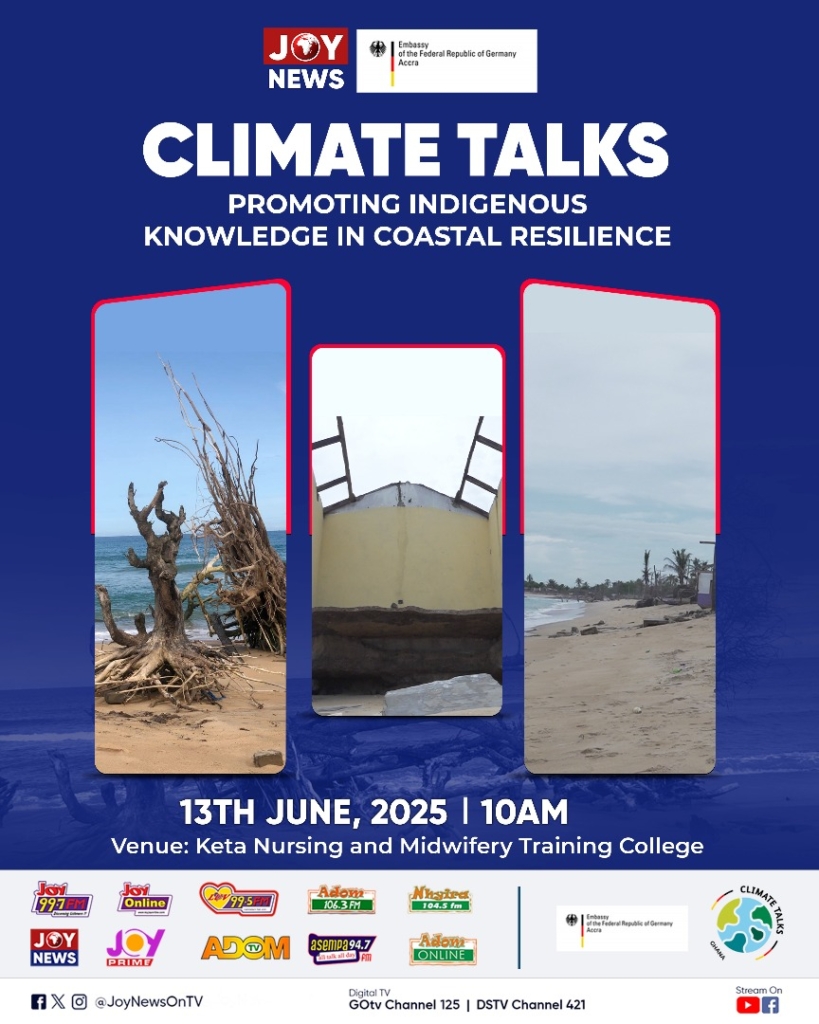
JoyNews, in collaboration with the German Embassy, is set to host the second edition of Climate Talks, which aims to encourage bold new steps to protect Ghana’s vulnerable coastal communities by integrating indigenous knowledge into national climate resilience efforts.
This edition will spotlight how Ghana is responding to the increasing threats of coastal erosion and sea-level rise, with a focus on grassroots solutions rooted in tradition.
Roughly 25% of Ghana’s population lives along the country’s 550-kilometre coastline, where the ocean plays a central role in livelihoods and culture.
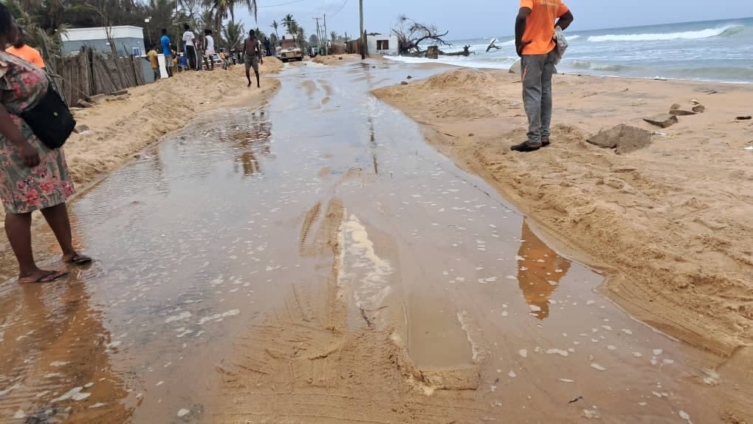
However, the coastline is receding gradually. Some communities, including Keta, Salakope, and Amutsinu, are losing up to 17 metres of land each year. In 2021 alone, nearly 4,000 people in the Keta district were displaced by severe tidal waves.
So far, Ghana’s response has leaned heavily on engineered solutions like sea defence walls. However, the Climate Talks dialogue is now turning its attention to the grassroots, emphasising the power of traditional ecological knowledge passed down through generations.
These practices, long used by local communities to manage land, water, and weather patterns, are being brought into the national spotlight.
The second edition of Climate Talks aims to shift perceptions, encouraging the public and policymakers alike to see local communities not merely as vulnerable populations but as vital knowledge holders and strategic partners in building coastal resilience.
The dialogue will be held at the Keta Nursing and Midwifery Training College Conference Hall in the Volta Region at 10:00 am on the 13th of June and broadcast live on JoyNews, JoyPrime, and Jubilee Radio.
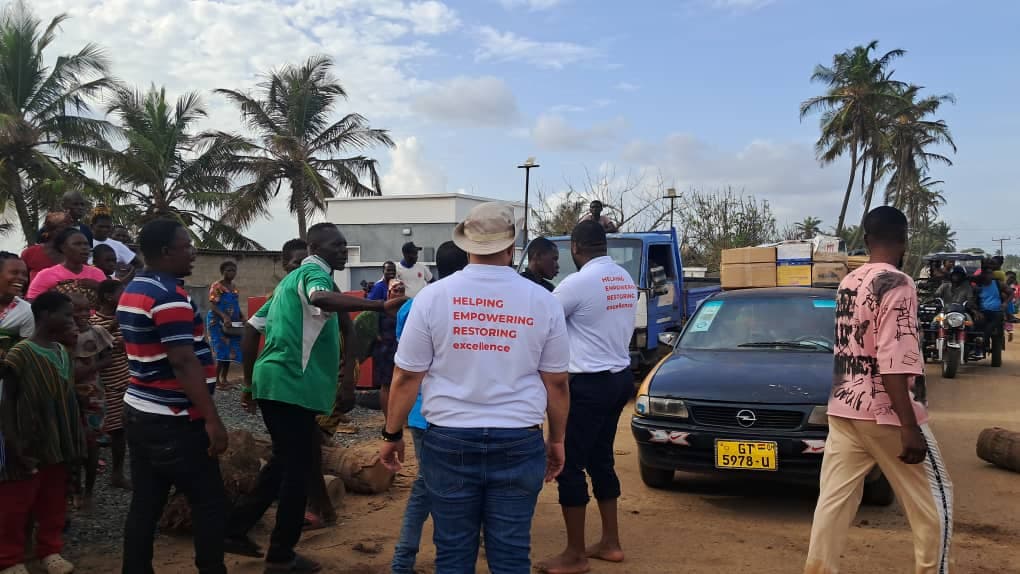
Community members, traditional leaders, climate experts, government officials and the general public will come together to share, document, and validate time-tested indigenous techniques that have helped coastal communities survive and adapt.
The dialogue will raise awareness of the benefits of indigenous knowledge in climate adaptation planning, promote capacity-building for both policymakers and communities, and attract private investment into locally informed, climate-resilient infrastructure.
The main goal of this second edition is to ensure that indigenous knowledge is fully reflected in Ghana’s National Adaptation Plan (NAP) and its Nationally Determined Contributions (NDCs) under the Paris Agreement.
As climate change escalates and engineered solutions become increasingly costly, Ghana’s pivot toward indigenous knowledge could become a defining model for coastal resilience in the future.
Latest Stories
-
Dusty Kwabenya-Berekuso-Kitase road affects health and education, residents call for help
15 minutes -
Sniffer dogs deployed as NACOC tightens security at Kotoka International Airport
16 minutes -
A Plus proposes bill to criminalise paternity fraud
20 minutes -
Ga Mantse in stable condition after dawn crash in Oti Region
29 minutes -
The longest I have stayed in a police cell is one month – BullGod
36 minutes -
Alhaji Abubakari Sidick gave me my first media interview in Ghana -Bawumia eulogises doyen
37 minutes -
South Korea’s ex-president jailed for life over martial law attempt
38 minutes -
I’ve spent 2 days in SWAT unit; it’s not a place anyone should be – Bullgod
44 minutes -
Defamation and rap diss culture in Ghana: A study of Drake vs UMG Recordings Inc.
51 minutes -
Terrorist attack on Ghanaian tomato traders in Burkina Faso prompts national security reset in Ghana
52 minutes -
NDC insists EC heads must go despite petition dismissal
53 minutes -
Nana Agyei Baffour Awuah calls for law to standardise prima facie cases
1 hour -
Cocoa Farmers in Western North demonstrate over price cut
1 hour -
Australian presenter apologises for drinking before slurred Olympics report
1 hour -
Let history record it right: Name the Radio Univers newsroom after Dr Alhaji Abubakari Sidick Ahmed
1 hour