

Audio By Carbonatix
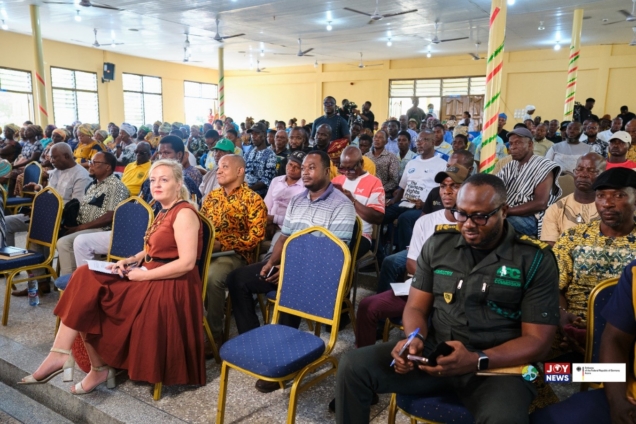
The second edition of Climate Talks, hosted by JoyNews in partnership with the Embassy of the Federal Republic of Germany, drew a large and enthusiastic crowd in Keta, sparking a powerful dialogue on the role of indigenous knowledge in addressing coastal erosion.
Held under the theme “Promoting Indigenous Knowledge for Coastal Resilience,” the dialogue took place with a focus on Keta’s long-standing struggle with tidal waves and sea erosion, an ever-present reminder of the urgent need for localised, community-driven climate action.
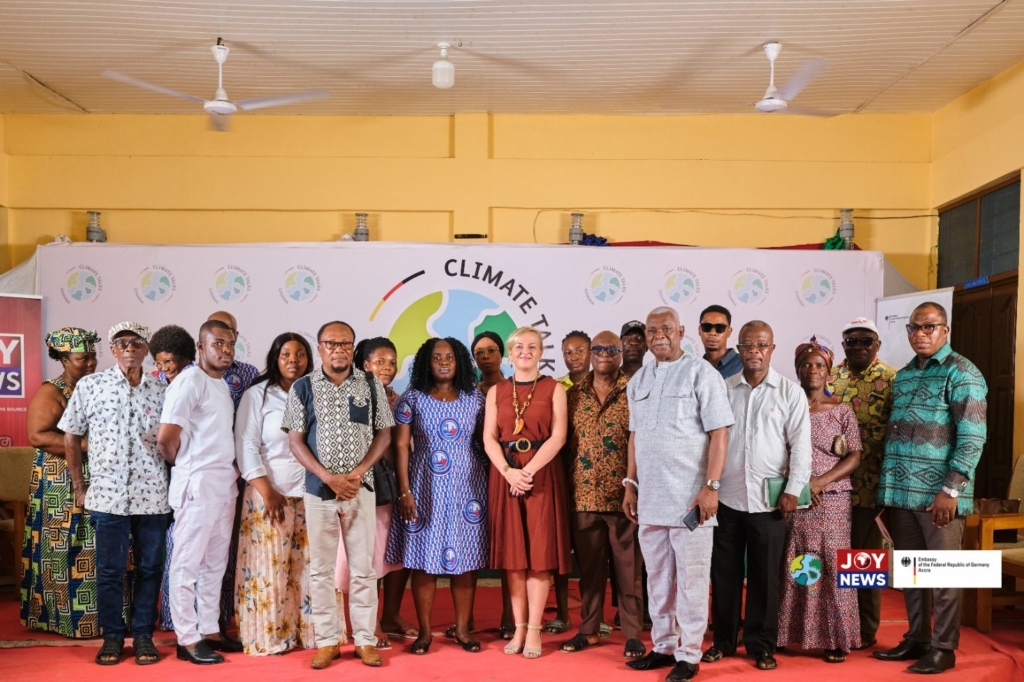
The gathering brought together traditional leaders, fisherfolk, policymakers, climate-focused NGOs, youth leaders, and environmental advocates, all aligned in their mission to integrate indigenous strategies into climate adaptation efforts.
Discussions were focused on enhancing the sustainability and effectiveness of climate responses while preserving cultural heritage and community identity.
This second edition of Climate Talks was designed to ensure that indigenous knowledge systems are recognized and reflected in Ghana’s National Adaptation Plan (NAP) and its Nationally Determined Contributions (NDCs) under the Paris Agreement.
It was also meant to encourage open dialogue, identify, document, and advocate the strengthening of community and policymaker capacities to incorporate traditional practices into resilience planning.
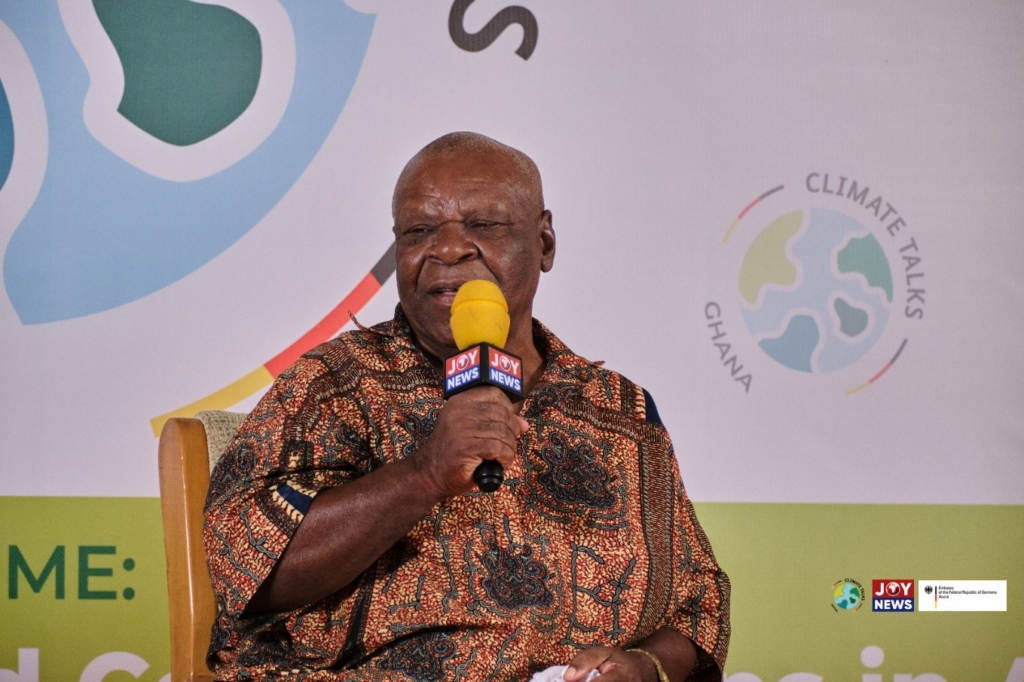
A community leader in Keta, Dumega Divine Kodzo Dzokoto, commended JoyNews and the German Embassy for putting indigenous perspectives at the center of the national climate conversation.
“We don’t have scientific experts in our communities, so during times of crisis, we rely heavily on our traditional leaders. But in today’s world, where science plays such a big role, discussions like this help us connect the dots and find ways to protect ourselves,” he stated.
The Keta Municipal Director for NADMO also called for concrete infrastructural interventions to address the growing threat of tidal waves and land loss.
“The first thing that has to be done is dredging and reclaiming land in Keta. We also call for the construction of a floodgate to reduce the currents from the tidal waves and minimize the impact of coastal erosion,” he said.
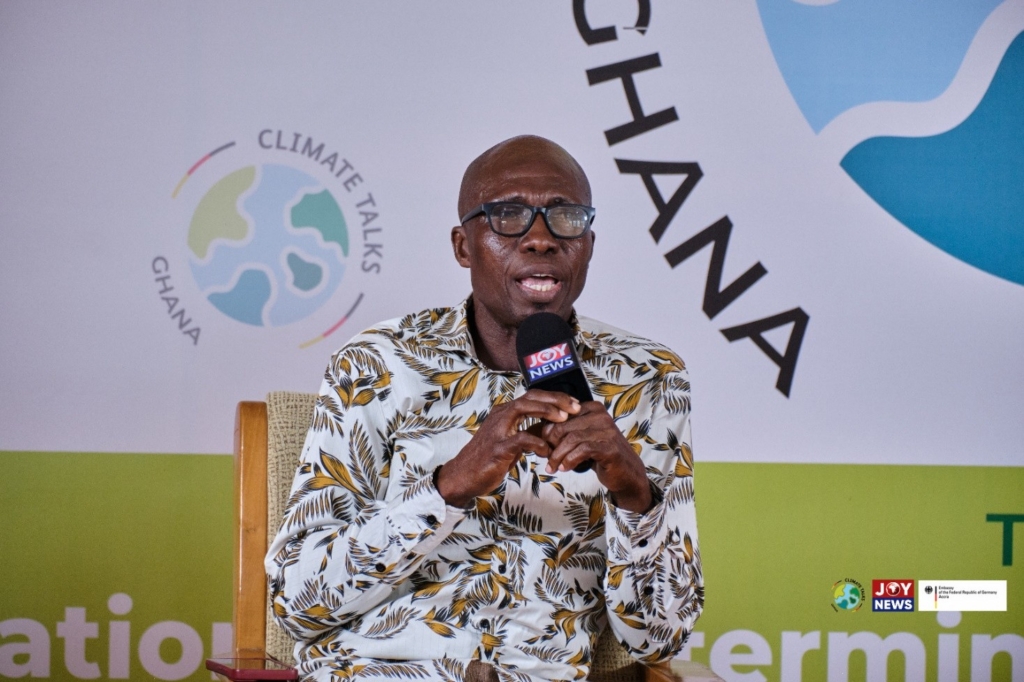
Traditional authorities stressed the importance of safeguarding cultural practices rooted in promoting coastal resilience.
“This conversation has opened our eyes to the realities of tidal waves and the urgent need for a roundtable dialogue, especially one that brings together both indigenous knowledge holders and scientific experts, while also drawing on our historical experiences,” said one of the leaders of Anloga.
Participants drawn from the Ghana National Canoe Fishermen Council, Canoe and Fish Gear Owners Association (CAFGOA), NADMO, Forestry Commission, and the National Fish Processors and Traders Association (NAFPTA) also shared their contributions and expectations and left the forum with a renewed sense of urgency and agency towards climate action. Others included the Kedzi TVET Institute, Anlo Hotels and Hospitality Services, Keta Youth Association, the Anlo, Keta and Ketu-South District Assemblies and general community members.
Local authorities, including the traditional authorities, urged the media to continue giving a platform to local voices in national policymaking spaces.
Latest Stories
-
Music giant Universal gets $64bn takeover offer
9 minutes -
NPP criticism of anti-LGBTQ Bill ‘nothing more than political posturing’ — Kwakye Ofosu
17 minutes -
Joy FM was birthed over a bowl of fufu’ – Tommy Annan-Forson shares interesting story
23 minutes -
World Athletics to introduce standalone World Marathon Championships from 2030
28 minutes -
Africa’s voice in global journalism grows as funding, AI and misinformation shape newsrooms
29 minutes -
First Atlantic Bank holds Annual General Meeting, reports strong growth and bold outlook for 2026
32 minutes -
Ghanaian-founded fintech WeWire secures Canadian PSP license to bridge African, global payments
35 minutes -
Uganda confirms 2027 AFCON dates
43 minutes -
40 convicted in Northern Region crime crackdown
43 minutes -
‘We’re days away from parts of the world experiencing actual shortages:’ Eric Nuttall on energy
53 minutes -
‘I’m Obroni in every country’ – Coco Blasian on music, survival and making Accra home
54 minutes -
IMANI wants NIC to probe possible conflicts of interest in reinsurance arrangements
1 hour -
First Atlantic Bank strengthens balance sheet as net interest income surges 67%
1 hour -
Choplife Gaming donates to Korle Bu Radiotherapy unit for Women’s Week 2026
1 hour -
Would President Mahama have reduced cocoa prices if this were an election year ? – Annoh Dompreh asks
1 hour