

Audio By Carbonatix
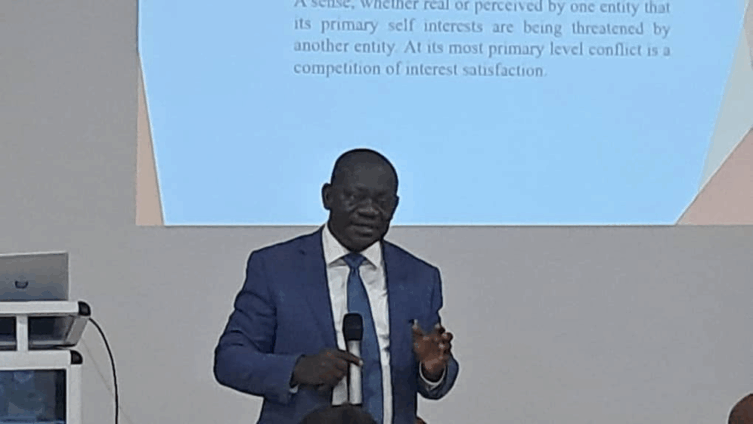
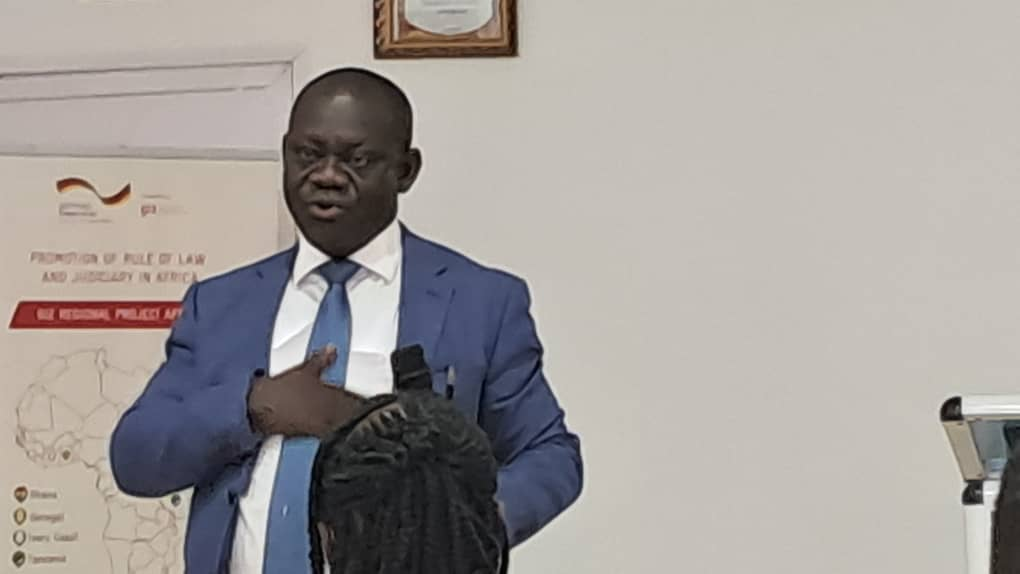
A conflict resolution consultant and President of the Centre for Citizen Empowerment (CCE), Alex Nartey, has expressed deep concern over recent comments made by the Bono Regional Minister, Joseph Addae Akwaboah, in which he threatened to order the arrest of chiefs allegedly fueling confusion in chieftaincy disputes.
In a strongly worded statement, Mr. Nartey described the minister’s remarks as “troubling and inappropriate,” warning that such an approach undermines Ghana’s traditional governance systems and risks escalating tensions in affected communities.
“While the concern for peace and security is legitimate and commendable, I find the approach and tone of the statement deeply troubling and inappropriate in the context of modern conflict resolution practices,” he noted.
According to him, chiefs occupy constitutionally recognized positions in Ghana’s governance and cultural framework, and treating them as potential criminals rather than partners in peacebuilding could have long-lasting negative consequences.
“The contemporary and globally approved approach to conflict resolution emphasizes dialogue, mediation, negotiation, and consensus-building, rather than coercion or punitive threats. Especially in matters involving traditional authorities, the path to sustainable peace requires inclusive engagement and respect for customary processes alongside state mechanisms,” Mr. Nartey stressed.
He cited the Chieftaincy Act, 2008 (Act 759), and provisions of the 1992 Constitution, which clearly outline institutional mechanisms for the resolution of chieftaincy disputes through the Judicial Committees of the Traditional, Regional, and National Houses of Chiefs. These, he said, must be strengthened and utilized instead of resorting to arrests.
Mr. Nartey further warned that public condemnation of chiefs could deepen mistrust and delegitimize both government authority and traditional leadership in the eyes of the people. “It sends the wrong signal that the state prioritizes coercion over dialogue,” he added.
He called on the Bono Regional Minister and other state officials to adopt conflict-sensitive, dialogue-driven, and respectful approaches in dealing with traditional leaders. “Chiefs must be seen as partners in peace and development, not as potential criminals,” he emphasized.
Mr. Nartey urged the Ministry of Chieftaincy and Religious Affairs, the National House of Chiefs, and the National Peace Council to provide leadership and guidance to regional authorities on best practices in conflict resolution.
Latest Stories
-
Telecel Foundation supports safer pregnancies with ultrasound outreach in Naaha
18 minutes -
AU’s 10-year reparations agenda is essential to address historic injustices – Spio-Garbrah
39 minutes -
Ghana can’t remain vulnerable to global economic disruptions— Dr Tutu-Boahene
53 minutes -
‘No nepotism’ – Former NSA Board Chairman demands world-class coach after Otto Addo exit
57 minutes -
Volta Region seen as top choice for luxury weekend breaks — V. L. K. Djokoto
1 hour -
Halt small-scale mining for one year to fight galamsey – Hopeson Adorye
1 hour -
Sammy Gyamfi marks 37th birthday with donations to Special School and Korle Bu
1 hour -
President Mahama orders full probe into ‘Big Push’ procurement exposé
1 hour -
Weija-Gbawe MP calls for commissioning of Weija paediatric hospital
2 hours -
Ghanaians dying in Russia–Ukraine war: The danger is real
2 hours -
Player ratings: Oppong earns high marks as Sibo and Adjetey draw low scores in Germany defeat
2 hours -
Pres. Mahama pledges action on 1.2m out-of-school children after School for Life raises concern
2 hours -
Suhum MP vows NPP will probe Gold-for-Reserves in 2029
2 hours -
Ghana to host Zimbabwe’s President Mnangagwa on three-day state visit
2 hours -
Ghana pushes for stronger West African blue economy partnership at Liberia fisheries investment conference
2 hours