
Audio By Carbonatix
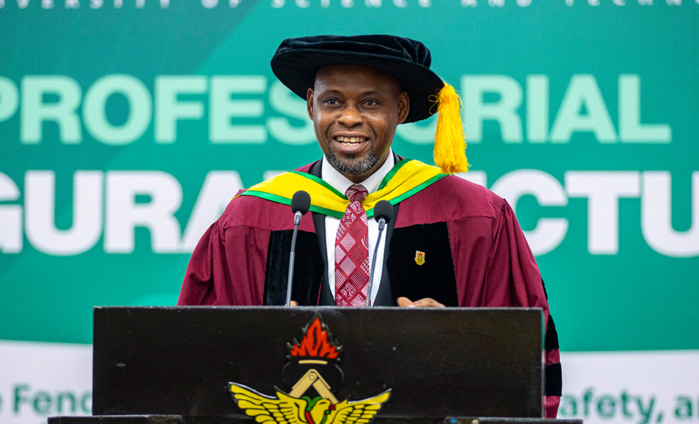
Construction project management expert Professor Emmanuel Adinyira has called for construction projects in Ghana to extend beyond delivering physical infrastructure and serve as platforms for empowering host communities with health, safety and environment (HSE) knowledge.
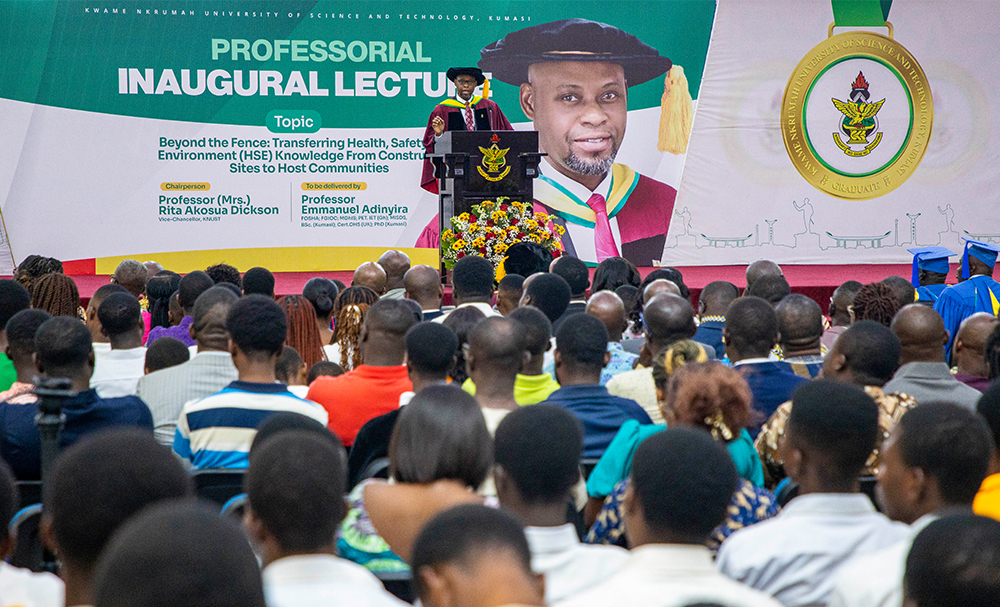
Speaking at his inaugural lecture on the theme “Beyond the Fence: Transferring Health, Safety, and Environment (HSE) Knowledge from Construction Sites to Host Communities,” Prof. Adinyira said safety practices rigorously enforced on project sites should be shared with surrounding communities to protect lives and build resilience.
He highlighted what he described as a paradox in Ghana’s construction sector: contractors operate under world-class safety standards within project boundaries, yet nearby residents remain exposed to hazards.
“Construction projects with high-class HSE compliance often leave people in the project’s geographical area unsafe and unaware. We build bridges but fail to connect with the people. We enforce protective equipment for workers, but we fail to raise awareness among families living near the site,” he said.
Adinyira’s research identified 26 hazards commonly managed on construction sites – including slips, burns, electrical accidents, poor ventilation and chemical exposure – that are also prevalent in homes and communities. While workers are protected by rules and equipment, he said, residents often lack the knowledge to guard against the same risks.
He argued that transferring HSE behaviours, rather than only managerial processes or technology, is both feasible and necessary. He proposed community safety demonstrations, greater use of media, and partnerships with schools, churches and traditional councils to spread awareness.
Adinyira urged policymakers and contractors to integrate HSE education into project delivery, called on the Public Procurement Authority to make community knowledge transfer a contractual requirement, and pressed Parliament to pass the long-delayed Occupational Safety and Health Bill.
“We need a new mindset, a change in our attitudes towards health, safety and the environment. Safety is not a gadget but a mindset,” he concluded.
Latest Stories
-
This Saturday on Prime Insight: Experts delve into SIM registration woes and surging fuel prices
4 hours -
This Saturday on Newsfile: Economy, Jobs, and Galamsey to dominate discussions
4 hours -
GCB Bank MD Farihan Alhassan nominated to Mastercard Africa Leadership Council
4 hours -
Mfantsipim@150: Chairman rallies national support as school unveils anniversary cloth and songs
5 hours -
Morocco walkout: Guinea seeks review of 1976 AFCON title
6 hours -
Wenchi chieftaincy dispute still unresolved – Sɔfoase Yɛfretete family
6 hours -
Mfantsipim launches 150th anniversary with new cloth, song unveiling and fundraising ceremony
7 hours -
Agribusiness Chamber unveils 12-month plan to end Ghana’s tomato import dependence
7 hours -
Day 1 of Joy Ghana Fest 2026 closes on a high note, more thrills await on Day 2
7 hours -
TOR emerges 2nd best institution in MoF’s Financial Management Compliance League Table
8 hours -
TOR thanks staff, stakeholders for PFM compliance success
8 hours -
Bel Beverages donates assorted drinks to support Muslims in Kumasi
8 hours -
Identity before connectivity: Why Ghana’s SIM registration will succeed — and what telecoms must learn from the banking sector
8 hours -
Why Wendy Shay is the definitive 2026 TGMA Artiste of The Year
8 hours -
Agribusiness Chamber urges gov’t to activate tomato emergency strategy within 30 days
9 hours