

Audio By Carbonatix
Electricity distribution company, Electricity Company of Ghana (ECG), is at the center of a financial crisis, draining billions from the national budget while struggling with inefficiencies and revenue losses.
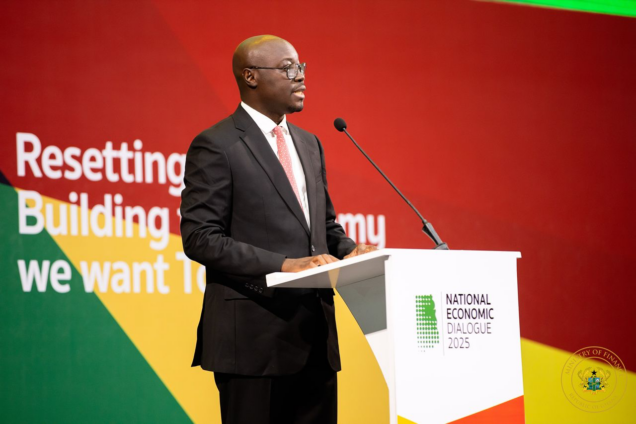
This is according to Finance Minister Dr Cassiel Ato Forson.
He made these revelations at the National Economic Dialogue, describing ECG’s operations as unsustainable and warning that if urgent reforms are not implemented, the country’s energy sector could collapse under mounting debts.
Dr Forson revealed that ECG collects only 62% of the total electricity it distributes, meaning nearly 40% of power supplied is either lost or goes unpaid for.
This alarming revenue gap has forced the government to continuously bail out the company, with budget transfers totaling $2.1 billion over the past two years.
“The inefficiencies at ECG are costing the nation heavily. Government transfers to support the energy sector have reached unsustainable levels, yet the company continues to struggle with revenue collection and operational inefficiencies,” he stated.
According to the Finance Minister, despite the government’s intervention, ECG’s financial problems are worsening.
By 2026, the projected cumulative shortfall in the energy sector is expected to exceed $9 billion, making it one of the biggest threats to Ghana’s economic stability.
Key challenges include:
• High Distribution Losses – A significant portion of power supplied is either lost due to technical faults or stolen through illegal connections.
• Non-Payment of Bills – ECG struggles to collect revenue from both government institutions and private consumers, leading to huge outstanding debts.
• Poor Cash Management – ECG often fails to settle its obligations to power producers, creating a chain reaction of debt across the energy sector.
“The power sector should be a key driver of industrial growth, but instead, it has become a financial black hole, dragging the entire economy down,” Dr Forson stated.
Another major issue facing ECG is the pricing of electricity tariffs.
Dr Forson acknowledged that while tariffs do not reflect the true cost of electricity, simply increasing prices is not a solution.
“Consumers cannot be forced to pay higher tariffs to cover ECG’s inefficiencies. Instead, we must address the root causes—inefficient billing, high system losses, and poor financial management,” he explained.
Despite periodic tariff adjustments, ECG continues to struggle with financial sustainability, making it increasingly reliant on government bailouts.
Dr. Forson called for urgent and radical reforms to fix ECG’s structural problems and reduce its burden on public finances. Proposed solutions include:
1. Strengthening revenue collection – Implementing strict enforcement measures to recover debts from consumers, including government agencies.
2. Reducing technical and commercial losses – Investing in modern metering systems and anti-theft technology to prevent illegal connections.
3. Privatization or partnership with the private sector – Exploring options to bring in private management expertise to improve efficiency.
4. Implementing cost-cutting measures – Cutting down on operational waste and ensuring ECG operates within its revenue limits.
5. Enhancing financial accountability – Strengthening oversight and internal controls to prevent financial mismanagement.
Dr Forson did not mince words about the urgency of the situation.
“If we do not act now, ECG will cripple Ghana’s economy. We cannot continue pouring billions into a broken system,” he warned.
The Finance Minister urged all stakeholders, including government agencies, private sector players, and ECG management, to commit to a turnaround plan that ensures the long-term sustainability of the electricity sector.
Latest Stories
-
Kwaku Azar writes: A-G vs OSP
28 minutes -
Mfantsipim–Adisadel rivalry built excellence, not division – Sam Jonah
53 minutes -
Vice President launches Mfantsipim’s 150 years of shaping Ghana’s greatest mind
1 hour -
I assure Otumfuo, Mahama will join him to commission KNUST Teaching Hospital by end of this year – Haruna Iddrisu
2 hours -
Barcelona dominate derby to extend La Liga lead
2 hours -
Gov’t to roll out free special education for persons with disabilities from July 1 – Education Minister
2 hours -
Importers and Exporters Association declares full support for Publican AI port system
3 hours -
“We used it to test our officiating officials’ readiness” – Bawah Fuseini after CAA Athletics event
3 hours -
Volleyball emerges as Ghana’s fastest rising sport
3 hours -
National Sports Fund needs strong leadership from the top – Administrator David Wuaku
3 hours -
JoySports Exclusive: Steve McLaren in talks with GFA after expressing interest in Black Stars job
3 hours -
Fire guts auto parts warehouse at Bubuashie, one fire officer injured
3 hours -
I owe my victory to coach Ofori Asare – Allotey after winning WBA Africa Gold Super Flyweight belt
3 hours -
Church of Pentecost supports over 2,000 BECE candidates in Obuasi with career guidance seminar
5 hours -
Brandon Asante and Coventry all but promoted to Premier League despite Sheffield Wednesday draw
5 hours