


Audio By Carbonatix
Professor Sarah Gilbert says human activity is driving the rising threat of viruses and that the risk is unlikely to diminish.
We should expect more animal-to-human disease outbreaks to emerge in future, a leading scientist has warned.
Professor Sarah Gilbert, who is heading the development of Oxford University's coronavirus vaccine, says human activity is driving the rising threat of viruses and that the risk is unlikely to reduce as globalisation continues.
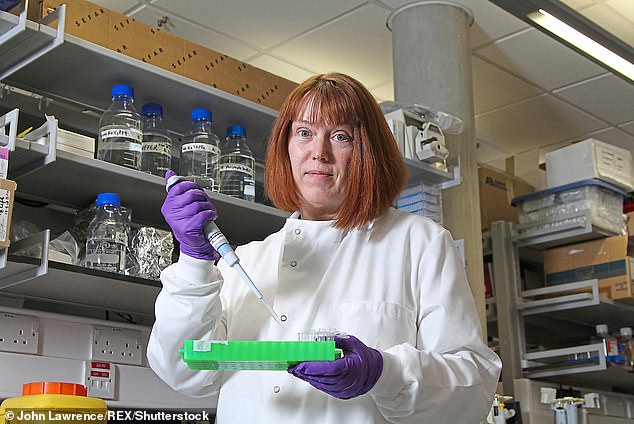
"Greater population density, greater travel, deforestation - all of these things make it more likely that these outbreaks will happen and then something will spread," she told The Independent.
"Because of the way things have been going in the world, it's more likely we'll have zoonotic infections causing outbreaks in the future."
A zoonotic infection is a disease caused by a pathogen, such as a bacterium or virus, that has jumped from an animal to a human.Advertisement
Most researchers believe COVID-19 emerged in bats and infected humans via another animal - probably in a market in Wuhan, China, where the virus was first detected.

Other deadly diseases such as Ebola, Sars and the West Nile Virus have also originated in animals.
The WHO estimates 75% of all new and emerging infectious diseases are zoonotic, meaning they come from animals.
Earlier this year Sky News, visited several animal markets in southeast Asia that have been dubbed "pathogen cafes" because of their potential for spreading disease.
In total, 60% of all infectious diseases in humans are zoonotic.

Trials of the potential coronavirus vaccine being developed at the University of Oxford have suggested it is safe and induces an immune response to the disease.
The project is currently awaiting the results of phase three trials and if a high level of efficacy is proven, a vaccine could be available by the end of the year.
Oxford's pharmaceutical partner in the project, AstraZeneca, has committed to producing two billion doses by next summer.
The vaccine, called AZD1222, uses a weakened version of a common cold virus (adenovirus) which causes infections in chimpanzees and is being trialled in tens of thousands of volunteers in the UK, South Africa, Brazil and the US.
Parece que soy el camino correcto, siguen avanzando las pruebas, aún queda por recorrer pero esperemos sea la buena. https://t.co/CmxAiIeeZ0
— Vacuna AZD1222 (@AZD1222) May 29, 2020
It is hoped it will make the body recognise and develop an immune response to the spike protein, recognisable in images of the virus, that will help stop COVID-19 from entering human cells and therefore prevent infection.
Other vaccines in development have entered into the same stage, and Professor Gilbert said there was a "very good chance" some would prove effective.
"We've seen good levels of neutralising antibodies, we're seeing strong T-cell responses from some of them.
If this works, other vaccines will also work. We expect there to be multiple vaccines," she added.
Latest Stories
-
Airlines cut flights and hike fares as fuel prices surge
9 minutes -
Kane inspires Bayern to first-leg advantage over Real Madrid at Bernabéu
20 minutes -
Wireless Festival cancelled after Kanye West blocked from coming to UK
28 minutes -
Wa West MP commissions five boreholes for the benefit of his constituents
28 minutes -
Havertz’s late strike hands Arsenal narrow first-leg advantage over Sporting
30 minutes -
Damang mine award: Minority not against Ghanaian participation; we’re asking for fair process – Konadu
52 minutes -
NPA to enforce stricter registration rules for petroleum tankers
1 hour -
Manhyia South MP laments decline in hospitality operations in his constituency
2 hours -
How a simple clean charcoal innovation could benefit Ghana’s climate future
2 hours -
NPA, COMAC launch Safety Week 2026 to promote risk management in petroleum sector
2 hours -
Stakeholder engagement resolves onion trade impasse
2 hours -
Gender Ministry holds staff durbar, welcomes new Chief Director
2 hours -
Unexpected illness sparked my radio career – Tommy Annan-Forson
2 hours -
Bolt Ghana awards GH¢50,000 to women entrepreneurs through “She Moves to Win” campaign
2 hours -
NRGI Country Manager questions speed of ministerial approval in Damang mining deal
2 hours