

Audio By Carbonatix
The informal sector has been part of Ghana’s economic activities since the post-independence era. In fact, it is worth noting that the terminology “informality” which is used to describe activities in the sector in academic/policy dialogues emerged from the Ghanaian experience.
Seen as illegal and a nuisance, many African Governments ignored the presence of the sector because the thinking was that, it would die out naturally once formal employment expanded.
Sixty years on, the so-called illegal and temporal phenomenon has grown to become the largest job creation sector in African economies, accounting for as much as 80% employment and 50% to GDP.
To this extent, many policy analysts have been advocating for urgent action towards its full integration into the formal economy, to help stem the high unemployment figures on the continent.
The call to speed up its integration into the modern economy has also received the backing of the African Union in its vision 2063 agenda. However, African Governments are still in a state of inertia towards embracing and integrating the sector into the mainstream economy.
The failure of African Governments to quicken up the pace of full integration of the sector appears now to have been gravely exposed by the current pandemic, Covid-19.
Many governments are now seriously struggling to figure out how best to reach-out and offer assistance to the sector amid the huge economic challenges anticipated from the effect of lockdown. The reality is that, the data is just not there to be used for effective verification and implementation.
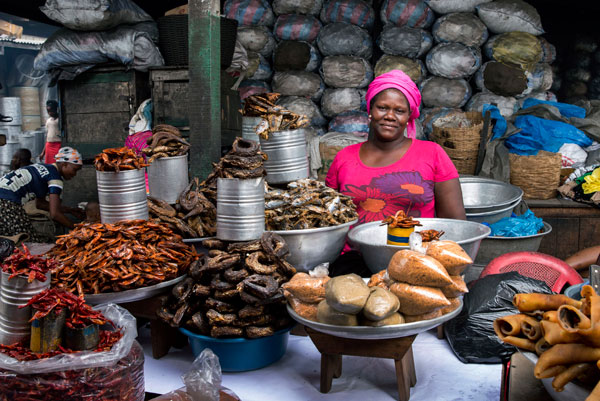
The sector is indeed varied and vibrant comprising head porters, artisans, hawkers, food vendors, transport operators, cleaners, bar attendants, gardeners, seamstress, hairdressers and so on. However, to date, we do not have data on the full extent and scope.
Instead of designing a pragmatic solution for the sector and for the benefit of the nation, we have pretended that the sector does not exist, when in fact it constitutes the largest part of economic activities on the continent.
African Governments have for far too long turned a blind eye to the informal sector in terms of building a firm data base, streamlining the job environment, incentivising payment of taxes, creating welfare packages and bringing workers in the sector onto social security and pension schemes.
Today, the continent is confronted with one of its biggest challenges in dealing with the momentous uncertainty created by the pandemic. Listening to radio commentaries in Ghana relating to the allocation of “hand-outs” to the penurious, one could sense a feeling of exasperation in the voice of authorities and the trauma they are also going through.
How on earth is one expected to correctly identify the people who are really in need, when there is no firm data-base.
For many of us in the developing world especially sub-Saharan Africa, this is the first time that we experiencing such a gigantic global distressing situation, with businesses and jobs at severe risk. The Western World seems to have seen quite a number of such tragedies already; the first World War, influenza/the Spanish flu, the Great Depression, the Second World War.
It appears that they learnt their lessons long ago with regards to the challenges associated with having a highly informal economy in the event of global pandemics/disasters. It is therefore not surprising that they have taken pains to assiduously ensured that their operating and work environments are highly formalized.
Is this going to be the era that will cause Africans to now take the informal sector serious, to make sure that the appropriate structures are put in place for its recognition and full integration into the wider economy? We keep our fingers crossed.
Latest Stories
-
Climate crises, trade wars devastating Africa—Sir Sam Jonah
3 hours -
Amazon confirms 16,000 job cuts after accidental email
5 hours -
Ecuador says ICE agent attempted to enter its Minneapolis consulate
5 hours -
AI model from Google’s DeepMind reads recipe for life in DNA
5 hours -
Europe must act urgently and stop outsourcing defence, says EU’s Kallas
5 hours -
Colombia launches search for missing plane carrying 15 people
5 hours -
Netherlands hands over inventory of Ghanaian artefacts in major step toward restitution
6 hours -
Telecel Foundation launches free cervical cancer screening campaign
6 hours -
Ghana moves to strengthen digital finance with new Virtual Asset framework
6 hours -
7 patients receive life-saving care as Ghana Medical Trust Fund pilot takes off
6 hours -
Disagreement must follow lawful paths, not weaponised – Minority welcomes NDC’s response to SC Kpandai ruling
6 hours -
Telecel reaffirms strategic partnership in New Year courtesy call on Asantehene
6 hours -
Mrs Georgina Owusu-Achiaw aka Afia Badu
6 hours -
US Federal Reserve holds interest rates despite White House pressure
6 hours -
GUTA unhappy about local cargo insurance directive
7 hours