

Audio By Carbonatix
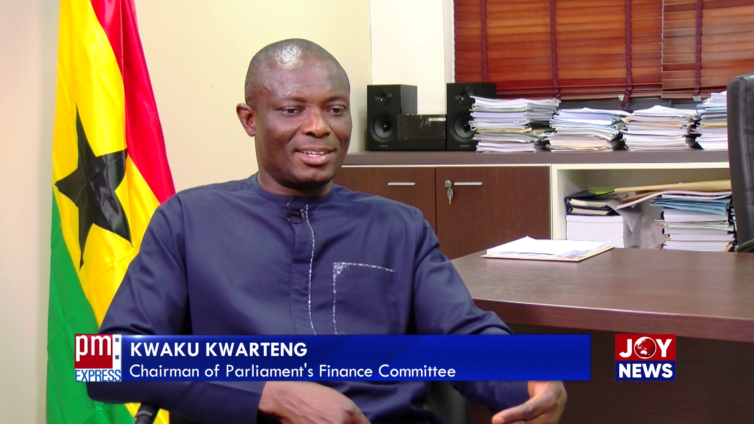
The Chairman of the Finance Committee, Kwaku Kwarteng, has attributed the country’s current economic crisis to decades of reckless public expenditure and economic mismanagement.
Acknowledging the adverse impacts of the Covid-19 pandemic and the ongoing Russian war, Mr Kwarteng refuted the notion that these global events were the sole cause of the crisis.
“I am not with the school of thought that we were not going to experience a financial crisis but for these [Covid-19 and Russia-Ukraine War].
“The country was always going to have some financial crisis. It might have been delayed a little bit if Covid-19 and the Russia-Ukraine war had not happened but the fact remains that with the path we were walking, we were definitely going to get here,” he said.
Mr Kwarteng who doubles as MP for Obuasi West made this assertion during an interview on JoyNews’ PM Express on Thursday.
Highlighting a pervasive culture of overspending and a lack of fiscal discipline, Mr Kwarteng also noted that Ghana's current predicament is not solely a result of recent economic management but rather the culmination of decades of bad politics and economic mismanagement.
“Overruns and reckless expenditure have become a culture," he told George Wiafe. A practice, he expressed grave concern.
According to him, unless there is a fundamental change in mindset and a commitment to fiscal responsibility, Ghana risks becoming a failed state.
He therefore called for an honest and straight-forward discussion about these negative cultural practices that have led to the current crisis and find sustainable solutions to them.
The Obuasi West legislator observed that due to the pervasiveness of these negative cultural practices, it makes laws and institutions established to clump down on economic mismanagement ineffective.
“We have the laws and we’ve set up institutions that should help us deal with these, but no amount of legislation, no amount of institutional arrangements can stop a people determined to destroy themselves.”
Mr Kwarteng's remarks come at a critical time as the country grapples with the dual challenges of external shocks and domestic economic vulnerabilities such as skyrocketing inflation rate, high unemployment rate among others.
Latest Stories
-
Sahara Group urges journalists to look beyond fuel prices in energy reporting
6 minutes -
Today’s front pages: Friday, October 16, 2026
10 minutes -
Ashanti Region: ECG urges customer cooperation with franchise officers
16 minutes -
Ghana’s research fund faces a test of turning funding promises into scientific breakthroughs
28 minutes -
Dîner en Blanc Accra returns on December 28 for second edition
31 minutes -
20% digital tax: Government hiding behind technicalities to cheat Ghanaians – Dr Boako
1 hour -
David Selassie Anthony declares bid for NDC Deputy National Organiser
2 hours -
Amin Adam proposes 13 measures to strengthen Ghana’s debt transparency and market confidence
2 hours -
Mahama announces $2bn annual investment to accelerate industrialisation
2 hours -
Amin Adam urges monthly disclosure of Sinking Fund as Ghana prepares for DDEP repayments
3 hours -
Stronger banks will fuel business growth and jobs – ADB MD
3 hours -
Galamsey: ‘Rivers that fed our grandparents now run the colour of chocolate milk’ – Sam Jonah
3 hours -
We have been scammed by NDC, government is only doing PR – Abanga Fuseini
3 hours -
Republic Bank–JoyNews Habitat Fair opens in Ho today
3 hours -
Dr Boako challenges government over new digital tax
3 hours