

Audio By Carbonatix
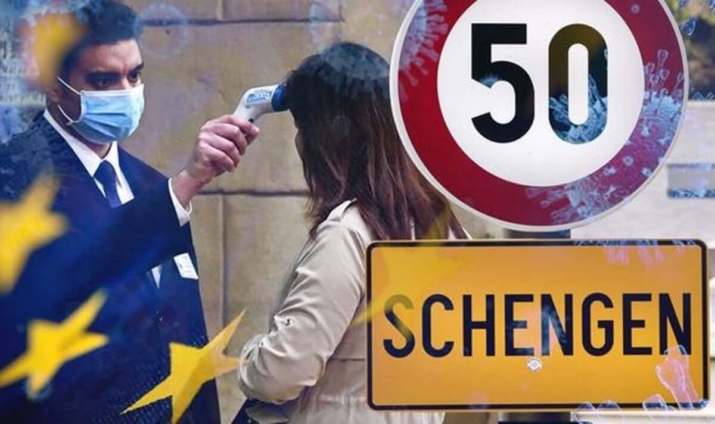
A recent warning by the French President Emanuel Macron that the external borders of the Schengen Area and the Associated Member states may remain closed until September has extinguished the hopes of those intending to apply for a Schengen visa throughout this period.
If the European Commission, which has already called for the prolongation of the border closure until mid-May, decides to extend external borders until September, this means non-EEA nationals and residence permit holders will not be able to travel to these countries
It is a sure thing that once the risks from the pandemic are reduced, and the Schengen Area starts going back to normality, the member states will start asking for additional documents regarding applicant’s health conditions.
In an exchange of emails with SchengenVisaInfo.com, an EU official has confirmed that those wishing to travel to the Schengen Area after the Member States start to gradually go back to normal,
“When the Schengen Borders open up in September, if they do, Schengen Visa applicants will need to submit a Coronavirus test that has resulted negative, taken within the last two weeks prior to the visa application. The traveller may be required to take a new test before travelling to the Schengen area, as to make sure that he/she has not been infected in the meantime,” the source said.
The official also noted that once the COVID-19 vaccine is confirmed and available for all, visa applicants may also be required to be vaccinated in the future, in particular, if the virus remains active.
While the requirement may seem that Schengen countries are going to extra lengths pushed by the Coronavirus pandemic, the official states that in the past there have been similar requirements imposed by some of the Schengen Member states, towards countries worst hit with the Swine Flu and the Ebola virus.
While the number of Coronavirus cases in the world is nearing two million, the worst-hit country in the world remains the United States with 588,465 cases detected, followed by four Schengen members, Spain, Italy, France, and Germany.
The Schengen country with the highest number of deaths remains Italy, while the highest number of deaths per one million people has been San Marino, a country of 33,785 citizens where 371 have died.
Latest Stories
-
Maiden Zongo Festival held in Wa amid calls to tackle drug abuse among the youth
13 minutes -
FDA warns of fake HIV test kits on Ghanaian market
41 minutes -
Africa urged to build resilient health systems as donor support tightens
47 minutes -
Easter gesture: Ablakwa settles medical bills for 85 North Tongu constituents
3 hours -
Africa must harness its population strength—Titus-Glover
3 hours -
Visa-free access doesn’t mean unlimited stay – Lom Ahlijah
3 hours -
From Golgotha to Kwahu: The Easter Migration of the Faithful and the Faithless
4 hours -
How the Ghanaian onion traders’ standoff with Nigeria unfolded and threatened local supply
4 hours -
No compensation for demolished structures on 24-Hour Economy market lands — Gov’t to structure owners
4 hours -
Financial Institutions must back local enterprises to spur growth – Deputy Minority Whip
5 hours -
Photos: Gomoa Easter Carnival 2026 ends in a burst of colour and celebration
5 hours -
Gomoa Easter carnival ends in colour as fashion, music and celebrity appearances light up final night
5 hours -
Families pick Luv Fm Family Party to celebrate Easter Monday with music and more
5 hours -
IMANI flags procurement issues in Ghana Gas insurance switch
6 hours -
Kaneshie footbridge rehabilitation to take up to 9 months — AMA
6 hours