

Audio By Carbonatix
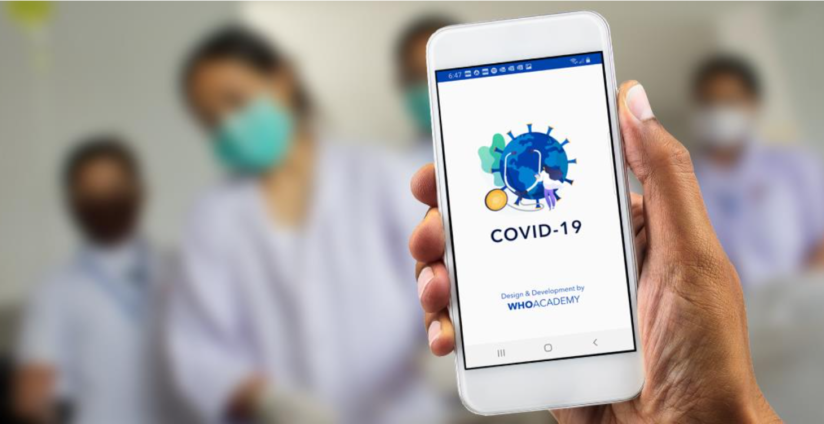
A mobile phone app can detect COVID in people's voices with "potentially high precision" using artificial intelligence (AI), according to researchers.
An AI model was said to be 89% accurate and cheap to use, which means it could be adopted in low-income countries where PCR tests are more expensive.
Results can be provided in less than a minute and are said to be a "significant improvement" on the accuracy of lateral flow tests, scientists said.
Infection normally impacts the upper respiratory tract and the vocal cords and so researchers decided to analyse changes in voices using an AI model to detect COVID.
Wafaa Aljbawi, a researcher at the Institute of Data Science at Maastricht University in the Netherlands, said: "These promising results suggest that simple voice recordings and fine-tuned AI algorithms can potentially achieve high precision in determining which patients have COVID-19 infection.
"Such tests can be provided at no cost and are simple to interpret. Moreover, they enable remote, virtual testing and have a turnaround time of less than a minute.
"They could be used, for example, at the entry points for large gatherings, enabling rapid screening of the population."
Data was used from the University of Cambridge's crowd-sourcing COVID19 Sounds app. This included 893 audio samples from 4,352 healthy and non-healthy people.
Users need to give information about their medical history, smoking status and demographics and record some respiratory sounds, such as coughing and reading a short sentence.
A voice analysis technique - called Mel-spectrogram - identified different voice features to "decompose the many properties of the participants' voices".
Ms Aljbawi added: "These results show a significant improvement in the accuracy of diagnosing COVID-19 compared to state-of-the-art tests such as the lateral flow test.
"The lateral flow test has a sensitivity of only 56%, but a higher specificity rate of 99.5%. This is important as it signifies that the lateral flow test is misclassifying infected people as COVID-19 negative more often than our test.
"In other words, with the AI LSTM model, we could miss 11 out of 100 cases who would go on to spread the infection, while the lateral flow test would miss 44 out of 100 cases."
The AI model is also being used for an app to predict exacerbations in chronic obstructive pulmonary disease.
The research is due to be presented to the European Respiratory Society International Congress in Barcelona on Monday.
Latest Stories
-
Ghana to host Zimbabwe’s President Mnangagwa on three-day state visit
3 minutes -
Ghana pushes for stronger West African blue economy partnership at Liberia fisheries investment conference
3 minutes -
Ghana hosts high-level African climate strategy meeting ahead of COP31 and COP32
21 minutes -
Today’s Front pages : Tuesday, March 31, 2026
37 minutes -
President Mahama welcomes Zimbabwe’s Mnangagwa for three-day state visit
42 minutes -
Dr Anthony Adjiepong’s Pharmatrust Pharmacy receives top recognition at UG’s White Coat ceremony
55 minutes -
OMCs increase in fuel prices at pumps: GOIL sells petrol at GH¢13.30 and diesel GH¢17.10
1 hour -
Gender Ministry convenes Equity Committee meeting, commissions secretariat to strengthen coordination
2 hours -
Aggie Asiimwe Konde: Soil is Africa’s hidden growth asset
2 hours -
Fiscal slippage could weigh on Ghana’s credit rating – S&P warns
2 hours -
Gender Ministry reviews Anti-Trafficking Action Plan to strengthen implementation
3 hours -
Fidelity Bank supports UG’s ‘One Student, One Laptop’ initiative
3 hours -
Ellembelle MP donates 1,000 set of furniture to KIMTECK
3 hours -
We’re focused on basic needs, not Anti-LGBTQ Bill – Mahama
3 hours -
Mahama announces April 15 launch for Free Primary Health Care Programme
3 hours