

Audio By Carbonatix
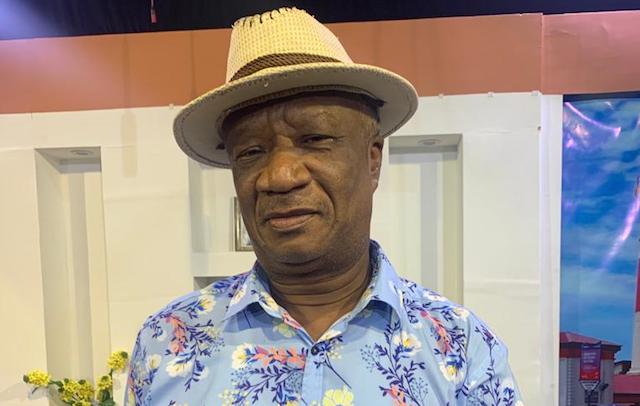
Veteran Ghanaian actor and producer Abeiku Sagoe is urging tertiary educational institutions in the country to design professional marketing programmes to build professionals for the entertainment sector.
The thespian bemoaned that the creative industry space had not been well projected to the wider community due to a lack of marketers in the space.
He called for urgent attention and efforts to be made to address the space, starting with educational institutions to train professionals to close the gap.
Mr Sagoe made this submission at the just-ended third Graphic Showbiz hosted in collaboration with Multichoice Ghana in Accra and on the theme 'Future of Ghana Movie Industry: Bright or Bleak?'
According to Mr Sagoe, there was very little interest in the marketing sector of the creative industry, even though it is a viable one and its practitioners could make equal gains when properly explored. He added this could also change the fortunes of the entertainment industry.
"There are business schools training marketers. I believe what we can do is go to the university and talk to the authorities to see if they can add the entertainment industry to the training of other professionals."
“Many marketers are coming out, and all they come to do is to advertise tomatoes and rice. We need to introduce our sector to them as a viable area they need to look at and train some of these young ones to take over,” he stated.
According to Mr Sagoe, more marketers focusing on the creative industry, particularly the movie industry, would put the sector in the spotlight; a move he said was long overdue.
"I'm convinced more people would get interested in what we are doing and that marketing professionals would profit as a result if we had enough marketers promoting the industry to the outside world."
Meanwhile, the Back Home from Justice producer asserted that Ghana's film industry had seen very little progress over a long period because filmmakers had not made an effort to pull resources to create a powerful industry front.
He suggested filmmakers needed to unite in these challenging times, identify the pressing issues that needed to be resolved, and pool resources to progress the film industry.
“Let us come together and build the industry. We have been in our individual spaces and we have achieved very little; it is difficult doing it alone. It’s like wanting to build a tomato manufacturing factory as an investor."
"You can’t do the job of the accountant, machine operator, human resource manager, etc. In other industries, they can learn and appreciate that it takes different professionals to come together to make a factory run,” he said.
Latest Stories
-
Industry collaboration key to solving skills mismatch – NYA CEO Osman Ayariga
2 minutes -
Ghana, Egypt deepen security ties following high-level meeting
7 minutes -
Every neurodivergent child deserves to thrive – AWARE 2026 walk set for North Legon
14 minutes -
Ghana-Russia Centre, ATF donate to Princess Marie Louise Children’s Hospital
18 minutes -
NPP increases polling station coverage per election committee from 10 to 25
22 minutes -
Ghana card cannot be used for financial transactions – NIA debunks false reports
22 minutes -
Successful conviction secured for illegal fish processing operation in Watford
28 minutes -
Bowen: Ceasefire means respite for civilians, but it might not last long
29 minutes -
Ofori-Atta not yet formally notified of any charges – Frank Davies
29 minutes -
Asanko Gold supports road rehabilitation to ease transport challenges in Amansie West
40 minutes -
Serial killer pleads guilty to eight murders in case that haunted Long Island, New York
44 minutes -
NPP used Bosomtwe road as ‘election machine’ but failed to dedicate funds for its completion – Dr Amoakohene
50 minutes -
CSOs warns of contraceptive crisis as $500k UNFPA supplies stall at port
56 minutes -
Africa’s youth bulge a ‘defining moment’ that requires urgent action – NYA CEO Osman Ayariga
1 hour -
No looming power crisis; Ghana’s electricity supply remains stable – Energy Ministry PRO insists
1 hour